
In This Article
Picture the long, grinding gallop up the final hill on a cross country course. Your horse has a generous shoulder and a ribcage that’s more shelf than barrel, and your saddle has quietly decided to emigrate towards his loins. Nobody wants that conversation at fence nineteen. A well-chosen breastplate for eventing is the cheap, unglamorous insurance policy against it.

It’s also one of the few pieces of tack that touches three things at once: saddle stability, your horse’s freedom through the shoulder, and your cross country safety. Get it right and you forget it’s there. Get it wrong and it rubs, restricts, or fails at its one job.
This guide compares seven real options available to UK riders, from a budget leather three-point to the five-point Italian-leather Invorio. Each gets honest analysis rather than a reworded shop blurb. You’ll learn how an elasticated breastplate differs from a fixed one and when a breastplate with martingale attachment earns its place. You’ll also get a proper walk-through of breastplate sizing, and a way to tell whether you need a breastplate for saddle slip or a saddle fitter.
Prices are given as ranges because they change constantly, so always check the current price. On reviews, where I couldn’t verify a meaningful pool of genuine customer feedback, I say so rather than invent any. Specs come from manufacturer and retailer listings and UK tack-trade coverage, and the analysis is reasoning built on those, not claimed hands-on testing.
What Is a Breastplate for Eventing?
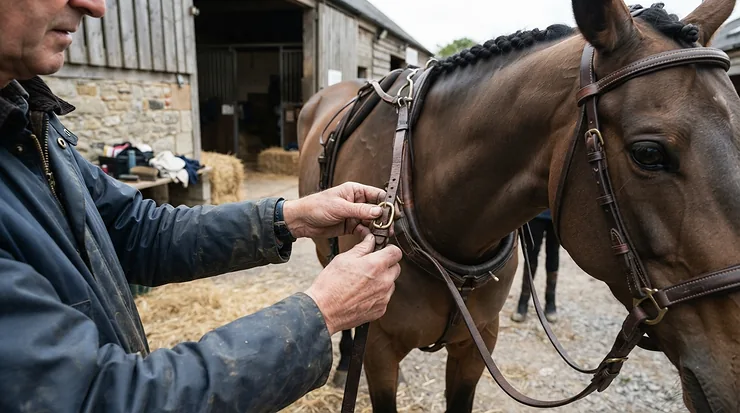
A breastplate for eventing is a set of straps that crosses the horse’s chest and attaches to the saddle’s D-rings and the girth. It stops the saddle sliding backwards on climbs, drops and landings. Most eventers choose a three-point or five-point design, often elasticated, and sometimes with a detachable running martingale.
In plain English, it’s a seatbelt for your saddle. The classic hunting-style design has a yoke across the chest, a strap running between the forelegs to the girth, and two straps up to the saddle’s front D-rings. Wikipedia’s overview of the breastplate notes that this style is most helpful for horses with large shoulders and a flat ribcage. It also points out that martingales can be attached to it.
The difference between three-point and five-point is simply how many places the saddle is anchored. Three-point models anchor at the two D-rings and the girth. Five-point models add attachments to the girth straps under the saddle flaps, which gives a more stable hold at the price of more straps to fit.
Then there’s the breast girth, which attaches at the saddle’s front and sits lower on the chest. Some riders prefer it on cross country for its security, but this guide focuses on the breastplate styles most UK riders actually buy.
Quick Comparison: The Best Breastplate for Eventing at a Glance
| Product | Style | Elastic | Martingale | Price range | Best for |
|---|---|---|---|---|---|
| Horseware Rambo Micklem Breastplate | 3-point | Yes | Detachable | £90-£140 | Jumping freedom |
| Premier Equine Invorio 5 Point Breastplate | 5-point | Yes, at shoulders | Removable | £55-£150 | Stubborn saddle slip |
| John Whitaker Eastwood Elasticated Breastplate | V-check | Yes | Detachable | £60-£75 | Budget elastic |
| Collegiate Hunter Breastplate IV | 3-point | Not listed | Detachable | £80-£95 | Classic, no-frills |
| Shires Salisbury 3 Point Breastplate | 3-point | Yes, inserts | Removable | £40-£50 | Tight budgets |
| HKM Breastplate With Martingale | Not specified | Yes, insert | Detachable | £65-£75 | Schooling all-rounder |
| Equestro Leather Breastplate with Elastic Inserts | Not specified | Yes, inserts | Removable | £95-£105 | Awkward conformation |
The table shows a clear split. The Horseware Rambo Micklem Breastplate and Premier Equine Invorio 5 Point Breastplate are the “buy once” options, while the Shires Salisbury 3 Point Breastplate is the cheapest route to an elastic design. The Collegiate Hunter Breastplate IV is the only one here whose listing doesn’t mention elastic, which matters for shoulder freedom. If you’re torn, read the sizing and saddle-slip sections before spending a penny.
💬 Just one click — help others make better buying decisions too!😊
Top 7 Picks for a Breastplate for Eventing: Expert Analysis
Seven real products, one honest verdict each. Every price below is a range at the time of research, so check current price before you buy.
1. Horseware Rambo Micklem Breastplate — most shoulder freedom of the seven
The Horseware Rambo Micklem Breastplate is built around a three-point layout. Horseware argues this leaves the shoulder freer than a five-point design. That’s a manufacturer’s claim, but the logic is sound: fewer straps crossing the shoulder means fewer places to restrict it.
It combines elasticated sections with generous adjustment at the neck sides, the underbelly strap and the detachable martingale. That helps on a horse whose shape sits between sizes, and it’s offered from pony up to extra full. The top clips go to the saddle D-rings, or to included stirrup-bar attachments, which Horseware says are the more secure option. A removable safety strap across the withers doubles as a grab handle.
My read is that this suits riders who jump as much as they gallop, because it’s an elasticated breastplate that behaves over fences. It’s less compelling for a horse with truly dramatic saddle slip, where extra anchor points may serve you better.
Verified customer data is thin. One US retailer listing shows roughly 4.4 out of 5 from fewer than 30 ratings, which is encouraging but a small sample. An online editorial roundup also named it overall pick, though that’s opinion, not customer feedback.
Pros:
- ✅ Three-point design leaves the shoulder free
- ✅ Stirrup-bar attachments reduce pull on D-rings
- ✅ Removable safety strap doubles as a grab handle
Cons:
- ❌ Fewer anchor points for severe saddle slip
- ❌ Priciest of the three-point options here
Expect around £90-£140 depending on size and retailer. It’s the best all-rounder if you want one breastplate for eventing, showjumping and schooling.

2. Premier Equine Invorio 5 Point Breastplate — five anchors for slippery saddles
The Premier Equine Invorio 5 Point Breastplate is the one to look at when the saddle really won’t stay put. It anchors to the D-rings, to the girth straps via leather loops under the flaps, and to the girth between the forelegs.
Premier Equine uses strong elastic high near the shoulder, with wool-padded shoulder points and chest pad. The leather is soft Italian stock with stainless steel fittings. Two extra D-rings on the chest strap let you lower the removable running martingale, or attach training aids. In practice, five anchors spread the load, which helps on a horse built like a downhill ski slope.
As a breastplate for saddle slip, this is the strongest candidate in the list. The trade-off is fiddliness: loops under the flaps add bulk, and there are more buckles to set evenly. Take ten minutes at home before competition day.
On reviews, I could only find editorial praise, such as being named best for eventing in one roundup. One international listing showed no customer reviews at all, so treat the quality claims as unproven by large-scale customer data.
Pros:
- ✅ Five attachment points for maximum saddle stability
- ✅ Elastic placed high at the shoulder
- ✅ Padded shoulder points and chest pad
Cons:
- ❌ More straps and buckles to fit correctly
- ❌ Leather loops add bulk under the saddle flaps
Prices vary widely, from the mid-£50s to around £150 depending on retailer and colour. At the lower end it’s a bargain, but check current price before assuming.
3. John Whitaker Eastwood Elasticated Breastplate — budget V-check with elastic
The John Whitaker Eastwood Elasticated Breastplate goes for a V-check design, with the yoke forming a V across the chest. The listing says it’s suited to hunting, showjumping and eventing.
Elastic is built in to reduce shoulder restriction while still securing the saddle. Straps are fully adjustable, the martingale detaches, and silver-coloured fittings finish it off. It comes in cob and full, with a pony size also listed. That adjustability makes it forgiving for horses that fall between sizes, though you should inspect the buckle quality in hand.
Think of it as a sensible, no-nonsense elasticated breastplate for riders stepping up from pony club to novice level. The listing mentions a hunting attachment, which is presumably aimed at hunting riders, so treat it as a bonus rather than a reason to buy.
I couldn’t verify a sizeable pool of independent reviews, so I can’t speak to long-term wear. At this price, check stitching and keepers on arrival.
Pros:
- ✅ Elastic reduces shoulder restriction
- ✅ Detachable running martingale included
- ✅ Available in pony, cob and full
Cons:
- ❌ Limited independent review evidence
- ❌ Fitting quality needs checking on arrival
It sits at around £60-£75, which is fair value for an elastic design with a martingale.
4. Collegiate Hunter Breastplate IV — the classic, no-frills three-point
The Collegiate Hunter Breastplate IV is the traditional hunting-style breastplate, doing exactly what it says and nothing fancy. It attaches at three points, with an adjustable neck and girth strap, and a detachable running martingale is included.
The materials are European leather and polished stainless steel, with padded leather for comfort. The listing doesn’t mention elastic, so expect less give through the shoulder than the elastic models. The retailer also suggests it can double as an emergency neck strap and handle head-tossing at speed or across country.
I’d see it as the choice for riders who like the proven shape and don’t want to pay for elastic. It suits a horse that moves with a shorter, flatter stride, while a big-moving jumper may feel more restricted. It’s a workable breastplate with martingale attachment if you need the martingale occasionally.
Editorial roundups have named it runner-up in the past, but I couldn’t verify a large pool of customer reviews for the UK listing.
Pros:
- ✅ Quality European leather and stainless fittings
- ✅ Detachable martingale included
- ✅ Simple three-point design is easy to fit
Cons:
- ❌ Listing doesn’t mention elastic inserts
- ❌ Less shoulder give than elastic rivals
It sits at roughly £80-£95. Solid value if you prioritise build quality over shoulder give.
5. Shires Salisbury 3 Point Breastplate — cheapest route to elastic
The Shires Salisbury 3 Point Breastplate gets elastic inserts into the shoulder straps at a price that barely dents a saddlery budget. It’s also fully adjustable through both shoulder straps.
It’s made from vegetable-tanned leather with padding over the withers and stainless steel fittings. A removable running martingale is included. The elastic inserts allow movement through the shoulder, while the wither padding reduces pressure. It comes in sizes from small pony to extra full, so it covers a lot of different builds.
For riders starting out at the lower levels, I’d say this is the obvious first buy. It won’t have the finesse of a premium design, and vegetable-tanned leather needs regular care. But as a first breastplate for eventing it ticks the essential boxes.
An editorial roundup named it budget pick. I couldn’t verify a meaningful pool of independent customer reviews, so check stitching and hardware when it arrives.
Pros:
- ✅ Elastic inserts in the shoulder straps
- ✅ Padded wither piece for comfort
- ✅ Wide size range, small pony to extra full
Cons:
- ❌ Vegetable-tanned leather needs regular care
- ❌ Basic fittings compared with premium rivals
At roughly £40-£50 it’s the cheapest in this list, and good value for entry-level riders.
6. HKM Breastplate With Martingale — affordable martingale-ready all-rounder
The HKM Breastplate With Martingale is built for schooling and lower-level competition. The listing describes quality leather with silver-coloured fittings, soft padding on the pressure points and an elasticated insert.
The martingale is detachable, so you can use it as a plain breastplate or add the martingale for flatwork and jumping. The listing also mentions an adjustable velcro fit. I’d want to look closely at how that velcro is used before trusting it across country, because buckles are the proven choice for anything that has to survive a gallop. The listing doesn’t specify the number of attachment points either, so check before buying.
It makes sense as a schooling breastplate with martingale attachment for riders who jump regularly but compete rarely. I wouldn’t make it my first pick for a horse with serious saddle slip.
I couldn’t verify a substantial pool of independent customer reviews, so I’m not claiming any review themes here.
Pros:
- ✅ Detachable martingale adds versatility
- ✅ Padded pressure points
- ✅ Elasticated insert for a snug fit
Cons:
- ❌ Velcro adjustment needs careful inspection
- ❌ Attachment points aren’t clearly specified
Around £65-£75 is a reasonable price for a schooling all-rounder.
7. Equestro Leather Breastplate with Elastic Inserts and Removable Martingale — independent strap adjustment
The Equestro Leather Breastplate with Elastic Inserts and Removable Martingale puts adjustability first. The listing says every strap and buckle adjusts independently, which helps on horses with unusual conformation.
It’s tanned leather with stainless steel hooks that attach to the saddle, plus elastic inserts for a little give as the horse moves. The listing stresses that the martingale runs to the reins and must be used with rein stops, to stop the ring catching on the bit. That’s good advice for any running martingale. Sizes are cob, pony and full.
Independent adjustment is valuable on a horse with a wide chest or low wither, where an off-the-peg fit may not suit. It’s also a sensible breastplate with martingale attachment for riders who want to keep their options open.
The retailer listing shows it as a special-order item, so allow time. I couldn’t verify independent reviews, so I’m making no claims about durability.
Pros:
- ✅ Every strap adjusts independently
- ✅ Elastic inserts allow shoulder movement
- ✅ Removable martingale with clear rein-stop guidance
Cons:
- ❌ Special-order delivery may add waiting time
- ❌ No verifiable review pool found
It sits at roughly £95-£105. It’s good value for awkward shapes, but only if you can wait.
How to Choose a Breastplate for Eventing
Choosing a breastplate for eventing comes down to seven decisions, taken in this order. Horse & Hound’s breastplate buying guide shows how wide the field is, from five-point leather designs to elastic-webbed ones with martingale attachments.
- Identify why the saddle moves. If it slides back on hills because of your horse’s shape, a breastplate helps. If it twists sideways, you probably need a saddle fitter first.
- Pick the point count. Three-point offers more shoulder freedom, while five-point gives more stability. Choose based on how severe the slip is.
- Decide on elastic. Elastic inserts at the shoulder give movement, which matters over fences and on big-striding horses.
- Decide if you need a martingale. A detachable martingale gives flexibility, but only if you’ll use rein stops properly.
- Check the attachment options. D-ring clips are standard, stirrup-bar attachments are gentler on the saddle, and girth attachments add stability.
- Confirm the size range. Sizes vary between brands, so check the maker’s chart rather than assuming “full” means the same everywhere.
- Be realistic about budget. Spend more on hardware and stitching than on style, because this is safety equipment.
Cross Country Safety: Rules, Rider Protection and Tack Checks
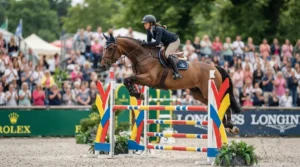
Cross country safety is where the breastplate stops being a convenience and becomes essential kit. British Eventing’s beginner’s guide to tack and equipment lists a martingale and/or breastplate as permitted on the cross-country phase when correctly fitted. It also lists body protectors meeting current standards as mandatory for cross-country. Rules change, so always check the current British Eventing rule book for your level, and remember unaffiliated events can differ.
Beyond compliance, there are three practical safety angles:
- Emergency handhold. A breastplate yoke can double as a neck strap, which retailers such as the one listing the Collegiate Hunter Breastplate IV highlight. The Horseware Rambo Micklem Breastplate includes a dedicated removable safety strap for exactly this purpose.
- Martingale and rein stops. If you run a martingale, use rein stops so the rings can’t catch on the bit. The Equestro Leather Breastplate with Elastic Inserts and Removable Martingale listing is explicit on this.
- Tack checks. Before every run, inspect stitching, buckle keepers, elastic and clip gates. Elastic perishes, and a tired clip is a bad surprise at speed.
One stitch pulling out at the wrong moment is a very expensive lesson. A two-minute check is cheap by comparison.
Breastplate Sizing: How to Measure and Fit Step by Step
Breastplate sizing is where most buyers go wrong, because “cob” and “full” aren’t standardised. Brands differ. The Shires Salisbury 3 Point Breastplate runs from small pony to extra full, while the Horseware Rambo Micklem Breastplate is offered as pony, cob, full and extra full. Always check the maker’s chart.
Here is a practical routine for getting breastplate sizing right at home:
- Fit the saddle first. A breastplate can’t fix a badly fitting saddle, so fit the saddle and girth before anything else.
- Check chest clearance. Wikipedia’s tack entry suggests a fist should fit between the breastplate and the horse’s chest. EQUUS Magazine agrees, adding that an elasticated breastplate should sit slightly snugger with no stretch at rest.
- Test the wither strap. EQUUS suggests it should lift three or four inches when pulled up, which tells you it’s neither choking nor floppy.
- Check the girth strap. It should hang two or three inches below the skin, not dangle down between the legs.
- Look at the yoke position. It should sit above the point of the shoulder without stopping the horse lowering his neck.
- Check it moving. Walk, trot and canter on the flat, then jump a small fence, and watch for rubbing or bunching.
A pre-ride lunge helps your horse acclimatise, which Horse Canada’s guide to breastplates and cruppers recommends. If the breastplate sizing sits between two sizes, choose the one that adjusts comfortably inside its range rather than at the very end of a strap.
Breastplate for Saddle Slip: Diagnose Before You Buy
A breastplate for saddle slip is a fix for one specific problem, not a cure-all. Work through these common scenarios before you spend any money.
Problem 1: the saddle slides back on hills. This is the classic case. A well-fitted three-point or five-point design should help. For a horse with a big shoulder and shallow ribcage, the Premier Equine Invorio 5 Point Breastplate offers the most anchor points here.
Problem 2: the saddle slides sideways. A breastplate won’t cure this. Look at saddle fit, girth, and rider straightness instead. Book a qualified saddle fitter.
Problem 3: the breastplate rides up towards the throat. Check the wither strap and yoke position, and re-check sizing against the steps above.
Problem 4: rubbing at the shoulder. Move towards an elasticated breastplate such as the John Whitaker Eastwood Elasticated Breastplate, and check that nothing is pinching.
Problem 5: sore withers. Wikipedia notes that a breastplate can make a poorly fitting saddle’s tree points dig into the withers. If that sounds familiar, the saddle is the culprit.
Treat the breastplate as a supporting actor. Saddle fit is the lead.
Breastplate with Martingale Attachment: When It Earns Its Keep
A breastplate with martingale attachment combines two jobs in one, which makes it popular on cross country. The martingale runs from the chest, splits into two straps and passes through the reins, limiting how high the horse can raise his head.
It earns its keep in two situations. First, a horse that tosses his head when he’s fresh or galloping at speed. Collegiate’s retailer notes the detachable martingale on the Collegiate Hunter Breastplate IV is useful for exactly that. Second, a horse that goes better with a little extra control through transitions.
Rules for using one properly:
- Use rein stops. They stop the martingale ring riding forward and catching on the bit ring.
- Adjust conservatively. A common rule of thumb is that the martingale shouldn’t interfere with the rein unless the horse raises his head. Ask your trainer to check it.
- Choose detachable. Models such as the HKM Breastplate With Martingale let you ride without it when you don’t need it.
- Use the right rings. The Premier Equine Invorio 5 Point Breastplate has two extra D-rings on the chest strap so the martingale can be lowered.
If your horse doesn’t need a martingale, don’t use one just because it came in the box.
Elasticated Breastplate vs Fixed Breastplate: Which Is Better for Eventing?
The elasticated breastplate versus fixed question is really about shoulder freedom versus rigid hold. Elastic inserts stretch as the horse’s shoulder moves, which most riders prefer over fences. A fixed design holds everything firmly in place but can restrict if fitted too tight.
| Type | Shoulder freedom | Saddle hold | Best for |
|---|---|---|---|
| Elasticated 3-point | High | Good | Horseware Rambo Micklem Breastplate, Shires Salisbury 3 Point Breastplate |
| Elasticated 5-point | Good | Excellent | Premier Equine Invorio 5 Point Breastplate |
| Elastic V-check | High | Good | John Whitaker Eastwood Elasticated Breastplate |
| Fixed 3-point | Lower | Good | Collegiate Hunter Breastplate IV |
Elastic wins for most eventers because jumping asks the shoulder to move a lot, and the table shows elastic designs score well on freedom without giving up hold. The five-point option is the choice when saddle stability is the problem. Fixed designs make sense if your horse has a short, flat stride and you prefer a traditional look.
One caveat applies to every elasticated breastplate: elastic perishes over time. Inspect it regularly and replace the breastplate if it looks tired.

Saddle Stability: Features That Actually Matter (And Those That Don’t)
Saddle stability depends on a handful of features, and the rest is mostly styling.
What matters:
- Attachment points. More anchors, as on the Premier Equine Invorio 5 Point Breastplate, spread the load and improve saddle stability on steep climbs.
- Elastic placement. Elastic high near the shoulder helps freedom without loosening the whole structure.
- Adjustability. Independent adjustment, as on the Equestro Leather Breastplate with Elastic Inserts and Removable Martingale, lets you tailor the fit.
- Hardware quality. Stainless steel fittings and sound stitching matter more than anything shiny.
- Padding at pressure points. Wither and shoulder padding reduce rubbing.
What doesn’t:
- Contrast stitching. The Shires Salisbury 3 Point Breastplate has it, and it looks smart, but it won’t affect performance.
- Colour matching. Lovely for the photos, irrelevant for the hill.
- Luxury wording. “Sumptuous” doesn’t hold a saddle in place. Stitching and hardware do.
Spend where it counts, and ignore the sparkle.
Real-World Scenarios: Choosing a Breastplate for Eventing by Rider Type
Here are three rider profiles, each with a budget, environment and frequency of use.
Scenario 1: the entry-level rider on a budget. You compete once or twice a month at the lower levels, on a cob-type with a round back, and your budget is under £60. The Shires Salisbury 3 Point Breastplate is the logical start. Check the saddle fit too, because round backs often cause slipping that no breastplate fully fixes.
Scenario 2: the regular cross-country rider on a big-moving horse. You event most weekends in hilly country, and your horse has a big shoulder and a long stride. Budget is up to £150. Choose between the Horseware Rambo Micklem Breastplate for freedom and the Premier Equine Invorio 5 Point Breastplate for security. If the saddle moves, go five-point. If it doesn’t, go three-point.
Scenario 3: the rider with a head-tosser. You school three times a week, and your horse throws his head up when fresh. Look at a breastplate with martingale attachment. The Collegiate Hunter Breastplate IV gives you the martingale in a classic package, and the HKM Breastplate With Martingale is a cheaper schooling alternative.
✨ Don’t Miss These Exclusive Deals!
🔍 Take your cross country preparation to the next level with these carefully selected options. Click on any highlighted item to check current pricing and availability. Each one is picked to keep your saddle in place and your horse comfortable on the course!
Long-Term Cost & Maintenance of a Breastplate for Eventing
A breastplate for eventing is a small purchase with a long working life, if you look after it. The real cost is less the sticker price than the cost per use.
| Product | Price range | Value verdict |
|---|---|---|
| Shires Salisbury 3 Point Breastplate | £40-£50 | Excellent entry-level value |
| John Whitaker Eastwood Elasticated Breastplate | £60-£75 | Fair for elastic and martingale |
| HKM Breastplate With Martingale | £65-£75 | Reasonable for schooling |
| Collegiate Hunter Breastplate IV | £80-£95 | Solid build quality |
| Equestro Leather Breastplate with Elastic Inserts and Removable Martingale | £95-£105 | Good for awkward shapes |
| Horseware Rambo Micklem Breastplate | £90-£140 | Premium multi-role |
| Premier Equine Invorio 5 Point Breastplate | £55-£150 | Excellent if bought at the lower end |
Cost per use favours buying slightly better. As a worked example, a £100 breastplate used 40 times a season for three seasons works out at under £1 an outing. A £45 one that needs replacing after a season costs more per use.
Maintenance is simple but non-negotiable. Premier Equine recommends a leather care routine after each use to help prevent staining and extend the life of its breastplate. Beyond that, wipe off sweat and mud, oil the leather periodically, and inspect elastic and stitching every few weeks. Replace anything that looks tired before it lets you down.
Common Mistakes When Buying a Breastplate for Eventing
Most mistakes are avoidable with a bit of planning.
- Treating it as a saddle-fit fix. If the saddle is wrong, the breastplate hides the problem. Get the saddle checked first.
- Ignoring breastplate sizing. Brands vary, so check the chart. EQUUS Magazine’s guide to fitting a breastplate is a handy cross-check.
- Buying on looks. Contrast stitching won’t help on a steep climb.
- Running a martingale without rein stops. Rings can catch, which is dangerous at speed.
- Never checking the elastic. Elastic ages. Test it regularly and replace it when it loses its spring.
The pattern is the same each time: a small oversight with big consequences. Slow down and check.

FAQ
❓ What size breastplate for eventing suits a 16hh horse?
❓ Is an elasticated breastplate allowed for cross country in British Eventing?
❓ How much should I spend on a breastplate for eventing?
❓ Can I use a breastplate with martingale attachment for jumping and cross country?
❓ Will a breastplate for saddle slip fix a saddle that twists sideways?
Conclusion
The right breastplate for eventing is the one that fits your horse, solves your actual problem, and survives a muddy cross country season. For jumping freedom, the Horseware Rambo Micklem Breastplate is the strongest all-rounder here. For stubborn saddle slip, the Premier Equine Invorio 5 Point Breastplate has the most anchors. If budget is tight, the Shires Salisbury 3 Point Breastplate and John Whitaker Eastwood Elasticated Breastplate give you elastic without the premium price. Riders who want a classic design should look at the Collegiate Hunter Breastplate IV. Those needing a martingale on a budget should consider the HKM Breastplate With Martingale, and the Equestro Leather Breastplate with Elastic Inserts and Removable Martingale suits awkward conformation.
Remember the order of operations: fix the saddle fit first, get the breastplate sizing right, then add a martingale only if your horse needs it. Check the current British Eventing rules before competing, and inspect your tack before every run. Spend where it counts, which means hardware, stitching and fit, and ignore the sparkle.
✨ Ready to upgrade your cross country kit?
🐴 Click on any highlighted product above to check current pricing and availability, and give your saddle the stability it deserves!
Recommended for You
- Standing Martingale For Horse: 7 Best UK Picks (2026)
- Running Martingale For Showjumping: 7 Best Proven Picks (2026)
- Running Martingale Vs Standing Martingale: 7 Best Buys (2026)
Disclaimer: This article contains affiliate links. As an Amazon Associate, I earn from qualifying purchases. If you purchase products through these links, we may earn a small commission at no additional cost to you.
✨ Found this helpful? Share it with your friends! 💬🤗
