
In This Article
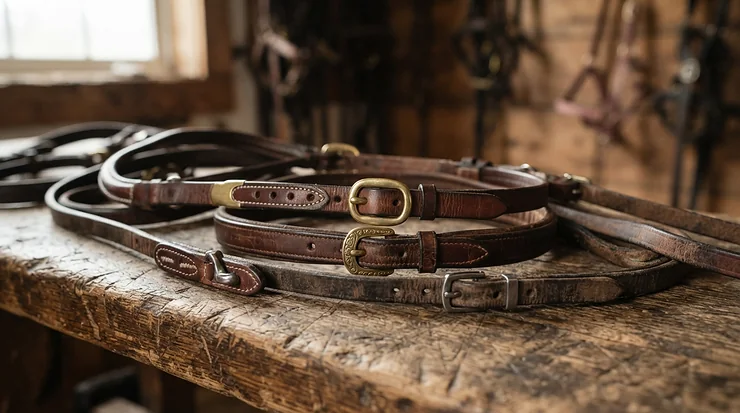
You’re scrolling at 11pm with two near-identical running martingales open in two tabs. One is soft leather that will smell like a saddler’s when it arrives. The other is a synthetic that wipes clean in seconds. Which one deserves your money? That’s the synthetic vs leather martingale question, and it’s trickier than it looks, because the wrong answer rarely bites in week one. It bites in month six, when one strap has gone stiff and furry in the tack room and the other has quietly paid for itself.
Here’s the honest bit up front. A martingale is a control accessory, not a magic wand. Your Horse’s buying guide describes four types: running, standing, bib and Irish. The running type is the one most riders reach for. Whichever material you choose, fit, rein stops and sensible hands matter far more than whether the strap started life as a cow.
This guide compares seven real models, and five of them come in under £40. If you’re hunting for top martingales under £40, a budget martingale for beginner use, an affordable nylon martingale, or a cheap breastplate combo, you’re in the right place. Along the way we’ll cover entry-level competition tack and some practical tack budgeting. Prices are given as ranges only, based on UK listings at the time of research, so check current prices before you buy.
Quick Comparison: Seven Martingales at a Glance
| Product | Material | Type | Price range | Best for |
|---|---|---|---|---|
| Collegiate Syntovia+ Plain Flat Running Martingale | Synthetic leather | Running | Around £25 | Muddy-yard beginners |
| Zilco Irish Martingale | Synthetic (Zilco webbing) | Irish | Around £10-£15 | Rein insurance on a shoestring |
| Shires Avignon Running Martingale | Leather (Avignon range) | Running | Under £30 | A traditional look on a tight budget |
| Shires Velociti Gara Running Martingale | Leather (Gara range) | Running | Mid-£30s | Matching a Gara bridle |
| Shires Velociti RAPIDA Running Martingale | Check listing | Breastplate with detachable running martingale | Around £30 | Two jobs, one purchase |
| Equestro Leather Running Martingale | Tanned leather | Running | Low £40s | Stretching the budget for leather |
| Wintec Synthetic Standing Martingale | Leather-look synthetic | Standing | Mid-£40s | Easy-clean, fixed-setting control |
Looking at the table, the Collegiate Syntovia+ Plain Flat Running Martingale is the cleanest all-round value if you want a running martingale and don’t want to polish anything. The Shires Velociti RAPIDA Running Martingale wins on versatility, because a breastplate and martingale in one piece is hard to beat at this price. The Equestro Leather Running Martingale and Wintec Synthetic Standing Martingale both sit just above £40, so they’re stretch purchases rather than default picks.
💬 Just one click — help others make better buying decisions too!😊
What Is a Synthetic vs Leather Martingale?
A synthetic vs leather martingale is a head-control strap in one of two materials. It stops a horse raising its head so high that the rider loses steering and braking. Synthetic versions use nylon, webbing or leather-look polymer; leather versions use tanned hide. The action is identical, while care, ageing and cost differ.
A running martingale runs from the girth between the front legs, then splits into two forks with rings. The reins pass through those rings. When the horse’s head stays where it should, the forks stay slack. When the head rises, the rings add downward leverage through the reins to the bit.
That leverage is why rein stops matter. These are small rubber or leather stops on the reins that keep the rings from sliding forward and snagging on the bit. Wikipedia’s martingale entry notes that rein stops are compulsory at Pony Club and British Eventing events. A standing martingale is simpler: a single strap from the noseband to the girth. It’s more restrictive because it can’t be loosened in an emergency.
So the material debate sits on top of a safety debate. Choose the right type for your horse and discipline first, then argue about leather versus synthetic.
Top 7 Martingales: Expert Analysis
The seven picks below span synthetic, leather and combination options. Each analysis rests on the specifications in UK retailer listings. I couldn’t verify enough genuine customer reviews for most of these models to summarise them fairly, and I say so rather than inventing sentiment.
1. Collegiate Syntovia+ Plain Flat Running Martingale — best easy-clean value for beginners
The standout is simplicity. It’s a flat, plain running martingale in synthetic leather that never asks for saddle soap.
The listing describes two split straps from the neck strap, rings for the reins and stainless steel fittings. In practice, stainless fittings shrug off damp tack-room corrosion. A flat, plain design gives buckles and keepers little to snag on. The synthetic surface wipes clean after a muddy hack, which matters more than you’d think on a busy yard.
For a budget martingale for beginner use, this is the sensible starting point. It does the job, it won’t punish you for skipping the leather balm, and it’s cheap enough that growing out of it won’t sting. The listing I found showed a pony size in brown, so check sizes and colours carefully before ordering.
Verified customer reviews weren’t available in the sources I could check, so read the live reviews. Look especially for comments on strap stiffness and stitching.
Pros:
- ✅ Wipes clean after muddy rides
- ✅ Stainless steel fittings resist rust
- ✅ Plain flat design suits most tack
Cons:
- ❌ Synthetic can feel stiffer than supple leather
- ❌ Size and colour choice may be limited
Around £25, and a strong value verdict for first-time buyers.

It’s a short strap linking the reins, which keeps them from slipping over the horse’s head if you part company.
Zilco’s signature material is polymer-coated webbing. The brand says it won’t stretch, crack or fade, and that it washes with warm soapy water. For a rarely noticed piece of kit, “doesn’t fuss about weather” is exactly the right spec. The listing I found didn’t spell out its materials, so treat the Zilco webbing link as brand context and confirm it on the product page.
On paper, this suits riders who want a little rein insurance on cross-country schooling or a young horse’s first outings. It will not replace a running martingale for a head-tosser. Check that your discipline and organisation permit it before you ride in competition.
Verified customer reviews weren’t found for this specific listing, so check recent feedback on stitching and strap length.
Pros:
- ✅ Very low cost
- ✅ Wipe-clean synthetic webbing
- ✅ Light and unobtrusive under the neck
Cons:
- ❌ Doesn’t control head height at all
- ❌ Limited colours and a plain look
Around £10-£15 in the listings I saw. It’s a cheap extra, not a headline purchase.
3. Shires Avignon Running Martingale — classic leather look for under £30
The standout is tradition at a modest price. Shires pitches it as a plain, traditional running martingale to match its Avignon range.
It’s adjustable at the shoulders and the girth, with stainless steel fittings. Two adjustment points matter more than they sound, because they let you re-fit as a pony grows or when a new horse arrives. Plain styling is also what judges and instructors expect to see in an entry-level ring.
Based on the spec comparison, this is a good first leather piece for riders who like the feel of traditional tack. The catch is upkeep. LeMieux’s care advice for its leatherwork applies equally here: leaving leather dirty, damp or dried too quickly can cause stiffening and cracks. If you won’t oil and wipe it, a synthetic will serve you better.
I couldn’t verify a reliable pool of customer reviews for this model, so check live reviews for comments on leather quality and stitching.
Pros:
- ✅ Classic plain look suits every ring
- ✅ Adjustable at shoulders and girth
- ✅ Stainless steel hardware
Cons:
- ❌ Leather needs regular cleaning and conditioning
- ❌ Won’t shrug off mud like a synthetic
Under £30, so good value if you’ll look after it.
4. Shires Velociti Gara Running Martingale — made to match Gara bridles
The standout is the matching set. It’s designed to pair with Velociti Gara bridles, so your tack looks like it belongs together.
The listing describes a plain running martingale, adjustable at the shoulders and girth, with stainless steel fittings. A restrained design means it won’t clash with other plain tack, even if you don’t own the bridle. Where it earns its slightly higher price is in matching colour and stitching, which counts for something on show days.
Analytically, you’re paying a few pounds over the Shires Avignon for coordination. If appearance isn’t a priority, that money is better spent on rein stops or a decent breastplate. If you already own Gara leatherwork, though, the match is hard to fake.
I couldn’t find verified review data for this specific model, so check live feedback for stitching and colour accuracy.
Pros:
- ✅ Matches Velociti Gara bridles
- ✅ Adjustable at shoulders and girth
- ✅ Stainless steel fittings
Cons:
- ❌ Costs more than similarly plain rivals
- ❌ Leather still needs regular upkeep
Around the mid-£30s, which is fair value if you’re matching tack and optional otherwise.
5. Shires Velociti RAPIDA Running Martingale — breastplate and martingale in one
The standout is two pieces of kit in one. It’s a breastplate with a detachable running martingale.
It clips to the saddle D-rings, the girth slides through an adjustable belly strap, and it adjusts at both shoulders. There’s padding at the withers and chest. That padding spreads pressure where a plain strap would dig in. Being detachable means you can use it as a breastplate for hacking and hunting-style rides, then add the martingale when schooling.
For a cheap breastplate combo, this is hard to beat. Buying a separate breastplate and martingale would almost certainly cost more, so compare totals before you assume otherwise. It does demand more adjusting and checking than a single strap. The listing I read didn’t state the material, so confirm that before ordering.
I couldn’t verify customer reviews for this model, so check live reviews for comments on padding comfort and fit.
Pros:
- ✅ Two jobs from one purchase
- ✅ Padded wither and chest areas
- ✅ Quick clips at the saddle D-rings
Cons:
- ❌ More straps to adjust and check
- ❌ Material not stated in the listing I read
Around £30, so excellent value if you’d otherwise buy two items.

6. Equestro Leather Running Martingale — tanned leather, stretch budget
The standout is proper tanned leather just above the £40 line. It’s fully adjustable at every strap and buckle.
The listing describes tanned leather with stainless steel fittings, rings on the fork straps for the reins, and a keeper clip for the adjustment strap end. The keeper clip prevents the flapping end that catches on gloves and branches. It comes in pony, cob and full sizes. The supplier also notes that rein stops are needed, since the rings can otherwise slide forward and catch on the bit.
Spec-wise, this is for riders who want leather and plan to keep it. It’s not a bargain-bin pick. It’s a “buy once, look after it” pick. At the time of research it appeared as a special-order item with an estimated delivery window, so don’t count on it for a last-minute show.
Verified reviews weren’t available for this listing, so check recent feedback on finish and delivery times.
Pros:
- ✅ Tanned leather with stainless steel fittings
- ✅ Adjustable at every strap and buckle
- ✅ Keeper clip tidies the strap end
Cons:
- ❌ Just over the £40 ceiling
- ❌ Special-order delivery may be slower
Low £40s, so decent value for long-term leather ownership.
7. Wintec Synthetic Standing Martingale — leather-look synthetic that won’t stretch
The standout is stretch-free consistency. The listing describes a leather-look material that doesn’t stretch and cleans easily.
“Won’t stretch” matters because a stretched strap quietly changes your setting. A standing martingale is also fixed in place, so it’s more restrictive than a running martingale. It can’t be loosened in an emergency, as Wikipedia notes. That makes correct fitting, ideally with an instructor’s eye, non-negotiable.
Rules matter too. Some rulebooks restrict standing martingales in certain jumping and cross-country classes, so check your organisation’s current rules before you buy. This one suits riders whose horses toss their heads and who ride under supervision.
I couldn’t verify a reliable review pool for this model, so check live reviews for comments on strap rigidity and stitching.
Pros:
- ✅ Material that doesn’t stretch
- ✅ Easy to clean
- ✅ Simple fixed setup
Cons:
- ❌ Sits above the £40 mark
- ❌ Less forgiving than a running martingale
Mid-£40s, so fair value only if a standing martingale is genuinely what you need.
✨ Don’t Miss These Budget-Friendly Picks!
🔍 Take your tack budgeting to the next level with these carefully selected martingales. Click on any highlighted item to check current pricing and availability. These picks will help you build a safe, tidy set-up for your next lesson, clinic or first show!
Practical Guide: Fitting and Caring for Your First Martingale
A well-chosen martingale fitted badly is worse than none. Here’s a first-30-days routine that applies whichever side of the synthetic vs leather martingale debate you land on.
- Set the neck strap. Equus magazine’s guide advises that you should be able to slide a hand between the top of the neck and the strap.
- Check the fork length. On a running martingale, the ring straps should extend to the withers when pulled up.
- Leave a little slack. With the head in a neutral position, the forks should sit with a small amount of give. Ask an instructor to confirm.
- Fit rein stops. Place them on the reins between the bit and the rings, roughly two inches from the bit.
- Check for twists. Straps shouldn’t cross or twist, and each rein must pass through its own ring.
Common first-month mistakes include fitting too short (so the horse can’t raise its head at all) and forgetting rein stops. Also avoid skipping the pre-ride strap check.
For care, synthetic straps usually need only a wipe-down or a wash in warm soapy water. Leather wants cleaning, plus a premium balm or oil, and should never be dried too fast. If you won’t do that weekly, synthetic is your friend.

Real-World Scenarios: Matching a Martingale to Your Riding Life
These are illustrative scenarios, not case studies of real riders.
Scenario 1: The teenager on a loan pony. Budget around £25-£30, muddy yard, four or five rides a week. Based on the specs, the Collegiate Syntovia+ is the obvious fit. It cleans in seconds, and pairing it with rein stops covers the safety basics.
Scenario 2: The adult returner hacking at weekends. Budget up to about £35, a tidy yard, two or three rides a week. Leather appeals to this rider. The Shires Avignon or Shires Velociti Gara gives a classic look, as long as they’re prepared to oil and wipe.
Scenario 3: The weekend jumper who wants flexibility. Budget around £30, mixed terrain, cross-country schooling plus hacking. The Shires Velociti RAPIDA covers both a breastplate and a martingale in one purchase.
Scenario 4: The head-tosser on a lesson programme. Budget just over £40, supervised riding. With an instructor’s agreement, the Wintec Synthetic Standing offers fixed, non-stretching control, provided the rules for your discipline allow it.
How to Choose a Synthetic vs Leather Martingale: 6 Steps
- Confirm the type you need. Running, standing, bib or Irish solve different problems, so ask your instructor before buying anything.
- Check your rulebook. Rules vary by organisation and discipline, so verify what’s permitted where you ride.
- Be honest about upkeep. If you won’t clean and condition leather, a synthetic will last better in practice.
- Match size to the horse. Pony, cob and full sizes exist for a reason, so measure rather than guess.
- Check fittings. Stainless steel resists rust, and good adjustment points make re-fitting easy.
- Set a ceiling. Decide your spend first, then compare the options within it.
Synthetic vs Leather Martingale: Head-to-Head Comparison
| Criterion | Synthetic | Leather |
|---|---|---|
| Upkeep | Wipe or wash with warm soapy water | Clean, then balm or oil regularly |
| Feel and ageing | Consistent, can feel stiffer | Softens and moulds with use |
| Weather resistance | Shrugs off mud and wet | Needs careful drying |
| Look in the ring | Neat, leather-look finishes available | Traditional, expected |
| Best for | Collegiate Syntovia+, Wintec Synthetic Standing | Shires Avignon, Equestro Leather |
Looking at the comparison, the real difference isn’t safety or strength. It’s how much time you’ll spend on maintenance. A synthetic like the Collegiate Syntovia+ suits a busy yard, while the Equestro Leather suits someone who enjoys the ritual of leather care.
In the synthetic vs leather martingale debate, appearance is where leather still wins. Leather ages with character, and some riders simply prefer it. But synthetic leather-look finishes have narrowed the gap considerably, and the Wintec Synthetic Standing is a good example. Neither material is inherently safer. Fit, rein stops and correct use are what protect you and your horse.
Top Martingales Under £40 and the Affordable Nylon Martingale Question
If you’re chasing top martingales under £40, five of this guide’s seven picks qualify. They are the Zilco Irish Martingale, Collegiate Syntovia+, Shires Avignon, Shires Velociti RAPIDA and Shires Velociti Gara. That’s a genuine spread of synthetic, leather and combination options, so you’re not forced into a single material.
What about an affordable nylon martingale? In the UK listings I checked, plain nylon-webbing martingales were thinner on the ground than leather or leather-look ones. Polymer-coated webbing, like Zilco’s, is the closest verified UK option. A US-made example, the Weaver Leather Nylon Running Martingale, uses doubled and stitched three-quarter-inch nylon with nickel-plated hardware, but check UK availability before getting excited.
The trade-off with nylon-style materials is a plainer look, while the gain is easy care and fast drying. For schooling and hacking, that trade is usually worth making.

Cheap Breastplate Combo: Is a Two-in-One Worth It?
A cheap breastplate combo makes sense if you’ll genuinely use both parts. The Shires Velociti RAPIDA is the clearest example, giving you a padded breastplate plus a detachable running martingale for around £30.
The logic is simple. A separate breastplate and a separate martingale means two purchases, two sets of straps and two things to fit. A combination reduces that to one. The detachable martingale means you can ride in breastplate mode for hacking and add the martingale when schooling.
For comparison, the LeMieux Breastplate with Detachable Martingale uses soft European leather, with martingale rings that clip on and off the reins. I’m using it only as a step-up reference, since it sits outside this guide’s budget focus, so check its current price.
The catch is complexity. More straps means more fitting, so ask an instructor to check your setup the first time.
Entry-Level Competition Tack: What You Actually Need
For entry-level competition tack, tidy and compliant beats expensive. Start with your organisation’s current rulebook, because martingale rules differ between disciplines and change over time. Wikipedia notes that rein stops are compulsory at Pony Club and British Eventing events, and that sanctioning organisations require rein stops with a running martingale if the reins are buckled to the bit.
For jumping and cross-country schooling, a plain running martingale with rein stops is the sensible default. Dressage rules typically restrict training aids, so check before you buy. A plain finish looks smart, and the Shires Avignon and Collegiate Syntovia+ both fit that brief.
Keep a spare set of rein stops in your tack box. They’re cheap, and forgetting them can cost you a class.
Tack Budgeting: Spending Smart on a Martingale
Good tack budgeting starts with priorities. A martingale is a mid-priority purchase. Saddle fit, a suitable bridle and bit, and a correctly fitted hat come first. Spend what’s left on the martingale, not the other way round.
| Price tier | What you get | Example products | Best for |
|---|---|---|---|
| Around £10-£15 | Rein insurance | Zilco Irish Martingale | Add-on safety |
| £25-£35 | Running martingales and a combo | Collegiate Syntovia+ Plain Flat Running Martingale, Shires Avignon Running Martingale, Shires Velociti Gara Running Martingale, Shires Velociti RAPIDA Running Martingale | Most beginners |
| £40-£50 | Leather or fixed-setting options | Equestro Leather Running Martingale, Wintec Synthetic Standing Martingale | Long-term buyers |
Looking at the tiers, the £25-£35 bracket delivers the best balance of quality and cost for most riders. Spending more rarely improves function, only finish. As an illustration, a martingale around £25 used about 100 times a year for three years works out at under 10p a ride, so cost-per-use favours buying once and caring for it.
Common Mistakes When Buying a Martingale on a Budget
- Skipping rein stops. They’re cheap, and they stop the rings catching on the bit.
- Buying the wrong type. A standing martingale isn’t a drop-in swap for a running one.
- Guessing the size. Pony, cob and full sizes don’t interchange.
- Fitting too tight. A martingale shouldn’t stop the horse raising its head altogether.
- Buying on colour alone. Matching looks nice, but function comes first.
- Assuming leather is safer. In a synthetic vs leather martingale decision, neither is automatically safer.

FAQ
❓ Is a nylon martingale good enough for beginner lessons?
❓ Can I buy a decent martingale for under £40?
❓ Do I need rein stops with a cheap running martingale?
❓ Is a breastplate with a removable martingale cheaper than buying both?
❓ How long does a leather martingale last compared with synthetic?
Conclusion
So, synthetic vs leather martingale: which wins? Neither, outright. Synthetic wins on convenience and weather-proofing, with the Collegiate Syntovia+ Plain Flat Running Martingale and Wintec Synthetic Standing Martingale leading that camp. Leather wins on tradition and ageing, with the Shires Avignon Running Martingale, Shires Velociti Gara Running Martingale and Equestro Leather Running Martingale all worth a look.
If you want one piece of kit doing two jobs, the Shires Velociti RAPIDA Running Martingale is the pragmatic choice. If you simply want rein insurance on the cheap, the Zilco Irish Martingale does that for very little.
Whatever you choose, fit it carefully, add rein stops and check your rulebook. Treat your budget as a plan, not an afterthought, and your tack will serve you well.
Recommended for You
- Breastplate For Eventing: 7 Best Picks For UK Riders (2026)
- Standing Martingale For Horse: 7 Best UK Picks (2026)
- Running Martingale For Showjumping: 7 Best Proven Picks (2026)
Disclaimer: This article contains affiliate links. As an Amazon Associate, I earn from qualifying purchases. If you purchase products through these links, we may earn a small commission at no additional cost to you.
✨ Found this helpful? Share it with your friends! 💬🤗
