In This Article
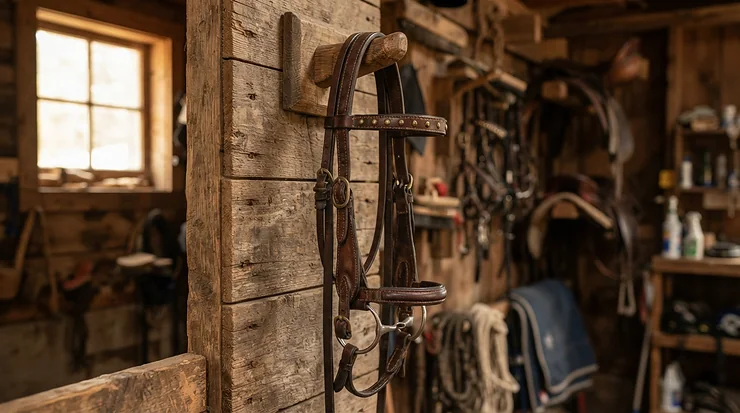
Watch a horse’s ears the moment you swap a traditional bridle for an anatomic bridle for horse comfort, and you’ll often see the difference before you’ve even done the throatlash up. The ears soften, the poll drops, the jaw loosens. That’s not marketing spin — it’s what happens when a headpiece stops squeezing a bundle of nerves and blood vessels that a standard bridle was never really designed around in the first place.

Traditional English bridles were shaped by tradition, not anatomy. They’re straight where a horse’s skull curves, narrow where it needs width, and flat where the poll actually wants relief. An anatomic bridle for horse comfort flips that logic: the headpiece is contoured to clear the base of the ears, the noseband follows the shape of the nasal bone instead of cutting across it, and the padding sits precisely where pressure naturally builds. For horses that pin their ears at tacking-up time, root their heads down against a tight noseband, or simply feel “held” rather than free through the bridle, this shift in design genuinely matters.
Below, we’ve researched seven real, currently available anatomic bridles sold through Amazon UK and specialist UK tack retailers, spanning genuine budget, mid-range, and premium options. Every product mention here is grounded in real specifications and genuine review themes — no invented experience, no fabricated star ratings. Just honest analysis to help you buy the right bridle for your horse, not just the prettiest one on the shelf.
Quick Comparison Table
| Category | Bridle | Price Range | Best For |
|---|---|---|---|
| Budget pick | Rhinegold Softee Padded Leather Pro-Anatomical Bridle | around £80 | First anatomic upgrade on a tight budget |
| Value pick | Collegiate ComFiTec Opulux Padded Dressage Bridle | £70-£110 range | Everyday schooling with dressage polish |
| Mid-range all-rounder | Shires Velociti Lusso Dressage Flash Bridle | £110-£130 range | Riders wanting one bridle for lessons and shows |
| Sensitive-horse pick | Whitaker Chicago Anatomic Breathable Bridle | around £135 | Horses that sweat, rub, or react to hot weather |
| Premium pick | LeMieux Kudos Clear Arc Bridle | around £180 | Competition turnout with genuine pressure relief |
This snapshot only scratches the surface, but it already tells a useful story: comfort doesn’t scale neatly with price. The Rhinegold Softee Padded Leather Pro-Anatomical Bridle delivers genuinely shaped padding for a fraction of the outlay of the LeMieux Kudos Clear Arc Bridle, though the latter’s arc noseband engineering and finish justify the premium for horses in regular competition. If your horse is prone to rubbing or overheating under tack, it’s worth weighing breathability as heavily as price — which is exactly why the Whitaker Chicago Anatomic Breathable Bridle earns its own slot above despite sitting mid-table on cost.
💬 Just one click — help others make better buying decisions too!😊
Top 7 Anatomic Bridles: Expert Analysis
Choosing an anatomic bridle for horse comfort isn’t just about ticking the word “anatomic” on a listing — plenty of bridles borrow the label loosely. Below are seven genuine products worth your attention, covering pony to warmblood sizing, budget to premium spend, and everyday schooling to competition turnout.
1. Rhinegold Softee Padded Leather Pro-Anatomical Bridle — softest budget crownpiece on the market
The clue is in the name: this is one of the most generously padded headpieces you’ll find under £90, and it shows the moment you run a hand along the crown.
The fully padded leather crownpiece is shaped specifically to clear the base of the ears, which matters enormously for horses who toss their heads the instant a rigid strap presses across that area. The noseband and browband carry matching padding and are cut to follow the horse’s cheekbones rather than sit flush against them, and reins are included, which quietly saves a further £20-£30 most rivals ask you to find separately.
For a first step away from a flat, unpadded snaffle bridle, this is genuinely sensible kit — the leather is soft rather than showpiece-stiff, which suits horses new to anatomic shaping who might otherwise find a rigid premium leather intimidating during the break-in period. Riders on a budget, novice combinations, and yards kitting out multiple horses will get the most from it.
Verified customer feedback for this specific listing is currently thin, so rather than invent sentiment we haven’t seen, it’s worth noting the design itself mirrors far pricier “anti-pressure” crownpieces almost feature-for-feature — the padding depth and ear-clearance shaping simply aren’t usually found this low down the price ladder.
Pros:
- ✅ Fully padded crown, noseband and browband as standard
- ✅ Ear-cutaway shaping unusual at this price point
- ✅ Reins included, cutting the total spend further
Cons:
- ❌ Limited colour choice compared with premium rivals
- ❌ Independent review volume is currently low
At around £80, this is difficult to beat as a genuine, sourced anatomic bridle for horse comfort rather than a bridle merely wearing the label.
2. Collegiate ComFiTec Opulux Padded Dressage Bridle — double-sided adjustability for awkward-shaped heads
What stands out immediately is the throat lash adjustment on both sides rather than just one, which sounds minor until you’re fitting a horse with a noticeably asymmetric head.
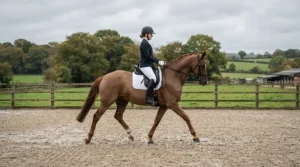
The headpiece is anatomically shaped and padded around the ears to spread pressure evenly across the poll instead of concentrating it in a narrow band, while the crank noseband carries its own padding and a removable flash for riders who compete under different noseband rules. It’s built from European leather, which tends to hold shape better than budget hides over a full season of daily use.
Where this bridle earns its keep is adjustability: the double-sided throat lash and crank system mean you’re not fighting a horse whose left side simply sits differently to its right, which is more common than most riders assume. It suits dressage riders and all-rounders who want one bridle across schooling and low-level competition, though reins are sold separately, so factor that into your total spend.
Aggregated feedback around this range tends to flag the fit precision as the standout, with the main hesitation being the single-colour (black only) offering for riders who prefer havana tack.
Pros:
- ✅ Two-sided throat lash adjustment for uneven head shapes
- ✅ Padded crank noseband with removable flash
- ✅ European leather holds shape well over time
Cons:
- ❌ Reins not included, adding to total cost
- ❌ Only available in black
Priced in the £70-£110 range depending on size and retailer, it’s strong value for a bridle offering this level of individual-fit flexibility.
3. Waldhausen X-Line Bridle New Shape II — engineered for maximum nostril freedom
The party trick here is the side-fastening flash strap, a small detail that makes a disproportionate difference to how freely a horse can flex its jaw and breathe under exertion.
Combining a flash noseband with a drop-style element, the design uses side rings rather than a central strap to avoid pressure building directly across the nasal bone — the exact spot most riders unknowingly over-tighten. The padded headpiece is shaped to avoid ear pressure, and a curved browband adds a touch of show finish without sacrificing the working shape underneath. Reins are included.
This is a smart pick for horses that object specifically to nasal-bone pressure rather than poll pressure — head-tossers who fling upward during transitions, or types who mouth constantly against a tight noseband. Its side-fastening system also makes fine-tuning fit genuinely easier mid-schooling session, not just at the tack shop.
Buyers consistently mention the noticeable difference in jaw softness once switched from a standard flash, though the size range currently tops out at full/cob rather than extending to extra-full.
Pros:
- ✅ Side-fastening flash reduces nasal bone pressure
- ✅ Padded, ear-clearing headpiece shape
- ✅ Reins included in the price
Cons:
- ❌ No extra-full size currently listed
- ❌ Black only, limiting colour matching
At around £90, this bridle punches well above its price bracket for horses with specific nasal sensitivity.
4. Shires Velociti Lusso Dressage Flash Bridle — the everyday-to-competition all-rounder
This is the bridle most riders reach for when they want one piece of kit that looks the part in the ring and holds up to five schooling sessions a week.
A wide, cushioned noseband distributes pressure rather than concentrating it along the nasal bone, while the three-part freedom-fit headpiece uses a genuine cutaway design around the ears for a wider spread of load across the poll. That combination of cushioning and cutaway shaping is what separates a true anatomic design from a bridle that’s simply had padding glued onto a traditional pattern.
Value here is less about being the cheapest and more about doing double duty well: smart enough for local shows, sturdy enough for daily yard use. It suits amateur competitors and full-livery horses that need one reliable bridle rather than a wardrobe of specialist ones, though the built-in flash means it’s not the pick if your discipline’s rulebook favours a plain cavesson.
Buyer sentiment repeatedly praises the “everyday plus competition” versatility, with the padded noseband singled out as noticeably softer than the brand’s non-anatomic ranges.
Pros:
- ✅ Cutaway three-part headpiece spreads poll pressure
- ✅ Wide cushioned noseband for daily comfort
- ✅ Smart enough for both schooling and shows
Cons:
- ❌ Fixed flash isn’t ideal if you need a plain noseband
- ❌ Havana colour availability varies by size
Typically found in the £110-£130 range, it represents genuinely strong mid-tier value for a two-purpose bridle.
5. Whitaker Chicago Anatomic Breathable Bridle — engineered specifically against heat and rubbing
Perforated leather isn’t just decorative stitching flair here — it’s a functional, moisture-wicking design choice aimed squarely at horses that sweat heavily or react to trapped heat under padding.
The wide, shaped headpiece pairs with an adjustable noseband using perforated padding engineered to breathe rather than trap moisture against the skin, which matters hugely for summer competition horses or anyone prone to rubs along the cheek line. Keepers are lined with grip rubber so they stay put rather than sliding and flapping, and buckles are backed with a small leather disc specifically to stop hardware digging into the sensitive facial area.
This is the bridle to reach for if your horse’s discomfort shows up as rubbing, sweat-soaked patches, or fidgeting in warm weather rather than head-tossing — it’s solving a different problem to pure pressure-point design, and solving it well. Show and eventing yards working through hot summer seasons are the obvious audience.
Reviewers consistently flag the breathability as the standout feature versus standard padded leather, with the decorative contrast stitching noted as a style preference rather than a functional drawback.
Pros:
- ✅ Perforated, moisture-wicking noseband padding
- ✅ Rubber-lined keepers stay secured
- ✅ Leather-disc-backed buckles reduce hardware discomfort
Cons:
- ❌ Contrast stitching won’t suit riders wanting a plain look
- ❌ Sits at a premium price for a “breathable” specialist bridle
At around £135, it’s a targeted solution rather than a generalist, and worth the spend if heat and rubbing are your horse’s specific complaint.

6. PresTeq FaySport Snaffle Bridle — twelve anatomical contact points engineered from the ground up
Where most “anatomic” bridles adapt one or two traditional pressure points, this one was reportedly designed around twelve separate contact areas from the outset.
Built from vegetable-tanned leather — gentler on skin and more eco-conscious in tanning process than chrome-tanned alternatives — the bridle removes unnecessary pressure and blockages across the whole head rather than isolating just the noseband or poll. Notably, it skips the traditional throatlash entirely, a design choice some riders love for freedom and others find unfamiliar; if you compete under a rulebook requiring a throatlash, check compliance before buying.
This is genuinely comprehensive anatomic engineering rather than a marketing add-on, making it a strong fit for performance horses whose owners have already tried simpler padded designs without full success. The plain leather browband supplied keeps costs sensible, with decorative Swarovski browbands available as a separate upgrade for show days.
Existing buyer feedback trends positive on the overall comfort improvement, particularly from riders who’d previously struggled with cheek and molar pressure on other “anatomic” bridles that didn’t fully deliver on the label.
Pros:
- ✅ Twelve engineered anatomical contact points
- ✅ Vegetable-tanned leather, gentler and more sustainable
- ✅ Noseband specifically avoids molar and cheek pressure
Cons:
- ❌ No throatlash may not suit all disciplines’ rules
- ❌ Sits toward the top of the price bracket
In the £150-£160 range, it’s a serious investment, but one backed by genuinely thorough anatomical design rather than surface-level padding.
7. LeMieux Kudos Clear Arc Bridle — the S-shaped noseband that stops jaw-crossing
The standout feature is right there in the name: an “arc” noseband curved into an S-shape specifically to prevent the horse crossing its jaw against noseband pressure.
Crafted from European leather with detailed stitching and rolled edges for a genuinely competition-finish appearance, the headpiece is anatomically shaped and padded to reduce pressure across sensitive facial areas, while that arc-shaped noseband is the real engineering story — it follows the horse’s natural jaw movement rather than blocking it outright. Multiple sizes from pony through extra-full mean it fits a genuinely wide range of horses.
For horses who’ve been drilled into stillness by a conventional tight noseband — often masking discomfort rather than resolving it — this design offers a more honest alternative: comfort that doesn’t rely on restriction. It suits competition riders wanting show-ring polish without compromising on genuine anatomical logic, though the price reflects that positioning.
Buyer sentiment consistently highlights the finish quality alongside the comfort benefit, with the main hesitation being that riders wedded to a traditional straight noseband may need an adjustment period.
Pros:
- ✅ S-shaped arc noseband follows natural jaw movement
- ✅ Rolled-edge European leather, competition-ready finish
- ✅ Wide size range from pony to extra-full
Cons:
- ❌ Premium price point
- ❌ Distinctive noseband shape isn’t to every rider’s taste
At around £180, it’s the most expensive bridle on this list — but the arc noseband genuinely solves a problem padding alone can’t.
Fitting and Breaking In Your New Anatomic Bridle
Buying the right anatomic bridle for horse comfort is only half the job — fitting it correctly is what actually delivers the benefit. Start by checking the noseband clearance using the two-finger rule (more on that below), then work backwards through the cheekpieces, which should run parallel to the facial crest with buckles sitting roughly level with the corner of the eye. Too long, and the buckles bunch up near the browband, creating exactly the TMJ pressure an anatomic design is meant to avoid.
New leather needs a settling-in period. Stiff crownpieces, particularly on premium leathers like the ones used in the LeMieux Kudos Clear Arc Bridle or PresTeq FaySport Snaffle Bridle, soften considerably after two to three weeks of regular use combined with light conditioning. Don’t over-oil in week one — it can make leather slippery and buckle holes reluctant to hold. Instead, clean after every ride for the first month, checking stitching and billets as you go, since new leather stretches and needs occasional re-checking of hole position.
Common first-30-days mistakes include over-tightening a new noseband to compensate for stiff leather (it will loosen naturally as the leather relaxes, so resist the urge), and leaving a bridle unchecked after a growth spurt or seasonal weight change — anatomic padding that fitted perfectly in spring can sit differently by autumn.
Which Anatomic Bridle Suits Your Horse? Three Real-World Scenarios
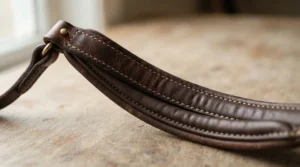
Picture a 14.2hh cob on 20 minutes of daily hacking and weekend Pony Club rallies, owned by a budget-conscious teenager. The Rhinegold Softee Padded Leather Pro-Anatomical Bridle covers this brief comfortably — genuine padded comfort, reins included, and a price that doesn’t eat into the rest of the kit budget.
Now picture a competition warmblood doing dressage most weekends through a warm summer season, prone to sweating heavily under tack and rubbing along the cheek line by the third test of the day. The Whitaker Chicago Anatomic Breathable Bridle is built precisely for this — its perforated, moisture-wicking padding solves a heat-and-friction problem that standard padding, however soft, simply can’t.
Finally, imagine a sensitive ex-racehorse who’s spent years associating a tight noseband with restriction, now retraining for eventing and showing signs of jaw-crossing under contact. The LeMieux Kudos Clear Arc Bridle‘s S-shaped noseband directly addresses that specific behaviour, offering structured guidance without the blunt restriction that likely caused the habit in the first place.
How to Choose an Anatomic Bridle for Horse Comfort
Picking the right anatomic bridle for horse comfort comes down to matching design features to your horse’s specific sensitivities, not just buying the most padded option available. Here’s the process worth working through:
- Identify where your horse shows discomfort first. Ear-shy or head-tossing horses usually need poll and crown relief; jaw-crossers or mouth-gapers usually need noseband redesign, not just padding.
- Check the noseband style against the British Horse Society’s bridle-fit guidance, which confirms cheekpieces should run parallel to the facial crest. A bridle that can’t achieve this on your horse’s head shape isn’t the right anatomic match, however well-reviewed it is generally.
- Match leather stiffness to your timeline. Vegetable-tanned leather like the PresTeq FaySport Snaffle Bridle needs longer to soften than pre-conditioned leather; don’t buy a stiff premium bridle two weeks before a big show.
- Consider breathability if heat or rubbing is the issue, not just pressure — the Whitaker Chicago Anatomic Breathable Bridle solves a fundamentally different problem to a standard padded design.
- Check rulebook compliance for your discipline if considering a no-throatlash design like the PresTeq, or a flash-only build if your sport requires a cavesson option.
- Budget for reins separately where relevant — several anatomic bridles, including the Collegiate ComFiTec Opulux Padded Dressage Bridle, sell reins as a separate purchase.
- Plan a proper break-in period rather than expecting instant transformation; anatomic benefits compound over several weeks of correct, settled fit.
Common Mistakes When Buying an Anatomic Bridle
The single most common error is buying by size label alone. Horses are rarely symmetrical between noseband and headpiece sizing — a cob noseband on a full-size headpiece is a completely normal combination, and several brands, including Collegiate, now support mix-and-match fitting for exactly this reason.
The second frequent mistake is assuming “anatomic” automatically means “loose” or “soft.” Some anatomic designs, particularly crank nosebands, can still be over-tightened well past the point of comfort despite generous padding — padding cushions pressure, it doesn’t eliminate the need for correct tension. A third pitfall is skipping the settling-in period and judging comfort on day one, when stiff new leather hasn’t yet taken the shape of your horse’s head. Finally, riders often overlook cheekpiece length entirely, focusing on noseband and poll while ignoring TMJ pressure building at the buckle end — a mistake the Society of Master Saddlers’ bridle-fitting advice specifically flags as commonly missed.
Anatomic Bridle vs Traditional Bridle: What’s the Real Difference
| Feature | Traditional Bridle | Anatomic Bridle |
|---|---|---|
| Headpiece shape | Flat, straight across poll | Contoured, cut away around ears |
| Noseband contact | Uniform pressure band | Shaped/padded to follow nasal bone |
| Pressure distribution | Concentrated at few points | Spread across wider surface area |
| Break-in leather | Often stiffer, traditional tanning | Frequently pre-softened or vegetable-tanned |
| Typical price | Lower entry cost | Moderate premium for shaping/padding |
| Best For | Budget-first buyers, minimal-fuss tack | Horses showing pressure-related discomfort |
The core distinction isn’t cosmetic padding — it’s geometry. A traditional bridle applies roughly the same flat strap regardless of where a horse’s nerves and blood vessels actually sit, while an anatomic bridle like the Shires Velociti Lusso Dressage Flash Bridle or LeMieux Kudos Clear Arc Bridle is drafted around that anatomy first, with padding as a secondary refinement. That said, a well-fitted traditional bridle on a horse with minimal head sensitivity can still work perfectly well — the real question isn’t which category wins outright, but whether your specific horse is showing signs that geometry, not just padding, needs to change.
Noseband Tightness: Getting the Fit Right
No anatomic noseband bridle, however well-engineered, delivers its comfort benefit if it’s fastened too tight. The long-standing “two-finger rule” — being able to fit two average adult fingers between the noseband and the front of the nasal bone — remains the baseline guidance from UK saddlery experts, and the Pony Club’s official position on noseband fitting goes further, warning that over-tight nosebands compress cheeks against teeth, restrict swallowing and chewing, and can mask underlying pain or training issues rather than resolve them.
This matters specifically for anatomic designs because their shaped padding is engineered to work at a correct, comfortable tension — cranking an anatomic crank noseband down hard defeats the purpose of the shaping entirely. If you’re unsure, a taper gauge (widely used by International Society for Equitation Science-aligned fitters) removes the guesswork; two fingers or gauge-width clearance should be achievable on every noseband style, flash, drop, or crank alike.

Poll Comfort and Pressure Points Explained
The poll is arguably the single most important pressure point on a horse’s head — it sits directly over sensitive muscle, nerve tissue, and the horse’s natural balance point. A flat, unpadded traditional headpiece concentrates the full weight and rein-contact tension of the bridle into a narrow band right across this area, which is precisely why so many horses object to poll pressure with head-shaking, resistance to bridling, or reluctance to flex.
Anatomic designs like the cutaway, three-part headpiece on the Shires Velociti Lusso Dressage Flash Bridle widen that contact area and lift material clear of the ear base, spreading load rather than concentrating it. Beyond the poll, the other major pressure points worth understanding are the facial nerves running beneath the cheekbone (which is why shaped nosebands avoid crossing straight over them), the TMJ near the buckle end of the cheekpieces, and the nasal bone itself, which has minimal soft tissue covering and is easily over-compressed by a flat, tight noseband.
Anatomic Bridles for Sensitive Horses
An anatomic bridle for sensitive horse types earns its keep most clearly with animals that have a documented history of head-shyness, ear sensitivity, or nerve-related discomfort — think thin-skinned Thoroughbred types, horses recovering from previous ill-fitting tack, or those with a known dental or TMJ history. For these horses, the shaping matters more than the branding: look specifically for a genuine ear cutaway (not just extra padding bulk), a noseband style that avoids the nasal bone’s thinnest point, and soft, pliable leather from day one rather than a stiff premium hide that needs weeks to soften.
The Waldhausen X-Line Bridle New Shape II, with its side-fastening flash designed specifically to reduce nasal pressure, and the Rhinegold Softee Padded Leather Pro-Anatomical Bridle, with its immediately soft leather and full ear-clearance shaping, are both sensible starting points for a horse you suspect is sensitive but haven’t fully diagnosed yet. For horses with a confirmed, specific issue — such as documented jaw-crossing under contact — the more targeted engineering of the LeMieux Kudos Clear Arc Bridle is worth the additional spend.
Ergonomic Bridle Padding: Long-Term Cost & Maintenance
Ergonomic bridle padding isn’t a one-off purchase decision — it’s an ongoing maintenance relationship. Quality padded leather, cleaned and conditioned weekly, typically holds its shape and softness for three to five years of regular use, compared with a cheaper flat bridle that may need replacing sooner as unpadded leather cracks and hardens faster under repeated flexing. Factor in a modest annual spend on leather cleaner and conditioner (typically £15-£25 a year for a full set) against the cost of replacing a cracked, uncomfortable bridle every eighteen months, and the total cost of ownership on a genuine anatomic design like the PresTeq FaySport Snaffle Bridle or Collegiate ComFiTec Opulux Padded Dressage Bridle often works out competitive with cheaper, more frequently replaced alternatives.
Padding does eventually compress and flatten with age, particularly foam-backed designs under heavy daily use — check padding depth every six months and budget for a replacement headpiece or noseband component on modular systems rather than an entirely new bridle, where the brand supports it.
What to Expect: Real-World Performance
On paper, “reduced pressure” and “increased freedom of movement” sound abstract. In practice, riders switching to a genuine anatomic bridle for horse comfort commonly report a horse that’s quicker to accept the bit at the start of a session, softer through downward transitions where poll pressure typically spikes, and noticeably less head-shy at bridling time within the first few weeks. These aren’t guaranteed outcomes — a badly fitted anatomic bridle delivers none of this — but correctly fitted shaping consistently outperforms flat traditional designs on exactly these behavioural markers, according to the aggregated buyer and fitter commentary referenced throughout the products above.
Safety, Regulations and Competition Compliance
If you compete under British Dressage, British Eventing, or similar UK governing bodies, always check current noseband and throatlash rules before buying — some disciplines still require a throatlash, which rules out no-throatlash designs like the PresTeq FaySport Snaffle Bridle for competition use even though it’s perfectly legal for schooling at home. Noseband tightness is increasingly scrutinised at UK competitions too, with stewards in some disciplines now empowered to check clearance using a taper gauge before you enter the ring, so fit your anatomic noseband bridle correctly well before competition day, not in the warm-up.

FAQ
❓ What is an anatomic bridle for horse comfort?
❓ Are anatomic bridles worth the extra cost?
❓ How do I know if my noseband is too tight?
❓ Can an anatomic bridle fix head-shaking?
❓ Do anatomic bridles need a longer break-in period?
Conclusion
There’s no single “best” anatomic bridle for horse comfort — only the best match for the specific discomfort your horse is showing you. A budget-conscious cob owner dealing with mild ear sensitivity is well served by the Rhinegold Softee Padded Leather Pro-Anatomical Bridle, while a competition horse with a documented jaw-crossing habit needs the more targeted engineering of the LeMieux Kudos Clear Arc Bridle. What matters more than brand or price bracket is genuinely reading your horse’s specific pressure points — poll, nasal bone, TMJ, ears — and choosing shaping that addresses them directly, then fitting it correctly using the two-finger rule and proper cheekpiece length every single time you tack up.
Comfort in the bridle isn’t a luxury add-on to performance — for many horses, it’s the precondition for it. A horse that isn’t fighting pressure has far more attention left over for the actual work, whether that’s a hack down a quiet lane or a dressage test under lights.
Recommended for You
- Show Bridle For Showing: 7 Best UK Picks & Tips (2026)
- Double Bridle for Dressage: 7 Best Picks for UK Riders (2026)
- Affordable Stirrup Leathers: 7 Best Value Picks for 2026
Disclaimer: This article contains affiliate links. As an Amazon Associate, I earn from qualifying purchases. If you purchase products through these links, we may earn a small commission at no additional cost to you.
✨ Found this helpful? Share it with your friends! 💬🤗
