

In This Article
Your youngster’s first proper bit is one of those decisions that feels enormous right up until you’re standing in the tack shop holding two nearly identical bits, googling frantically on your phone. A snaffle bit for young horse work is, in plain terms, a direct-pressure mouthpiece with no leverage action — no shanks, no curb chain, nothing that multiplies the pull on your reins into something sharper. What it does have is a huge range of thicknesses, materials and joint styles, and picking wrong can set a green mouth back months.
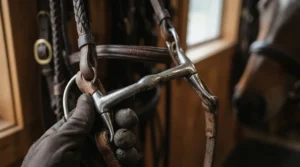
That’s the practical problem this guide solves. Rather than reciting spec sheets, we’ve dug into real mouthpiece research, aggregated genuine owner and reviewer feedback, and cross-referenced current UK stock to shortlist seven bits that actually suit a horse in the first year or two of ridden work. You’ll get budget rubber options for the very first sessions, mid-range stainless steel for early schooling, and premium copper-alloy bits for horses who need extra encouragement to accept contact. According to a snaffle consists of a mouthpiece and two rings, with no leveraging shank, and it gives direct pressure on the horse’s mouth — which is exactly why it remains the default choice for starting young horses. We’ll also cover sizing, materials, thickness and fitting, because the “right” bit only works if it actually fits.
Quick Comparison Table: 7 Best Snaffle Bits for a Young Horse
| # | Bit | Joint Type | Mouthpiece | Best For |
|---|---|---|---|---|
| 1 | Shires Equikind Flexi Soft Mullen Mouth | None (mullen) | Flexible rubber | Very first bitted sessions |
| 2 | Korsteel Rubber-Covered Jointed Loose Ring | Single jointed | Rubber over metal core | Gentle step-up from a mullen |
| 3 | Korsteel Full Cheek Single Jointed Snaffle | Single jointed | Stainless steel | Lungeing and early steering aids |
| 4 | Waldhausen DUO Sensitive Loose Ring | Single jointed | Thin stainless steel | Narrow, shallow mouths |
| 5 | Herm Sprenger Novocontact Aurigan Loose Ring | Single jointed | Aurigan copper alloy | Dry-mouthed or reluctant chewers |
| 6 | Herm Sprenger Dynamic RS Sensogan Loose Ring | Single jointed, 45° angled | Sensogan copper alloy | Long-term schooling investment |
| 7 | Neue Schule Team Up Loose Ring | Lozenge (double jointed) | Lightweight alloy | Premium all-rounder as training advances |
Reading across that table, the pattern that jumps out is a natural progression rather than a single “best” answer: most trainers move a young horse from a mullen or rubber mouthpiece towards a thin, well-designed single joint as the horse relaxes into contact. The Herm Sprenger Novocontact Aurigan and Dynamic RS Sensogan occupy the sweet spot most professional producers reach for once the initial acceptance phase is behind them, while the Neue Schule Team Up is worth the extra outlay only once you’re confident the horse is settled and you want to fine-tune feel rather than solve a behavioural issue.
Found a bit you like the look of? Give this comparison a share so other owners starting young horses can find it too!
Top 7 Snaffle Bits for a Young Horse: Expert Analysis
Choosing a snaffle bit for young horse work isn’t about finding the “kindest” bit in isolation — it’s about matching mouthpiece, joint and thickness to the individual horse’s conformation and stage of training. Below, each pick includes genuine spec interpretation and aggregated review sentiment rather than invented testimonials, because a horse’s mouth deserves more than marketing copy.
1. Shires Equikind Flexi Soft Mullen Mouth Loose Ring — softest possible introduction
The complete absence of a centre joint is the headline feature here, and it matters more than most first-time owners realise. A mullen mouth applies pressure evenly across the tongue rather than folding into the “nutcracker” V-shape a jointed bit makes under rein tension, so there’s no pinch point for a horse who’s never had metal or rubber in its mouth before.
The flexible rubber compound also warms to body temperature within a minute or two, which takes the edge off the shock of a cold bit on day one. Fitted with stainless steel loose rings, it encourages mouthing and salivation without giving the horse anything sharp to fixate on — precisely what you want during those first few in-hand and lungeing sessions before a rider is even aboard.
This is a genuinely soft snaffle bit for young horse introductions, and it’s usually the first bit a good backer reaches for. Reviewers consistently report that horses accept it with minimal head-tossing compared with a metal single-jointed bit of similar thickness, though a handful note the rubber can show tooth marks and needs replacing sooner than a metal equivalent if the horse likes to chew.
Pros:
- ✅ No joint means zero nutcracker action on the tongue
- ✅ Warms quickly, feels less alien than cold steel
- ✅ Loose rings encourage relaxed mouthing from day one
Cons:
- ❌ Rubber wears and needs replacing more often than metal
- ❌ Less precise lateral feel once schooling gets more technical
Prices sit in the under-£25 range at most UK retailers, and for a bit you may only use for a matter of weeks, that’s excellent value — you’re paying for a soft landing, not a bit built to last a decade.

2. Korsteel Rubber-Covered Jointed Loose Ring — gentle bridge into a single joint
Once a young horse is settled with a mullen mouth, this is the logical next step: a single jointed snaffle bit with a rubber-coated metal core, so the horse gets its first experience of the folding joint action but with the sharpness of bare metal padded out. The metal core inside the rubber sleeve keeps the bit rigid enough to hold its shape under contact, while the coating adds real thickness — useful for horses with average-to-generous tongue room who’d find a bare 12mm stainless bit uncomfortably thin.
Loose rings again do the heavy lifting on encouraging chewing rather than leaning. Based on the spec comparison with pure rubber mullen bits, this Korsteel model is the more honest “training wheels” option for teaching a horse what a joint actually does, without throwing a thin metal single-jointed snaffle at a mouth that’s had zero prior bitting.
Aggregated reviewer sentiment on this exact style is broadly positive for the price point, though several owners flag that the rubber coating can eventually split at the joint under heavy chewing, which is worth checking weekly.
Pros:
- ✅ Introduces joint action with a cushioned rubber coating
- ✅ Metal core keeps shape better than pure rubber bits
- ✅ Budget-friendly for a short-term transitional bit
Cons:
- ❌ Coating can split at the joint with persistent chewers
- ❌ Bulkier feel than a bare metal equivalent
At around £15-£20, it’s one of the most cost-effective ways to bridge the gap between zero bitting experience and a proper metal single joint.
3. Korsteel Full Cheek Single Jointed Snaffle — best for lateral steering aids
The full cheek design is where this bit earns its keep: the long cheekpieces sit against the horse’s face and reinforce a turning aid, which is invaluable when you’re lungeing a green horse in a cavesson-and-bit combination or riding out with a leader who needs to reinforce a “look this way” cue.
Because the cheeks physically press against the side of the face when a rein is applied, the horse learns the connection between rein pressure and direction far faster than with a loose ring, where the bit can slide before that lateral cue registers. The single jointed stainless steel mouthpiece sits at a fairly standard 14-16mm depending on size, giving a reasonably mild, versatile feel for general schooling.
What most buyers overlook about full cheek bits is that they need keepers (small leather loops connecting the top of the cheek to the bridle cheekpiece) to stop the long cheek catching on gates, rugs or another horse — skip the keepers and you’re inviting an accident. Reviewers who use full cheeks for young horse work consistently mention improved responsiveness to opening-rein turns within the first few rides.
Pros:
- ✅ Reinforces turning aids far more clearly than loose rings
- ✅ Genuinely useful for lungeing and leading young horses
- ✅ Widely stocked, easy to find replacement sizes
Cons:
- ❌ Needs keepers fitted or the cheeks can snag on things
- ❌ Not ideal once the horse no longer needs the extra steering cue
Expect to pay in the £15-£25 range, making this one of the more affordable specialist designs on this list.
4. Waldhausen DUO Sensitive Loose Ring — best for narrow, shallow mouths
This is a mouthpiece thickness story more than anything else. At a genuinely slim 12-14mm, the Waldhausen DUO Sensitive is built for horses — and there are more of them than people assume — with limited room between tongue and palate.
A shallow mouth crammed with a fat 18mm “kind” bit isn’t kind at all; the horse simply has nowhere for its tongue to go and reacts by gaping, tilting its head, or leaning on the bars for relief. The dual-material construction pairs a stainless steel core with a slightly textured surface finish designed to encourage a light, mobile mouth rather than deadening feel the way very thick rubber sometimes can.
On paper this means better precision for schooling work once the horse is confidently accepting contact, without resorting to a harsh, ultra-thin racing snaffle. Genuine owner feedback on thinner single-jointed bits for narrow mouths tends to praise the improved head carriage and reduced gaping compared with oversized alternatives, though a minority of riders with very green horses find the thinner profile slightly sharper-feeling initially.
Pros:
- ✅ Genuinely slim profile suits narrow or shallow mouths
- ✅ Stainless steel construction holds shape and lasts for years
- ✅ Encourages a light, mobile mouth for schooling work
Cons:
- ❌ Can feel sharper than thick rubber for a completely green mouth
- ❌ Needs correct mouth assessment first — wrong choice if the tongue is fleshy
This one typically sits in the £20-£30 range and represents solid mid-tier value for a bit that will still be relevant well past the “very first weeks” stage.
5. Herm Sprenger Novocontact Aurigan Loose Ring — best for reluctant chewers
Aurigan is a copper, zinc and silicon alloy Sprenger developed specifically to trigger a chemical reaction in the horse’s saliva that encourages chewing and acceptance — and this isn’t marketing fluff, it’s the same reasoning that underpins their entire copper-alloy bit range. For a young horse who clamps the jaw, holds the bit rigid, or generally seems unconvinced by the whole “metal in the mouth” concept, the warmer, slightly sweet taste that develops as the alloy gently oxidises genuinely helps.
The single-jointed mouthpiece follows a fairly traditional shape rather than an anatomically angled one, so it’s a smaller step up from a standard stainless bit than Sprenger’s more advanced ranges, making it a sensible mid-premium choice rather than an overwhelming leap.
Reviewers consistently note increased salivation and softer jaw carriage within the first couple of rides compared with plain stainless steel, which lines up with what you’d expect from the alloy’s known properties. The main criticism in aggregated feedback is that the gold-toned finish darkens with use, which some owners find unattractive even though it has no bearing on function.
Pros:
- ✅ Copper alloy genuinely encourages chewing and salivation
- ✅ Smooth transition from a standard stainless single joint
- ✅ Backed by decades of Sprenger mouthpiece research
Cons:
- ❌ Finish darkens and oxidises with regular use
- ❌ Meaningfully pricier than budget stainless steel options
Prices generally fall in the £50-£70 range, and for a horse showing genuine bit resistance, that’s a reasonable investment against months of frustrated schooling sessions.
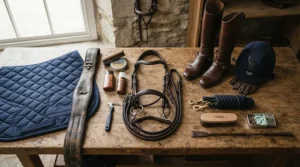
6. Herm Sprenger Dynamic RS Sensogan Loose Ring — best anatomically shaped single joint
This is the bit most professional producers upgrade to once the initial acceptance phase is done and proper schooling begins. The defining feature is the 45-degree forward-angled joint, engineered so both sides of the mouthpiece meet the tongue with roughly equal surface area instead of the uneven contact you get from a conventionally manufactured single joint, where one shank is inevitably slightly longer than the other due to how the bit is forged.
In practice, that angled joint moves forward rather than sharply upward when the reins are engaged, softening the classic nutcracker sensation without removing the clarity of a single-jointed aid. The Sensogan mouthpiece material, a further development of the Aurigan alloy, adds the same salivation-encouraging properties as the Novocontact above.
Based on the spec comparison with standard single-jointed bits, this design solves a genuine mechanical flaw rather than just adding a soft coating, which explains why it commands a premium price. Aggregated reviews from riders using this bit through early schooling consistently mention improved straightness and a calmer, more consistent contact compared with a conventional single joint of similar thickness.
Pros:
- ✅ Angled joint gives noticeably more even tongue pressure
- ✅ Sensogan alloy supports salivation and jaw relaxation
- ✅ Genuinely engineered fix, not just a cosmetic upgrade
Cons:
- ❌ One of the pricier single-jointed options on this list
- ❌ The mechanical benefit is subtle and easy to miss if you’re not looking for it
Expect a price range in the region of £90-£130, positioning it firmly as a long-term schooling investment rather than a first bit.
7. Neue Schule Team Up Loose Ring — best premium all-rounder as training advances
Strictly speaking, the Team Up uses a lozenge in the centre rather than a single fold, technically making it double jointed — but it earns its place here because it’s frequently the bit riders reach for once a young horse has outgrown the need for a basic single joint and is ready for a more sophisticated, evenly distributed contact. The lightweight alloy construction (Neue Schule’s own titanium-look material) means the bit sits noticeably lighter in the mouth than traditional stainless steel of the same thickness, which matters for a young horse still building neck and jaw strength.
The lozenge shape removes the sharp central nutcracker point entirely, spreading pressure across a broader area of tongue. What most buyers overlook is that “double jointed” doesn’t automatically mean “milder” — a poorly shaped lozenge can actually create pressure points on the palate if the bit is too thick for the horse’s mouth, so this only earns its premium price when properly fitted.
Reviewers who’ve moved young horses onto this bit from a conventional single joint consistently report a noticeably more settled, less fussy contact, particularly in horses that previously leaned or gaped.
Pros:
- ✅ Lightweight alloy noticeably reduces overall bit weight
- ✅ Lozenge spreads pressure more evenly than a single joint
- ✅ Popular next step once basic bit acceptance is established
Cons:
- ❌ Among the most expensive bits on this list
- ❌ Wrong thickness choice can create palate pressure, undoing the benefit
Prices typically sit in the £70-£100 range, and while that’s a serious outlay for a young horse’s bit, many riders treat it as a bit they’ll use across several horses over the years, softening the effective cost-per-use.
Practical Usage Guide: Introducing a Snaffle Bit to a Young Horse
Getting the bit right on paper is only half the job — how you introduce it in real life determines whether your horse ever relaxes into contact. Start bitless-adjacent: pop the chosen bit into a headcollar-and-bit combination or a simple cavesson bridle for short in-hand sessions before any riding is involved, letting the horse mouth it while grazing under close supervision for ten to fifteen minutes a day. Keep the first week free of any rein pressure at all — the goal is purely getting the horse comfortable with metal or rubber sitting on the bars and tongue, not teaching an aid yet.
A common mistake in the first 30 days is changing bits too frequently because a horse seems mildly unsettled. Give any new bit at least five to seven sessions before deciding it isn’t working, because some initial fussing (chewing, slight head tilting, excess salivation) is completely normal and usually settles once the novelty wears off. Genuine discomfort looks different: persistent gaping, tongue lolling out sideways, or trying to get the tongue over the bit are signs to reassess size or thickness immediately rather than push through.
Maintenance matters more than most new owners expect. Rinse the bit after every use — dried saliva and grass residue left in the joint mechanism accelerates wear and can trap grit against the mouth. Check rubber-coated bits weekly for splitting at stress points, particularly around the joint, and inspect metal bits for rough edges or pitting that can develop faster than you’d think, especially on cheaper alloys. A bit that felt smooth on day one can develop a sharp edge within a season if it’s dropped on concrete yard floors repeatedly, so a quick visual and tactile check before each ride costs nothing and prevents a nasty surprise.
Real-World Scenarios: Matching the Bit to Your Young Horse
The nervous native pony, three years old, just backed. Small mouth, minimal prior handling, easily startled. The Shires Equikind Flexi Soft Mullen Mouth is the sensible starting point here — no joint to fold unexpectedly, warms quickly, and the softness reduces the chance of an adverse reaction compounding an already anxious temperament. Budget under £25, sessions kept short and frequent.
The forward-going warmblood cross, backed at four, hacking and starting flatwork. Bigger mouth, more established acceptance already, needs precision as schooling begins. This is where the Waldhausen DUO Sensitive or Herm Sprenger Novocontact Aurigan come in — enough thinness and material sophistication to support developing contact without overwhelming a horse that’s already past the total-beginner stage. Budget £20-£70 depending on which route you take.
The talented but mouth-shy youngster showing early resistance under saddle. Clamping jaw, minimal chewing, tension through the poll. The copper-alloy properties of the Herm Sprenger Novocontact Aurigan or the mechanically improved Dynamic RS Sensogan genuinely address this rather than masking it, because the salivation response is a physiological reaction to the alloy, not a training trick. Budget £50-£130, but arguably cheaper than months of stalled progress with the wrong mouthpiece.
How to Choose a Snaffle Bit for a Young Horse
Picking a snaffle bit for young horse work comes down to seven practical checks, and working through them in order avoids the trial-and-error expense most owners end up paying.
- Measure mouth width first. A bit that’s too wide pinches nothing but slides and rotates uncomfortably; too narrow pinches the lips against the rings. Neither is kind.
- Assess tongue thickness and mouth depth. A fleshy tongue with little palate clearance needs a thinner mouthpiece, regardless of what “gentler = thicker” folklore suggests.
- Start with the mildest joint configuration. A mullen or well-fitted single joint before anything double jointed or ported, so you’re not troubleshooting two variables at once.
- Choose material based on temperament. Copper alloys for reluctant chewers, stainless steel for durability and precision, rubber for the very first sessions.
- Prioritise loose rings for early work. They encourage mouthing and rarely become a fixed pressure point the way some cheek designs can if oversized.
- Budget for a transitional purchase, not a forever bit. Most young horses move through two or three bits in their first eighteen months, so treat the first purchase as a stepping stone.
- Reassess every few months. As the mouth matures and training advances, thickness and joint tolerances that felt right initially may need revisiting.
Single Jointed vs Double Jointed Snaffle Bits
This is one of the most persistent points of confusion for anyone buying their first single jointed snaffle bit, and the mechanical difference matters more than the marketing terminology suggests. A single jointed bit forwards the rider’s rein aids to the tongue edges and the lower jaw bones, forming a V-shape under rein pressure that concentrates force there. A double jointed bit, by contrast, distributes pressure from rein aids more evenly and over a wider surface onto the tongue, without exerting pressure onto the sensitive palate — assuming the middle link is correctly sized, since an oversized centre piece can create exactly the palate pressure it’s meant to avoid.
| Feature | Single Jointed | Double Jointed |
|---|---|---|
| Pressure distribution | Concentrated on tongue edges and bars | Spread across a wider tongue surface |
| Best for | Clear, simple early lateral aids | Horses ready for more nuanced contact |
| Common risk | “Nutcracker” pinch on the palate | Poorly sized middle link creates its own pressure point |
| Example bit | Waldhausen DUO Sensitive | Neue Schule Team Up |
Reading this table, the honest takeaway is that neither joint type is universally “kinder” — a well-fitted single joint like the Waldhausen DUO Sensitive can be more comfortable than a badly sized double-jointed bit, and vice versa. Most professional starters begin with single jointed simplicity precisely because it’s easier to assess fit and reaction with one variable rather than two, then progress to a double-jointed design like the Neue Schule Team Up once the horse’s mouth conformation and training level are better understood.
Bit Thickness Explained: Why Fatter Isn’t Always Kinder
The old rule of thumb — thicker equals kinder — is one of the more persistent myths in bitting, and it’s worth unpicking properly. Bit thickness typically ranges from around 10mm at the thinnest racing-style profiles up to 20mm or more on very thick rubber mouthpieces, and the “right” figure depends entirely on how much room a specific horse’s mouth actually has. A study measuring oral dimensions across hundreds of horses found that bit fit is essential for horse welfare, since the bit causes pressure on sensitive structures within the mouth — and that pressure changes dramatically depending on whether the available space matches the bit’s diameter. Cram an 18mm bit into a mouth with a naturally fleshy tongue and shallow palate clearance, and you haven’t been kind; you’ve removed the only space the tongue had left to sit comfortably, forcing it upward against the roof of the mouth.
For most young horses starting out, something in the 14-16mm range strikes a reasonable balance — enough substance to feel stable and non-severe, without assuming excessive spare room that many horses simply don’t have. If your youngster has an unusually narrow, “wolfish” head shape, dropping to 12-14mm (as with the Waldhausen DUO Sensitive) is often more comfortable than following generic sizing advice. Always check by gently parting the lips with the mouth relaxed and shut to see how much the tongue bulges between the teeth — a lot of bulge signals limited room and a case for going thinner, not thicker.
Mouthpiece Material Guide: Rubber, Copper, Stainless Steel and More
The mouthpiece material affects taste, temperature, salivation response and durability, and choosing well can shortcut weeks of acceptance issues. Flexible rubber, as used on the Shires Equikind Flexi Soft Mullen Mouth, is warm, forgiving and ideal for a completely unbitted mouth, but it wears faster and offers less precision once schooling gets technical. Stainless steel, seen on the Korsteel Full Cheek Single Jointed Snaffle and Waldhausen DUO Sensitive, is durable, hygienic and neutral-tasting — a reliable long-term workhorse material without any particular chewing incentive built in. Copper and copper alloys, the basis of both the Herm Sprenger Novocontact Aurigan and Dynamic RS Sensogan, oxidise slightly in the mouth to produce a subtly sweet taste that measurably increases chewing and salivation, which is genuinely useful for a tense or reluctant young mouth rather than just a nice-to-have. Lightweight alloys, as used in the Neue Schule Team Up, prioritise reducing the sheer physical weight hanging in the mouth, which matters more for a young horse still developing jaw and poll strength than many riders initially assume.
There’s no single “best” material — the right choice is the one that solves your horse’s specific issue, whether that’s total inexperience, reluctance to chew, or the need for a durable everyday bit that will survive years of yard life.

Snaffle Bit for Schooling: What Changes as Training Progresses
A snaffle bit for schooling purposes needs to do more than just sit quietly in the mouth — it needs to support increasingly refined communication as your young horse’s balance, straightness and responsiveness develop. In the very earliest weeks, the priority is acceptance: a mullen or simple single joint that the horse tolerates without tension. Once basic acceptance is established and you’re working on rhythm, bend and transitions, thinner, more precisely shaped bits like the Waldhausen DUO Sensitive or the anatomically angled Herm Sprenger Dynamic RS Sensogan start to earn their keep, because they transmit finer aids without the horse having to “guess” through a thick, blunt mouthpiece.
By the time you’re introducing lateral work, more established contact and early dressage-style schooling, many riders move towards a design like the Neue Schule Team Up, where the lozenge spreads pressure evenly enough to support a steadier, more established contact without the sharper edges of a basic single joint. The general principle worth holding onto: schooling bits should get more refined, not more severe, as training advances — severity is rarely the answer to a communication problem, and a young horse that’s struggling almost always needs clearer, not stronger, signals.
Common Mistakes When Buying a Snaffle Bit for a Young Horse
Even experienced owners fall into predictable traps when bitting a young horse, and most of them are avoidable with a bit of forethought. The first is guessing size from a generic chart rather than actually measuring — “4.5 inches for a pony, 5 inches for a horse” is a starting estimate at best, not a rule, because mouth width varies enormously even within breeds. The second is assuming thicker automatically means milder, which as covered above can actively backfire on a narrow-mouthed horse. The third is buying a premium bit before establishing basic acceptance — there’s little point spending £100 on an anatomically engineered joint if the horse hasn’t yet learned to relax its jaw around any bit at all; start cheap and simple, then upgrade with purpose. The fourth is neglecting fit checks over time — a bit sized correctly at three years old may sit differently as the horse’s head matures and jaw structure changes over the following year. Finally, many owners change bits reactively at the first sign of resistance rather than investigating whether the resistance stems from dental issues, saddle fit, or rider hand position — a bit swap won’t fix a problem the bit didn’t cause.
Bit Fitting: Getting the Size and Height Right
Correct bit fitting is where good intentions on paper either succeed or fail in practice, and it comes down to three measurable checks. First, width: with the bit in place, you’re aiming for roughly a finger’s width of clearance between the corner of the lip and the bit ring or cheekpiece on each side — enough that the bit doesn’t pinch, not so much that it slides excessively. Second, height: a general guide for correct bit height is to aim for half to one lip wrinkle at the corners of the mouth, bearing in mind that mouth conformation varies considerably between horses. Too high causes unnecessary corner-of-mouth pressure and can mask rein aids; too low invites the horse to get its tongue over the bit. Third, thickness clearance: gently check how much room remains between tongue and palate once the bit is fitted, adjusting your material and thickness choice accordingly rather than forcing a bit that doesn’t suit the individual mouth.
It’s also worth building a simple habit: recheck fit every few months through a young horse’s first two years, since jaw width, tongue thickness and overall head shape can shift meaningfully as the horse physically matures. A bit that fitted perfectly at backing may need a half-size adjustment by the time serious schooling begins.
Long-Term Cost and Maintenance of a Young Horse’s Bitting Set-Up
Budgeting for a young horse’s bitting journey is rarely a one-off purchase, and treating it that way tends to cost more in the long run than planning for the natural progression. Most owners realistically move through two to three bits across the first eighteen months to two years — typically a soft mullen or rubber-coated introduction (£15-£25), a mid-range stainless steel schooling bit (£20-£40), and eventually a premium copper-alloy or anatomically shaped bit (£50-£130) once training intensifies. Viewed as a total cost of ownership across that period, spending £120-£180 in stages is genuinely more economical than buying one expensive bit prematurely and discovering it doesn’t suit the horse’s current stage, or conversely, sticking with an unsuitable budget bit for two years and losing schooling progress to a poor mouth fit.
Maintenance costs are modest but real: budget for occasional replacement of rubber-coated bits as they wear, and factor in that stainless steel and copper-alloy bits, properly rinsed and dried after use, can genuinely last years without needing replacement. The best long-term value tends to come from mid-to-premium metal bits purchased once, rather than repeatedly replacing budget rubber bits that wear out every few months of heavy use.
Safety, Regulation and Welfare Considerations
Bitting isn’t purely a comfort question — it’s a welfare and, in competition contexts, a rules question too. The British Horse Society, the UK’s leading equine welfare charity, provides extensive horse care and welfare guidance covering everything from tack fit to general handling, and it’s worth consulting their resources directly if you’re ever uncertain whether a piece of equipment is appropriate for a young or inexperienced horse. Recent academic research adds useful nuance here too: a cadaveric study examining how bits move inside the mouth under rein tension found that snaffle bits moved more when higher rein tension was applied, especially with unilateral rein use, and that bits too wide for the horse’s head moved more in both lateral and posterior directions — a strong practical argument for getting sizing right rather than erring wide “just in case.” If you compete under any affiliated discipline rules, always double-check current bit legality for young horse classes with the relevant governing body before your first outing, since permitted mouthpieces and thicknesses can differ from general schooling recommendations.

Frequently Asked Questions
❓ What is the best snaffle bit for young horse starting under saddle?
❓ Is a single jointed snaffle bit gentler than a double jointed one?
❓ What thickness snaffle bit should a young horse wear?
❓ How do I know if a snaffle bit fits my young horse correctly?
❓ What mouthpiece material is best for a nervous young horse?
Conclusion
There’s no single “correct” snaffle bit for young horse work, and honestly, that’s the whole point of this guide — the right choice depends on your individual horse’s mouth conformation, temperament and current stage of training, not on which bit has the flashiest marketing. Start soft and simple with something like the Shires Equikind Flexi Soft Mullen Mouth for total beginners, move through a well-fitted stainless steel single joint such as the Waldhausen DUO Sensitive as acceptance builds, and consider a copper-alloy option like the Herm Sprenger Novocontact Aurigan if your youngster is proving reluctant to relax and chew. Whichever bit you land on, spend more time on fit and introduction than on brand names — a correctly sized, sensibly introduced budget bit will always outperform an expensive one shoved into the wrong mouth. Measure carefully, watch your horse’s reaction honestly, and don’t be afraid to adjust course over the first year or two as the mouth matures and training develops.
Recommended for You
- Bitless Bridle vs Snaffle Bridle: 7 Best Picks For UK Riders (2026)
- Anatomic Bridle For Horse Comfort: 7 Best UK Picks (2026)
- Show Bridle For Showing: 7 Best UK Picks & Tips (2026)
Disclaimer: This article contains affiliate links. As an Amazon Associate, I earn from qualifying purchases. If you purchase products through these links, we may earn a small commission at no additional cost to you.
✨ Found this helpful? Share it with your friends! 💬🤗
