
In This Article
There’s a particular kind of dread that creeps in mid-canter when you glance down and notice one stirrup sitting a full hole lower than the other. Nine times out of ten, that’s not you riding crooked — it’s tired leather finally giving up the fight. Finding affordable stirrup leathers that actually hold their length, rather than quietly stretching into oblivion, is one of those unglamorous jobs that quietly underpins every good ride you’ll ever have.
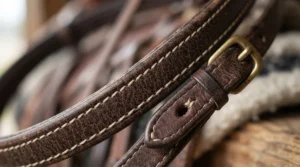
What is affordable stirrup leathers, in practical terms? It means a pair of straps connecting your saddle’s stirrup bar to your stirrup iron that cost noticeably less than premium competition leather, typically under the £50 mark, while still using genuine leather, a reinforced nylon core, or a durable synthetic construction that resists stretch and wear. You don’t need to spend three figures to get something safe, comfortable and long-lasting — but you do need to know what separates a bargain from a false economy.
This guide walks through seven real, currently available options, from bargain synthetic straps through to covered calfskin leathers that punch well above their price tag. We’ll cover non-stretch stirrup leathers, covered stirrup leathers, sizing for stirrup leathers for tall riders, and the often-overlooked relationship between your stirrup bar and how your leathers wear over time. According to the Health and Safety Executive’s guidance on horse riding, tack maintenance is a recurring theme in accident prevention — so this isn’t just about comfort, it’s about riding safely on a budget.
Quick Comparison Table
| Product | Material | Best For | Price Range |
|---|---|---|---|
| Shires Easy Care Non Stretch Stirrup Leathers | Synthetic, nylon core | Budget everyday riding | under £25 |
| Cottage Craft Stirrup Leathers | Genuine leather, nylon core | Value leather feel | £20-£35 |
| Wintec Webbers Stirrup Straps | Synthetic webbing, buckle-free | Close-contact comfort | £20-£35 |
| Shires Velociti Stirrup Leathers | Leather, nylon-reinforced buckle | Growing riders/schools | £18-£35 |
| Wintec Slimline Stirrup Leathers | Synthetic, slimline buckle | Synthetic saddle owners | £25-£40 |
| Exion Wide Stability Stirrup Leathers | Vegetable-tanned cowhide, nylon core | Tall riders, stability | £40-£60 |
| John Whitaker Bonded Stirrup Leathers | Calfskin, bonded web core | Long-term premium feel | £45-£65 |
Looking across the table, the split really comes down to material philosophy: synthetic options like the Shires Easy Care Non Stretch Stirrup Leathers and Wintec Slimline Stirrup Leathers trade a touch of “real leather” character for near-zero maintenance, while genuine leather picks such as Cottage Craft Stirrup Leathers and the John Whitaker Bonded Stirrup Leathers ask for a bit more care in exchange for that classic look and feel breaking in beautifully over time. If your budget is genuinely tight and you ride several times a week, the nylon-core synthetics edge it on pure cost-per-ride; if you want something that’ll still look smart at a show in three years, lean leather.
💬 Just one click — help others make better buying decisions too!😊
Top 7 Affordable Stirrup Leathers: Expert Analysis
1. Shires Easy Care Non Stretch Stirrup Leathers — best budget non-stretch pick
The clue is in the name: these are built specifically to solve the stretch problem cheaply, using a nylon core wrapped in a traditional-looking synthetic outer. That inner nylon strap is doing the heavy lifting here, and it’s the reason this pair regularly tops UK bestseller lists in the category.
Constructed with a durable nylon core beneath a leather-look synthetic wrap, these come in the familiar 48-58 inch sizing and 3/4-inch to 1-inch widths that suit most General Purpose and jumping saddles. In practice, that nylon core means the strap resists the gradual “creep” you get with cheap uncoated leather, so your near and off-side stirrups are far more likely to stay level after a season of regular riding.
Based on the spec comparison with pricier leathers, what most buyers overlook about this model is that “easy care” also means genuinely weatherproof — you can wipe mud off after a wet hack without worrying about the surface cracking, which matters if your tack lives in an unheated stable rather than a climate-controlled saddle room. They’re best suited to novice and intermediate riders, Pony Club families managing multiple sizes, or anyone who wants dependable performance without a leather-conditioning routine.
Reviewers consistently report strong satisfaction with build quality and value for money, though aggregated feedback is genuinely split on stretch resistance — some buyers say the nylon core keeps them perfectly even for years, while others report the outer wrap eventually splitting with heavy use. If you can’t verify a specific unit’s longevity in advance, the safest read is that quality control varies slightly, so it’s worth checking your pair periodically regardless.
Pros:
- ✅ Genuine nylon core resists stretching far better than plain leather
- ✅ Weatherproof surface wipes clean after muddy rides
- ✅ Consistently praised as excellent value for money
Cons:
- ❌ Aggregated reviews are mixed on long-term outer-layer durability
- ❌ Feels noticeably less premium underfoot than genuine leather
At around under £25, this is about as close to a “set and forget” budget stirrup leather as you’ll find, and the value verdict is straightforward: for hacking, lessons and everyday schooling, it’s hard to justify spending more.
2. Cottage Craft Stirrup Leathers — best genuine leather value pick
Cottage Craft has built a reputation in UK tack rooms as the brand you reach for when you want “proper” leather without a premium price tag, and this non-stretch pair with a stainless steel buckle is a good example of that positioning in action.
These are made from genuine leather with a nylon core sandwiched inside, finished with a stainless steel buckle rather than the nickel-plated hardware you’ll find on some budget alternatives. What that stainless steel buckle actually buys you is corrosion resistance — nickel-plated buckles can develop a thin rust bloom after repeated exposure to rain and sweat, whereas stainless steel shrugs it off for years.
Here’s what the spec sheet won’t tell you, but reviewers note: genuine leather like this needs an occasional feed of leather conditioner to stay supple, but in return it moulds to your riding style and stirrup angle in a way synthetic material never quite does. That makes it a strong pick for riders who want the classic leather feel and don’t mind five minutes of tack cleaning after a ride, rather than absolute beginners who might forget maintenance altogether.
Aggregated customer sentiment on this style of non-stretch leather leather is generally positive, with buyers commonly citing “fantastic quality” and describing the leather as soft yet strong for the price point; a smaller number of reviews mention the classic leather-versus-stretch debate that seems to follow every nylon-core product in this category, so it’s sensible to inspect your pair after the first few rides.
Pros:
- ✅ Genuine leather with a nylon core for real stretch resistance
- ✅ Stainless steel buckle resists rust far better than plated metal
- ✅ Softens and moulds to your leg position over time
Cons:
- ❌ Requires occasional leather conditioning to stay supple
- ❌ A small minority of reviewers report uneven stretch after heavy use
Priced in the £20-£35 range depending on length, this sits at a genuine sweet spot between the cheapest synthetics and the calfskin-covered leathers further down this list.
3. Wintec Webbers Stirrup Straps — best for close-contact comfort
Wintec built its reputation on synthetic saddle technology, and the Webbers apply that same thinking to stirrup leathers by removing the buckle altogether. Instead, a loop slides directly over the stirrup bar, with a T-hook adjustment at the stirrup end.
That buckle-free webbing core design means there’s no metal lump sitting under your thigh, which is the single biggest complaint riders have about traditional buckled leathers once they’ve tried a close-contact alternative. The webbing core itself is essentially immune to the kind of stretch you get with unlined leather, since webbing doesn’t have the same fibre structure that lengthens under sustained load.
What most buyers overlook about this model is that removing the buckle also removes a common failure point — buckle tongues and holes are where cheap stirrup leathers most often wear through first. Based on the spec comparison, this makes the Webbers a sensible choice for riders who jump regularly, since a slimmer profile under the leg supports a more consistent lower-leg position over fences, while the size options (60cm, 70cm, 80cm) cover most adult heights without needing a tape measure.
Reviewers consistently note the “close contact” feel as the standout benefit, alongside easy-clean synthetic material that shrugs off rain and mud. The main theme in aggregated feedback is that sizing runs differently to standard leather lengths, so first-time buyers occasionally order the wrong size and need to exchange.
Pros:
- ✅ No-buckle design removes bulk and a common wear point
- ✅ Webbing core is highly resistant to stretch over time
- ✅ Weatherproof synthetic material needs almost no upkeep
Cons:
- ❌ Sizing doesn’t map directly onto standard leather lengths
- ❌ Limited additional adjustment holes compared with buckled designs
At roughly £20-£35, the Webbers offer a genuinely different feel for a similar outlay to a mid-range leather pair, and they’re worth trying if bulk under the leg has bothered you before.
4. Shires Velociti Stirrup Leathers — best for growing riders and riding schools
Riding schools and Pony Club families have a specific problem: several riders sharing tack across a range of leg lengths and abilities, all putting the buckle area under repeated stress as leathers get adjusted multiple times a day. The Shires Velociti range, available in Childs, Youths, Adults and Long Adults, is built with exactly that scenario in mind.
The standout feature here is nylon reinforcement specifically around the buckle, on top of genuine leather straps and stainless steel buckles. In practice, that reinforcement targets the exact point where budget stirrup leathers usually fail first — repeated flexing at the buckle hole eventually tears thinner, unreinforced leather, and the nylon backing spreads that stress over a wider area.
Based on the spec comparison with the plain leather options above, what most buyers overlook is that buying “by age category” (Childs/Youths/Adults/Long Adults) rather than by exact inch measurement makes this a genuinely practical choice for a yard replacing several pairs at once, since staff don’t need to individually measure every rider. It’s a strong fit for livery yards, riding schools and multi-child families who want dependable, replaceable stock rather than a single perfect-fit leather for one rider.
Aggregated reviews frequently describe these as reliable, no-fuss straps that do exactly what’s expected without drama — the kind of quietly competent product that rarely gets a glowing five-star essay written about it, but also rarely gets returned.
Pros:
- ✅ Nylon-reinforced buckle targets the leather’s most common failure point
- ✅ Simple age-based sizing suits schools and multi-rider households
- ✅ Genuine leather with stainless steel hardware at a modest price
Cons:
- ❌ Fewer premium finishing touches than dedicated competition leathers
- ❌ Long Adults sizing sells out faster than shorter lengths in peak season
Typically priced between £18 and £35 depending on size, this is a sensible bulk-buy for anyone managing tack across several riders rather than just one horse.
5. Wintec Slimline Stirrup Leathers — best for synthetic saddle owners
If you ride in a Wintec or Bates synthetic saddle, matching your stirrup leathers to the saddle’s construction isn’t just about looks — synthetic saddle flaps and genuine leather straps can wear against each other slightly differently than a fully matched synthetic set-up.
These leathers use a strong leather-look synthetic material engineered specifically not to stretch, paired with the same patented slimline buckle found on Bates leathers, which is designed to reduce bulk under the rider’s leg. On paper, that slimline buckle is a genuine mechanical difference rather than a cosmetic one: a lower-profile buckle plate sits flatter against the saddle flap, which is precisely why close-contact and dressage riders tend to seek it out.
What the spec sheet won’t tell you, but the fit implies, is that these are cut to match Wintec saddle proportions almost exactly, so riders switching from a leather saddle sometimes find the leather “sits” slightly differently at first. Reviewers note the flexible, durable feel of the material and its resistance to the weather, making it a solid pick for riders who leave tack in a less-than-perfect storage set-up, such as a field shelter or shared yard.
Aggregated feedback trends positive on durability and the non-stretch claim specifically, with the slimline buckle repeatedly singled out as the feature that convinced buyers to switch from a standard buckle design.
Pros:
- ✅ Slimline buckle genuinely reduces bulk under the leg
- ✅ Purpose-built to match Wintec/Bates synthetic saddles
- ✅ Weatherproof and low-maintenance in imperfect storage conditions
Cons:
- ❌ Best value is really unlocked when paired with a matching synthetic saddle
- ❌ Some riders miss the traditional leather feel underfoot
Priced around £25-£40, this is less about being the cheapest option on this list and more about being the smartest match if you already own synthetic tack.

6. Exion Wide Stability Stirrup Leathers — best for tall riders needing stability
Taller riders often discover the hard way that standard 48-inch leathers simply run out of adjustment room, and a too-short leather forces an unnatural, cramped leg position that undermines balance rather than helping it. The Exion Wide Stability range solves both the length problem and the stability problem at once.
Built from vegetable-tanned cowhide with a heavy-duty nylon core “sandwiched” between leather layers, these are a genuinely wide-body design at 2.25 inches, compared with the roughly 1-inch straps used elsewhere on this list, and they’re available from 48 inches right up to 62 inches. That extra width increases surface friction against the saddle flap, which in practice means a noticeably steadier lower leg without you having to consciously grip harder — useful for anyone who’s been told their leg “swings” at sitting trot.
Based on the spec comparison with narrower leathers, what most buyers overlook is that the 18 closely spaced, numbered holes matter just as much as the raw length: fine 1-hole adjustments let you fine-tune for flatwork versus jumping without guessing between two imperfect options. For stirrup leathers for tall riders specifically, the 62-inch maximum length is the genuinely useful figure here, comfortably covering riders who’ve previously had to hunt for “extra-long” leathers as a separate, harder-to-find category.
Reviewer sentiment aggregated from vegetable-tanned leather stirrup products in this style consistently highlights the flat stainless steel buckles for close contact and the resistance to uneven stretching, though as with any premium cowhide product, buyers should expect a genuine leather break-in period before the straps feel fully supple.
Pros:
- ✅ Sizes up to 62 inches genuinely solve the tall-rider length problem
- ✅ Wide 2.25-inch body noticeably stabilises lower-leg position
- ✅ 18 numbered holes allow precise micro-adjustment
Cons:
- ❌ Wider body may feel bulky to riders used to slim leathers
- ❌ Vegetable-tanned leather needs a short break-in period
At roughly £40-£60, this sits toward the top of “affordable” territory, but for a tall rider who’s struggled with short leathers for years, it’s arguably the best value item on this entire list.
7. John Whitaker Bonded Stirrup Leathers — best premium-feel covered leather
John Whitaker’s name carries genuine weight in British showjumping, and this bonded, calfskin-covered stirrup leather is the brand translating competition-yard preferences into a still-attainable price point for club and leisure riders.
These are calfskin stirrup leathers with webbing bonded to the back, giving you the classic covered stirrup leathers look and buttery-soft feel of calfskin on the outside, while the bonded webbing inner does the actual work of resisting stretch. Available in sizes up to around 160cm (roughly 63 inches) and finished in black, oak brown or light havana, they cover both the tall-rider length problem and the premium-finish brief in one product.
Here’s what most buyers overlook about covered stirrup leathers generally: the outer calfskin layer isn’t purely decorative — it’s typically softer and more pliable against the saddle flap than plain harness leather, which is why showjumpers who spend hours in the saddle daily favour it for comfort as much as looks. On paper, that combination of a durable inner and a soft, embossed-logo outer explains the higher price versus the synthetic options earlier in this list; you’re paying for two layers of engineering rather than one.
Aggregated feedback on this style of bonded, calfskin-covered leather commonly praises the finish and feel as noticeably more premium than standard tack-shop leather, while acknowledging that calfskin, like any natural leather, benefits from proper conditioning to avoid drying out, particularly if stored somewhere with variable humidity.
Pros:
- ✅ Calfskin outer gives a genuinely premium, competition-grade feel
- ✅ Bonded webbing core targets stretch resistance directly
- ✅ Long sizing (up to ~160cm) suits tall riders and long-leg saddles
Cons:
- ❌ Highest price point on this list, even within the “affordable” bracket
- ❌ Calfskin needs regular conditioning to avoid drying out
Sitting around £45-£65 depending on retailer and length, this is the “buy once, cry once” option here — a fair value verdict for riders who compete regularly and want their tack to look the part.
Getting the Fit Right: A Practical Sizing and Break-In Guide
Buying the right stirrup leather length is where most people go wrong, and it costs nothing to get it right first time. As a starting point, measure your current leathers from buckle to the hole you actually ride on, not the longest hole available, then add roughly 4-6 inches if you’re buying new to allow room to lengthen as you develop a deeper seat. Most adults ride comfortably on 48-54 inch leathers, while stirrup leathers for tall riders, or anyone over roughly 5’10”, should look at 58-62 inch options like the Exion range above.
Once your new leathers arrive, resist the urge to punch new holes immediately. Genuine leather needs a short bedding-in period: ride a handful of sessions on the factory holes, checking after each one that both sides remain level, since uneven wear in week one usually signals a fitting problem rather than a faulty product. During this period, apply a light leather conditioner to the fold points around the buckle — this is where cracking starts, months before it becomes visible anywhere else on the strap.
A common first-month mistake is over-oiling brand-new leather, which can actually soften the fibres too much and accelerate stretch rather than prevent it. Stick to a thin, even coat of conditioner every few rides rather than a heavy weekly soak, and always dry muddy leathers naturally rather than near direct heat, which dries leather out and causes it to crack from the inside.
Real-World Scenarios: Matching Leathers to Riders
If you’re a Pony Club parent managing three children’s ponies on a modest budget, the Shires Velociti or Shires Easy Care ranges make the most practical sense: age-banded sizing, low individual cost, and enough durability to survive daily adjustment by small, impatient hands. Buy an extra pair as backup rather than a single premium set, since with growing children you’ll be resizing within a year regardless.
If you’re a returning adult rider in your thirties, riding two or three times a week on a livery yard horse, the Cottage Craft or Wintec Slimline options land in the right zone — durable enough for regular use, comfortable enough that you’ll actually enjoy the feel underfoot, and priced so that replacing them in three or four years doesn’t sting.
If you’re a taller competition rider chasing a quieter lower leg for dressage tests or show jumping rounds, the Exion Wide Stability or John Whitaker Bonded leathers are worth the extra spend. The additional width and the calfskin’s soft flex genuinely change how your leg sits against the saddle flap, and that’s a difference judges and instructors notice even if you can’t quite articulate why your position looks tidier.
Common Stirrup Leather Problems (and How to Fix Them)
Problem: one leather is visibly longer than the other after a season of riding. This is classic uneven stretch, usually from mounting predominantly from one side. Swap which side you mount from occasionally, and consider a nylon-core option like the Shires Easy Care leathers, which resist this specific issue by design.
Problem: cracking appears at the buckle fold. This is almost always dryness combined with repeated flexing. Apply leather conditioner specifically to that fold point every few weeks, and consider a nylon-reinforced buckle design such as the Shires Velociti range if you’re replacing leathers anyway.
Problem: a persistent lump or pressure point under your thigh. Traditional buckled leathers create a small ridge under the leg that some riders never notice and others find genuinely uncomfortable over a long hack. A slimline buckle design, like the Wintec Slimline, or a buckle-free option like the Wintec Webbers, solves this directly.
Problem: leathers are too short even on the longest hole. Rather than accepting a cramped leg position, size up properly. Stirrup leathers for tall riders exist specifically to solve this — the Exion range up to 62 inches and John Whitaker up to roughly 160cm both address genuine length shortfalls rather than papering over them.
Problem: leather feels stiff and unyielding straight out of the packaging. New vegetable-tanned or full leather straps need breaking in. A light conditioning routine over the first few rides, rather than one heavy treatment, brings the leather to a comfortable, supple state faster and more evenly.
How to Choose Affordable Stirrup Leathers: 6 Expert Steps
- Measure your current leathers properly. Take the length from the buckle to your actual riding hole, not the shortest or longest available position, so you’re comparing like for like against new options.
- Decide between synthetic and genuine leather. Synthetic options resist weather and need less maintenance; genuine leather offers a classic feel and improves with age but needs conditioning.
- Check for a non-stretch core. A nylon or webbing core inside the strap is the single biggest factor in whether your stirrups stay level over months of riding.
- Match the buckle to your comfort priorities. Standard buckles are simplest to adjust; slimline or buckle-free designs reduce bulk under the leg for close-contact disciplines.
- Size generously if you’re between lengths. It’s far easier to shorten a leather that’s slightly too long than to make do with one that’s too short, particularly for stirrup leathers for tall riders.
- Factor in your riding frequency. Riders in the saddle daily should prioritise durability and reinforced buckle areas over pure price, since replacement costs add up faster than the initial saving suggests.
Non-Stretch Stirrup Leathers vs Traditional Leather: What Actually Changes
The term “non-stretch stirrup leathers” specifically refers to straps built around an internal core, usually nylon or webbing, that resists the natural elongation plain vegetable-tanned leather experiences under repeated load. Traditional, uncoated leather leathers can and do stretch, particularly on the side you mount from, which is why generations of riders have quietly accepted one stirrup running slightly lower than the other as simply “how it goes.”
| Feature | Non-Stretch (Nylon/Web Core) | Traditional Leather |
|---|---|---|
| Stretch resistance | High — core does the structural work | Lower — leather fibres elongate over time |
| Feel underfoot | Slightly firmer, more consistent | Softens and moulds with age |
| Maintenance | Minimal, often weatherproof | Requires regular conditioning |
| Typical price | Often lower | Often higher for equivalent quality |
| Best for | Daily riders, schools, budget-conscious buyers | Riders who prioritise classic feel and don’t mind upkeep |
Interpreting that table honestly: non-stretch construction wins decisively on consistency and low maintenance, which is exactly why options like the Shires Easy Care Non Stretch Stirrup Leathers dominate budget bestseller lists. But traditional leather, when properly maintained, offers a tactile quality and gradual custom fit that many experienced riders genuinely prefer, which is why premium picks like the John Whitaker Bonded Stirrup Leathers still combine a leather outer with a non-stretch core rather than abandoning leather altogether.
Covered Stirrup Leathers vs Standard Leathers: Is the Extra Cost Worth It?
Covered stirrup leathers, like the John Whitaker Bonded Stirrup Leathers on this list, wrap a softer outer leather, typically calfskin, around a structural inner core, rather than relying on a single layer of harness leather to do both jobs. The practical upshot is a strap that feels noticeably softer against the saddle flap and under the buckle, while the hidden inner layer handles the actual load-bearing and stretch resistance.
Standard, uncovered leathers like the Cottage Craft Stirrup Leathers or Shires Velociti Stirrup Leathers are simpler in construction, using a single leather layer reinforced internally, which keeps costs down without necessarily sacrificing much durability for casual and club-level riding. What most buyers overlook is that the “extra cost” of covered leathers isn’t really paying for durability at all — a well-made standard leather can outlast a covered one — it’s paying for a softer, more premium tactile experience and a slightly dressier appearance in the show ring.
The honest verdict: if you compete regularly and appreciate the finished look and feel, covered leathers justify their premium. If your riding is largely hacking, schooling and the odd unaffiliated show, a well-specified standard leather with a reinforced buckle delivers close to the same functional performance for considerably less outlay.
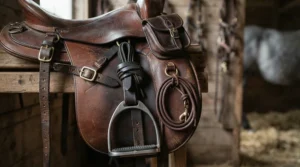
Stirrup Leathers for Tall Riders: Solving the Length Problem Properly
Taller riders are chronically underserved by “one size fits most” stirrup leather ranges, where 48-54 inches covers the majority of buyers but leaves anyone over roughly 5’10” perpetually riding on the very last hole, or worse, unable to reach a workable length at all. That’s a genuine safety and comfort issue, not a minor inconvenience, since a leather stretched to its absolute limit sits under constant strain at exactly the point most likely to fail.
The fix is straightforward once you know to look for it: both the Exion Wide Stability Stirrup Leathers, running up to 62 inches, and the John Whitaker Bonded Stirrup Leathers, available up to roughly 160cm, are specifically manufactured with tall riders’ proportions in mind rather than treating extra length as an afterthought. On paper, an extra 8-10 inches of usable leather sounds modest, but in practice it’s the difference between a leg that hangs naturally from a relaxed hip and one that’s permanently hitched upward, fighting the saddle rather than working with it.
If you’ve been quietly tolerating a too-short leather for months because “extra-long” options seemed hard to find or expensive, it’s worth revisiting the market: both options above sit within genuinely affordable territory rather than pushing you into bespoke, made-to-measure pricing.
Understanding the Stirrup Bar: The Overlooked Half of the Equation
It’s easy to focus entirely on the leather itself and forget that every stirrup leather threads through a stirrup bar fixed to your saddle’s tree, and that bar’s design directly affects both safety and how quickly your leathers wear. Most English saddles feature a hinged safety catch on the stirrup bar, designed to release the leather automatically if a rider falls and a foot remains caught, provided the catch is left in the open, “down” position rather than flipped up.
According to the Wikipedia entry on stirrups, the basic design of the stirrup leather and bar system has changed remarkably little since the device’s introduction to Western riding centuries ago, precisely because the mechanical principle of a simple, releasable loop remains hard to improve upon. What has changed is materials: a rough or corroded stirrup bar can abrade the top of your leather far faster than normal riding wear, so it’s worth running a finger over your saddle’s bar periodically to check for burrs or rust before blaming the leather itself for premature fraying.
Practically, this means two things for anyone buying affordable stirrup leathers: first, always leave the stirrup bar’s safety catch down while riding, regardless of how snugly your leathers seem to fit; and second, if you notice one leather wearing unusually fast at the very top loop, inspect the bar itself rather than assuming the leather is simply low quality.
Common Mistakes When Buying Affordable Stirrup Leathers
The most frequent mistake is buying strictly on price without checking for a non-stretch core, then being surprised six months later when stirrups run uneven. A close second is guessing at length rather than measuring existing leathers, which leads to constant returns and exchanges that erase any money saved on the initial purchase.
Many riders also skip checking buckle material, assuming all metal hardware is equivalent, when in fact nickel-plated buckles can corrode over a wet British winter in a way stainless steel simply doesn’t. Finally, treating all “leather” as identical is a subtle trap: vegetable-tanned cowhide, calfskin and bonded synthetic-leather hybrids all behave differently in terms of break-in time, weight and long-term care, and picking based on a photo alone rarely gives you the full picture.
Long-Term Cost and Maintenance: What You’re Really Paying For
A £20 pair of synthetic non-stretch leathers that lasts three seasons with zero conditioning costs works out cheaper per year of use than a £60 covered leather that needs a small tin of conditioner every few months, even before you factor in replacement risk from neglect. But that calculation flips if you ride six days a week rather than twice, since higher-frequency use accelerates wear on any material, and a reinforced buckle or wider leather body pays for itself faster in reduced replacement cycles.
As a rough total cost of ownership guide, and echoing the range of construction styles covered in Horse & Hound’s own buyers’ guide to stirrup leathers: budget synthetic leathers rarely need more than an occasional wipe-down, genuine leather options benefit from conditioning roughly every four to six weeks of regular use, and premium calfskin-covered leathers reward slightly more frequent, lighter conditioning to avoid the outer layer drying and cracking. None of that maintenance is expensive in isolation — a tin of leather conditioner typically lasts a full season — but factoring in your own realistic willingness to actually do it should influence which of the seven products above makes sense for your yard routine.
Frequently Asked Questions
❓ Do non-stretch stirrup leathers really not stretch at all?
❓ What length stirrup leathers do I need?
❓ Are covered stirrup leathers worth the extra cost?
❓ How often should I replace my stirrup leathers?
❓ Can I use the same stirrup leathers on any saddle?
Conclusion
Affordable stirrup leathers don’t have to mean a compromise on safety or comfort, provided you know which construction detail actually matters for your riding. A nylon or webbing core solves the stretch problem that plagues plain leather; the right length solves the cramped-leg problem that plagues taller riders; and a sensibly reinforced buckle solves the failure point that ends most stirrup leathers’ working lives prematurely.
Across the seven options here, the Shires Easy Care Non Stretch Stirrup Leathers remain the easiest recommendation for anyone prioritising low-maintenance value, while the Exion Wide Stability Stirrup Leathers and John Whitaker Bonded Stirrup Leathers earn their higher price tags for tall riders and regular competitors respectively. Whichever you choose, the real win is simply buying with intention rather than guessing — your future self, glancing down mid-canter at two perfectly level stirrups, will thank you for it.
✨ Don’t Miss These Exclusive Deals!
🔍 Take your stirrup leather shopping to the next level with these carefully selected picks. Click on any highlighted item to check current pricing and availability, and give your riding the steady, level foundation it deserves!
Recommended for You
- Affordable Stainless Steel Stirrups: 7 Best UK Picks (2026)
- Affordable Safety Stirrups: 7 Best Picks to Ride Safer in 2026
- Affordable Anatomic Girth: 7 Best Budget Picks for UK Riders (2026)
Disclaimer: This article contains affiliate links. As an Amazon Associate, I earn from qualifying purchases. If you purchase products through these links, we may earn a small commission at no additional cost to you.
✨ Found this helpful? Share it with your friends! 💬🤗
