
In This Article
Let’s be honest: girth shopping is rarely glamorous. It’s the bit of kit you buy in a rush, five minutes before a lesson, when you notice your horse pinning his ears every time you do it up. An affordable anatomic girth exists precisely for that moment — a girth cut with a curve behind the elbow so your horse’s shoulder can swing freely, without you having to remortgage the yard to afford one. In the simplest terms, an anatomic girth is a girth shaped (rather than straight) to follow the natural contour of a horse’s barrel, easing pressure around the elbow and sternum so the front leg isn’t restricted mid-stride.

The tricky part isn’t finding an anatomic girth — high street tack shops are stuffed with them — it’s finding one that’s genuinely good without costing what most of us would spend on a saddle pad, numnah, and boots combined. Prices for anatomic shapes swing from budget neoprene numbers to hand-stitched leather with gel inserts, and the difference between them isn’t always where you’d expect. This guide pulls together seven real, currently available options across neoprene, leather, and memory-foam builds, with honest analysis on which suits a cob, which suits a narrow Thoroughbred type, and where your money is actually working hardest. According to the Wikipedia entry on girths, several traditional shapes were already being cut away at the elbow long before “anatomic” became a marketing term — so this is less a fad and more a refinement of an old idea.
Quick Comparison Table
| Product | Material | Price Range | Best For |
|---|---|---|---|
| Shires ARMA Neoprene Dressage Girth | Neoprene | Around £30-£37 | Budget buyers, sweaty horses |
| Rhinegold Anatomical Memory Foam Girth | Foam/synthetic | Around £26-£34 | Best all-round value |
| Shires ARMA Anti-Chafe Anatomic Girth | Waffle synthetic | Around £38-£42 | Horses prone to rubs |
| Shires ARMA Memory Foam Anatomical Girth | Memory foam/synthetic | Around £50-£56 | Mid-range comfort upgrade |
| Wintec Anatomic Elastic Girth with CAIR | Synthetic + air cushion | Around £90-£100 | Narrow-chested, sensitive horses |
| Rhinegold Anatomical Italian Leather Girth | Leather | Around £70-£75 | Traditional leather on a budget |
| LeMieux Gel-Tek Anatomic Girth | Leather + gel | Around £140-£155 | Competition riders, premium spend |
Looking at the spread above, the gap between the cheapest and priciest option here isn’t really about “does it work” — every one of these girths is genuinely anatomically shaped. It’s about materials, durability, and how much fine-tuning you want for a specific horse. Budget buyers shouldn’t assume they’re settling for less comfort; the Rhinegold Anatomical Memory Foam Girth proves you can get real shoulder freedom for under £35. Where the pricier end earns its keep is in longevity and disciplin-specific refinements, like the elastic-and-gel combination on the LeMieux Gel-Tek Anatomic Girth.
💬 Found a favourite already? Save this page and compare prices before you buy — a few minutes now could save you a re-purchase later!
Top 7 Affordable Anatomic Girths: Expert Analysis
1. Shires ARMA Neoprene Dressage Girth — best budget neoprene pick for sweat control
If you want the cheapest realistic entry point into anatomic shaping, this is it. The neoprene body isn’t fancy, but it does a genuinely useful job: wicking moisture away from the skin so sweat doesn’t pool and cause rubs during a hard schooling session. Shires cuts it with the brand’s familiar anatomical contour, meaning it’s shaped to sit further back from the elbow than a flat, straight girth would. Paired with nylon webbing for strength and elastic inserts at both ends, it flexes with the horse’s ribcage rather than fighting it, which matters more than most riders realise when a horse takes a big breath mid-canter.
Who should buy it? Honestly, anyone on a tight budget, or anyone who wants a spare girth to rotate in while their good one is being cleaned. It’s not going to win a hunter class on looks, but functionally it ticks the anatomic box. Reviewers on equestrian retail sites consistently flag the easy-wipe-clean surface as the standout feature, since neoprene doesn’t need saddle soap or conditioning the way leather does — a genuinely practical win for busy yards. The main criticism that comes up repeatedly is that neoprene can feel a touch stiffer than leather until it’s been used a few times, and it doesn’t breathe quite as well in hot weather as some memory-foam alternatives.
Pros:
- ✅ Genuinely anatomic shape at an entry-level price
- ✅ Wipe-clean neoprene needs zero maintenance
- ✅ Elastic inserts flex with the ribcage
Cons:
- ❌ Feels stiffer than leather when new
- ❌ Less breathable than foam options in summer
At around £30-£37, this sits at the affordable end of the spectrum and represents solid value if your priority is function over form — check current price before buying, as stock and sizing availability shift regularly.

2. Rhinegold Anatomical Memory Foam Girth — best value all-rounder under £35
What most buyers overlook about this one is that it punches well above its price point on padding. The memory foam panel is generously cushioned and curved to the horse’s natural shape, which spreads pressure across a wider surface area than the thin, single-strip girths still sold in some bargain bins. That wider footprint means less concentrated pressure directly under the girth, and — based on the spec comparison against pricier competitors — the padding thickness here is genuinely comparable to girths costing twice as much.
Elasticated ends make tightening more forgiving, and a central D-ring gives you somewhere to clip a training aid without buying a separate attachment. This is the girth I’d point a first-time horse owner toward if they’re not yet sure which shape or brand suits their horse and don’t want to gamble £70+ finding out. Aggregated feedback on UK retail sites tends to praise the surprising softness for the price, with occasional comments that the elastic can lose some of its stretch after a season or two of regular use — a fair trade-off at this price bracket.
Pros:
- ✅ Thick memory foam padding for the price
- ✅ Elasticated ends make tightening more forgiving
- ✅ Central D-ring for training aid attachment
Cons:
- ❌ Elastic may soften with heavy long-term use
- ❌ Fewer size options than premium competitors
Typically priced around £26-£34, this is the girth to buy if you want anatomic comfort without committing to a specific material philosophy just yet — always check current price and available sizing at the time of purchase.
3. Shires ARMA Anti-Chafe Anatomic Girth — best for horses prone to rubs and galls
Here’s the thing about “anti-chafe” claims on tack: they’re usually about texture, not just shape, and this girth backs that up with a textured waffle surface designed to reduce friction and let air circulate underneath. Combined with the anatomical cut-back at the elbow, it’s aimed squarely at horses who rub or gall easily — the kind of horse that comes in from hacking with a raw patch behind the front leg no matter what you try. The moisture-resistant fabric resists soaking through the way cotton-lined girths can, which reduces the chance of that damp, chafing friction in the first place.
Stainless steel roller buckles round out the build, meaning the fittings themselves should outlast the strap. What the spec sheet won’t tell you, but owners of sensitive-skinned horses often report, is that “anti-chafe” girths like this one tend to need a genuine settling-in period — the first few rides can still cause some rubbing until the material softens slightly with use, so it’s worth combining with a sheepskin girth sleeve for the first fortnight if your horse is particularly reactive.
Pros:
- ✅ Textured surface actively reduces friction
- ✅ Moisture-resistant material limits chafing
- ✅ Stainless steel fittings built to last
Cons:
- ❌ Needs a short break-in period before full comfort
- ❌ Bulkier profile than slimline neoprene girths
Sitting around £38-£42, it’s a sensible mid-budget step up for anyone who’s tried a cheaper anatomic girth and still seen rubbing — check current price, as this model regularly appears in seasonal saddlery sales.
4. Shires ARMA Memory Foam Anatomical Girth — best mid-range comfort upgrade
This is where Shires’ anatomic range starts to feel genuinely premium without the premium price tag. Heat-responsive memory foam moulds to the horse’s individual shape as body heat softens it during work, which — unlike a fixed foam pad — means the fit improves the longer you ride rather than staying static. The brand calls its cut “FreedomFit” shaping, and in practice that means the girth sits slightly further forward between the front legs than a standard anatomic cut, which many riders find gives a more stable saddle position, particularly for horses that tend to have their saddle creep backward during work.
Reinforced nylon webbing backs the whole thing, so the flexible foam doesn’t stretch out of shape over time the way unsupported foam sometimes does. For riders who’ve outgrown a basic budget girth but aren’t ready to spend £100+, this is the natural next step. The trade-off, and it’s a fair one, is that heat-responsive foam takes a few minutes to “activate” once girthed up — so don’t judge the fit in the first sixty seconds of tacking up.
Pros:
- ✅ Heat-responsive foam improves fit as you ride
- ✅ FreedomFit shape aids saddle stability
- ✅ Reinforced webbing resists stretching over time
Cons:
- ❌ Foam needs a few minutes to “warm up” and mould
- ❌ Costs noticeably more than entry-level neoprene options
Expect to pay around £50-£56 for this one — a genuinely fair mid-range price for foam technology that used to be reserved for premium brands. Prices may vary by retailer, so it’s worth comparing before you commit.
5. Wintec Anatomic Elastic Girth with CAIR — best for narrow-chested and sensitive horses
Wintec built its reputation on synthetic saddles designed to suit a wide range of conformations, and this girth carries the same philosophy over. The standout feature is the central CAIR cushion — an air-filled pocket that flexes symmetrically as the horse’s ribcage expands and contracts with breathing, rather than compressing unevenly the way solid foam can. For horses with a narrow ribcage or a particularly prominent sternum (think fine-boned Thoroughbred and Arab types, rather than cobs), that even, air-based give tends to matter more than raw padding thickness, because there’s less bulk pressing into an already tight girth area.
Based on the spec comparison, this is also one of the slimmer anatomic girths on this list, which suits horses where a bulky girth simply doesn’t sit well in a narrow girth groove. The fully elastic centre panel adds further forgiveness, and there’s a neat integrated clip for a breastplate or martingale so you’re not fighting extra straps. The catch is price: this sits meaningfully above the budget bracket, and the CAIR cushion, while durable, isn’t something you can repair yourself if it’s ever punctured — it needs replacing as a unit.
Pros:
- ✅ Air cushion gives even, symmetrical pressure relief
- ✅ Slim profile suits narrow ribcages and tight girth grooves
- ✅ Integrated clip for breastplate or martingale
Cons:
- ❌ Noticeably pricier than foam or neoprene alternatives
- ❌ Air cushion can’t be user-repaired if damaged
At around £90-£100, this is the girth I’d point specifically toward narrow or sensitive horses rather than a general-purpose cob — check current price, as Wintec accessories occasionally see seasonal discounting.
6. Rhinegold Anatomical Italian Leather Girth — best affordable leather option
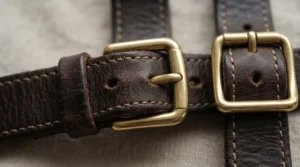
Leather traditionalists don’t have to give up on “affordable” entirely, and this Rhinegold model is proof. Made in Italy from properly finished leather rather than the stiffer bonded leather sometimes used to hit a lower price point, it’s cut with the same elbow-clearing anatomic shape as the synthetic options on this list, but with the classic look many riders still prefer for showing or dressage tests where turnout counts. Elasticated ends allow the strap to flex with movement, and it includes the ring fittings needed to attach a breastplate or training aid.
Here’s what most buyers overlook about leather girths generally: proper leather, cared for correctly, actually softens and moulds to an individual horse’s shape over months of use in a way synthetic materials can’t fully replicate — the trade-off is that it demands actual maintenance (cleaning and conditioning) that a wipe-clean neoprene girth simply doesn’t. Reviewers of Italian leather tack in this price bracket regularly note that the finish feels notably nicer than UK-made budget leather at a similar cost, though as with any leather product, it will need a proper break-in period and shouldn’t be left to dry out or crack from neglect. Horse & Hound’s own buyer’s guide to anatomical girths makes a similar point: the curve behind the elbow matters more for freedom of movement than the material it’s cut from.
Pros:
- ✅ Genuine Italian leather at a below-average leather price
- ✅ Anatomic shape with elasticated ends for flex
- ✅ Softens and personalises to your horse over time
Cons:
- ❌ Requires regular cleaning and conditioning
- ❌ Needs a break-in period before it feels supple
Priced around £70-£75, this is realistically the most affordable route into genuine leather anatomic shaping without stepping into three-figure territory — always check current price and colour availability at the time of research.
7. LeMieux Gel-Tek Anatomic Girth — best premium splurge for competition riders
This is the outlier on the list, and deliberately so — every roundup needs a “if budget genuinely isn’t the constraint” option, and this is it. The Gel-Tek combines ultra-soft oiled leather with gel-impregnated pockets positioned right along the leading edge of the girth, precisely where the elbow moves through its widest range of motion. The idea is that gel, unlike foam, doesn’t compress and stay compressed — it flows and redistributes under pressure, then returns to shape, which on paper should mean more consistent comfort across a long session than foam that gradually flattens.
Scalloped ends even out pressure under the buckles, and the buckles themselves sit at a slight angle for a closer fit against the horse’s side. An integrated clip means you can attach a breastplate without extra fuss. Based on the spec comparison against every other girth on this list, this is genuinely the most technically engineered option here, and the leather quality is a noticeable step up in feel. The obvious catch is cost: at this price, you’re paying for incremental comfort gains that matter more to a horse doing several hours of ridden work a week than one hacking twice weekly, so it’s worth being honest with yourself about whether your horse’s workload actually justifies the spend.
Pros:
- ✅ Gel pockets redistribute pressure without compressing flat
- ✅ Ultra-soft oiled leather feels noticeably premium
- ✅ Scalloped ends and angled buckles refine the fit further
Cons:
- ❌ Significant price jump over every other option here
- ❌ Comfort gains may be marginal for lightly worked horses
At around £140-£155, this sits firmly at the top of the “affordable” conversation — it’s the girth to consider once you’ve established your horse genuinely needs what gel technology offers, rather than a first purchase. Prices fluctuate, so check current listings before buying.
Practical Usage Guide: Fitting, Break-In and Maintenance
Buying the right anatomic girth is only half the job — fitting it properly is where most of the actual comfort benefit lives or dies. Start by checking the girth sits roughly a hand’s width behind the elbow when done up, with the buckles resting above the curve of the ribcage rather than digging into the softer belly area below. Tighten gradually: do the girth up loosely for mounting, walk for a few minutes, then take up one more hole once the horse has relaxed and settled into the tack, rather than cranking it fully tight from cold.
In the first thirty days with a new anatomic girth, the most common mistake is judging fit too quickly. Leather needs several rides to soften and mould; heat-responsive foam needs body warmth to activate properly; even neoprene needs a few uses to lose its factory stiffness. Check girthing area skin daily during this period for any early signs of pressure marks or hair loss, and don’t be afraid to size up slightly if the girth is sitting in exactly the same spot every time rather than settling naturally into the girth groove.
For ongoing maintenance, leather girths need cleaning after sweaty use and conditioning every few weeks to prevent cracking, while synthetic and neoprene options generally just need a wipe-down or occasional rinse. Whatever the material, check stitching and buckle attachment points monthly — a girth is a safety-critical piece of tack, and fraying at the billet strap or buckle holes is the first sign it needs replacing, not repairing.
Real-World Scenarios: Matching the Girth to Your Horse and Budget
The livery yard novice with a cob on a tight budget. If you’re keeping costs down and riding a forgiving, well-sprung-ribbed cob type two or three times a week, the Rhinegold Anatomical Memory Foam Girth or the Shires ARMA Neoprene Dressage Girth will comfortably cover your needs without overspending on features your horse’s conformation doesn’t demand.
The competition rider with a sensitive Thoroughbred. Fine-boned horses with a prominent sternum and narrow ribcage benefit most from even pressure distribution rather than raw padding thickness — this is exactly the scenario the Wintec Anatomic Elastic Girth with CAIR was designed to solve, and the extra spend is justified by genuinely reduced pinch points.
The dressage rider who shows regularly and wants the traditional look. If turnout in the ring matters and you’re schooling four or five times a week, the Rhinegold Anatomical Italian Leather Girth offers real leather presentation without the premium price of the top-tier options, while the LeMieux Gel-Tek Anatomic Girth suits riders competing at a level where marginal comfort gains genuinely affect performance.
Problem → Solution: Fixing Common Girth Complaints
Problem: my horse pins his ears or nips when I do the girth up. This “girthiness” is very often pressure-related rather than pure temperament — try a wider anatomic shape like the Shires ARMA Memory Foam Anatomical Girth, tighten in stages rather than all at once, and rule out ulcers with your vet if the behaviour is severe or sudden.
Problem: constant rubbing or hair loss behind the elbow. Switch to a textured, anti-chafe surface such as the Shires ARMA Anti-Chafe Anatomic Girth, and in the short term, a sheepskin girth sleeve over your existing girth can buy healing time while the skin recovers.
Problem: the saddle keeps sliding backward during work. This is often a girthing-point issue rather than a saddle problem — a forward-cut anatomic shape like the Shires ARMA Memory Foam Anatomical Girth‘s FreedomFit design, positioned slightly further forward between the front legs, can meaningfully improve saddle stability.
Problem: excessive sweating and heat under the girth in summer. Neoprene traps less moisture against the skin than some old-style padded girths — the Shires ARMA Neoprene Dressage Girth is a practical, budget-friendly fix here.
Problem: leather girth has gone stiff and cracked from neglect. Prevention beats cure: clean after sweaty rides and condition every few weeks; once cracking has set in around the billet holes, it’s a safety issue and the girth should be replaced, not patched.
How to Choose an Affordable Anatomic Girth
- Start with your horse’s conformation, not the price tag. A narrow-chested horse and a broad cob have genuinely different pressure points, so the “best” girth shape isn’t universal — it’s specific to the horse in front of you.
- Decide your material priority: comfort, maintenance, or looks. Neoprene wins on low maintenance, memory foam wins on padding-per-pound, and leather wins on traditional presentation and long-term mouldability.
- Check the elbow cut-out depth. A deeper anatomic cut-back generally means more elbow freedom, which matters more for horses that move with a big, forward-reaching stride.
- Match elastic placement to your horse’s girthiness. Fully elastic centres suit horses that expand a lot through the ribcage when working hard; end-elastic designs suit horses that just need a small amount of give.
- Set a realistic budget band before you shop. Decide whether you’re solving “my horse needs any anatomic shape” (budget tier) or “my horse needs a specific pressure-relief feature” (mid-to-premium tier) before comparing prices.
- Buy from a seller with a clear returns policy. Girth fit genuinely varies horse to horse, so the ability to exchange for a different size or shape without a fight is worth more than a marginal price saving.
- Reassess fit after your horse’s first few rides in a new girth. Weight, fitness, and even the season can change a horse’s girth measurement enough to matter, so treat the initial fit as a starting point, not a permanent fixture.
Anatomic Girth vs Traditional Straight Girth
The core difference is simple: a traditional straight girth is a flat strip that runs in an uninterrupted line from one billet to the other, while an anatomic girth is cut, curved, or contoured specifically to sit away from the elbow. On paper this sounds like a minor tailoring detail, but in practice it changes where pressure actually lands on the horse’s body. A straight girth concentrates pressure along a single narrow band directly behind the elbow — exactly where the forelimb needs to retract freely with every stride. An anatomic shape spreads that same girthing force across a wider surface area and specifically relieves the zone the elbow swings through.
| Feature | Straight Girth | Anatomic Girth |
|---|---|---|
| Elbow clearance | Minimal | Cut back for freedom of movement |
| Pressure distribution | Concentrated on a narrow band | Spread over a wider surface area |
| Typical price | Often cheaper | Slightly higher for the shaping |
| Best for | Very narrow saddle flaps, in-hand work | Ridden work, sensitive or forward-moving horses |
The written comparison above suggests straight girths still have a place — they’re simpler, sometimes cheaper, and fine for very light or occasional use — but for any horse doing regular ridden work, the anatomic shape’s wider pressure distribution is doing genuinely useful biomechanical work, not just following a trend. Where straight girths persist most commonly today is on very budget general-purpose saddles and some in-hand or lungeing setups, where elbow freedom under saddle isn’t the priority it is for ridden schooling.

Anatomic Girths for Narrow Horses
Narrow doesn’t just mean “thin” — it usually describes a horse with less spring of rib, a flatter barrel shape, and often a more prominent sternum, which is common in Thoroughbred, Arab, and some warmblood lines. On these horses, a bulky, heavily padded anatomic girth can actually work against you: extra thickness pressing into an already tight girth groove can create new pinch points rather than removing old ones. What tends to help more is a slimmer profile with even, flexible give across the whole panel — which is exactly the logic behind the Wintec Anatomic Elastic Girth with CAIR‘s air-cushion design, rather than simply adding more foam.
A second consideration for narrow horses is girth length and buckle position. If a girth is too long for a narrow-chested horse, the buckles can end up sitting too low, closer to the softer belly area rather than resting neatly above the curve of the ribcage near the saddle flap. Riders with narrow horses often find that going one size shorter than their previous straight girth, combined with a properly anatomic cut, solves rubbing issues that padding alone never fixed.
Girth Padding Materials Compared: Neoprene, Memory Foam, Sheepskin and Gel
Not all padding does the same job, and understanding the differences helps explain why prices vary so much across this list. Neoprene, as used in the Shires ARMA Neoprene Dressage Girth, is dense, wipes clean instantly, and resists moisture absorption — but it doesn’t breathe as well as other materials, and it stays at a fixed firmness regardless of temperature. Memory foam, seen in the Rhinegold Anatomical Memory Foam Girth and the heat-responsive version on the Shires ARMA Memory Foam Anatomical Girth, softens with body heat and moulds closer to an individual horse’s shape the longer it’s used, though standard foam can gradually compress and lose some of its original loft over a season or two of heavy use.
Sheepskin, while not featured among this list’s seven picks, is worth mentioning for context: it’s exceptionally soft against clipped or sensitive skin and excellent at wicking moisture, but requires more regular washing than synthetic pads. Gel, as used in the LeMieux Gel-Tek Anatomic Girth, behaves differently again — rather than compressing and staying compressed like foam, it flows under pressure and returns to its original shape, which is why it tends to feel more consistently supportive across a long ride but also explains its higher price point. None of these materials is objectively “best” — the right choice depends on your horse’s skin sensitivity, your climate, and how much maintenance time you’re realistically willing to put in.
Girth Safety Checks: Fit, Wear and When to Replace
A girth is one of the few pieces of tack where failure has an immediate, obvious safety consequence, so routine checking matters more than it does for, say, a saddle pad. Before each ride, run a hand along the full length of the girth checking for fraying at the billet holes, cracking in leather, or thinning in the elastic inserts — elastic in particular loses recoil gradually and can snap without much warning once it’s degraded. Check buckle tongues for bending or rust, since a bent buckle can slip under load exactly when you need it not to.
According to continuing professional development guidance published via the Society of Master Saddlers, girth condition and fit should be assessed as part of routine tack checks alongside the saddle itself, not treated as a separate, lower-priority item — the girth is, after all, the only thing keeping the saddle attached to the horse. As a rough rule of thumb, budget synthetic girths in regular use are worth inspecting closely from around the one-year mark, while well-maintained leather can last considerably longer provided it’s cleaned and conditioned properly; but any visible cracking, fraying at stress points, or elastic that no longer springs back should mean immediate replacement rather than “one more ride.”
Frequently Asked Questions
❓ What does anatomic mean on a horse girth?
❓ Is a more expensive anatomic girth always more comfortable?
❓ How do I know if my anatomic girth is the right size?
❓ Can I use an anatomic girth on any saddle?
❓ How often should I replace my horse's girth?
Conclusion
An affordable anatomic girth doesn’t have to mean compromise — the honest truth from comparing all seven of these is that shape matters more than price for basic comfort, while price mainly buys you refinement, durability, and material-specific perks like gel’s pressure recovery or leather’s long-term mould. For most riders on a budget, the Rhinegold Anatomical Memory Foam Girth or Shires ARMA Neoprene Dressage Girth genuinely deliver the core benefit without the core cost. For horses with specific needs — a narrow ribcage, a rub-prone coat, or a competition workload that justifies premium engineering — the Wintec Anatomic Elastic Girth with CAIR and LeMieux Gel-Tek Anatomic Girth earn their higher price tags with features that actually solve a defined problem rather than simply looking nicer.
Whichever you choose, remember that the girth is only doing its job properly if it’s fitted, checked, and replaced on a sensible schedule — no shape or material substitutes for basic vigilance. Take the time to reassess fit after the first few rides, keep an eye on wear points, and don’t be afraid to size or style-swap if something isn’t working, even after you’ve bought it.
✨ Ready to upgrade your horse’s comfort? Browse the anatomic girths above and check today’s prices before you buy — your horse’s shoulders will thank you! 🐴
Recommended for You
- Affordable Jumping Girth: 7 Best Budget Picks UK (2026)
- 7 Best Affordable Dressage Girths for 2026: Expert Buying Guide
- Affordable Sheepskin Numnah: 7 Best Value Picks for 2026
Disclaimer: This article contains affiliate links. As an Amazon Associate, I earn from qualifying purchases. If you purchase products through these links, we may earn a small commission at no additional cost to you.
✨ Found this helpful? Share it with your friends! 💬🤗
