In This Article
Let’s be honest: shopping for a jumping saddle under £400 can feel a bit like hunting for a unicorn wearing a price tag. Walk into most tack shops and you’ll see leather jump saddles sitting proudly at £1,200 and up, looking down their noses at anyone clutching a modest budget. But here’s the thing nobody tells beginners — a smaller budget doesn’t have to mean a worse ride, or a horse who resents you every time you tack up.
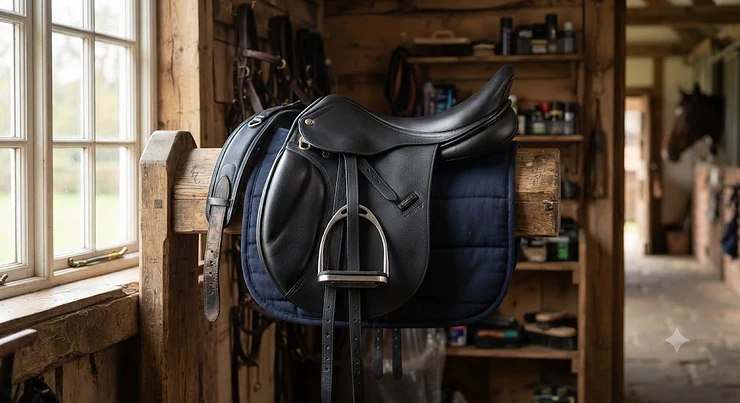
What is a jumping saddle under £400? In practical terms, it’s a forward-cut, close contact saddle — usually synthetic rather than full leather — built with a flatter seat and forward flap to support the rider’s position over a fence, priced within a genuinely accessible range for hobby riders, Pony Clubbers, and eventing hopefuls who aren’t sponsored by anyone.
This guide digs into seven real products currently sold on amazon.co.uk, weighs up the trade-offs of synthetic versus leather at this price point, and gives you the kind of comparative reasoning a spec sheet alone simply won’t. Whether you’re chasing a forward flap jumping saddle for a green horse, kitting out for eventing tack on a shoestring, or just want a lightweight jumping saddle that won’t wreck your back on the yard run, you’ll find the analysis here rather than a rewritten product listing. As the British Horse Society points out, tack affordability doesn’t have to compromise safety — provided you know what you’re buying and get it properly checked. That’s exactly the mindset this article takes.
Quick Comparison Table
| Saddle | Type | Weight | Best For | Price Range |
|---|---|---|---|---|
| ACES Equine Self-Adjusting Synthetic GP Jump Saddle | Synthetic, changeable gullet | Light | First-time buyers on a tight budget | Under £150 |
| Pets2Care Synthetic Jumping GP Saddle | Synthetic, changeable gullet | Light | Riding school leavers building a kit | Under £150 |
| Wintec 250 Jump Saddle | Synthetic (CAIR panel) | Mid-light | Riders wanting a known, trusted brand | £250-£350 range |
| HORSE Treeless FreeMax Jumping Saddle | Treeless, synthetic | Very light | Multi-shape horses, ponies, cobs | Under £200 |
| Shires Hi-Lite Self-Adjust Synthetic GP Saddle | Synthetic, self-adjusting | Light | Budget all-rounders who jump occasionally | Under £200 |
| Bridleway Synthetic Close Contact Jump Saddle | Synthetic, forward cut | Light-mid | Club-level jumping and hacking | £150-£300 range |
| Prideaux Synthetic Close Contact Jump Saddle | Synthetic, interchangeable gullet | Mid | Eventing-curious riders wanting more support | £300-£400 range |
Looking at the spread above, the gap between the cheapest and most expensive options in this list isn’t really about quality alone — it’s about how much adjustability, knee support, and brand-backed engineering you’re paying for. The ACES Equine Self-Adjusting Synthetic GP Jump Saddle and Pets2Care Synthetic Jumping GP Saddle sit at the true entry point, while the Prideaux Synthetic Close Contact Jump Saddle edges right up against the £400 ceiling because it borrows design features — like a properly engineered interchangeable gullet system — usually reserved for pricier saddles. If you’re outfitting a first pony on a shoestring, start at the top of the table; if you’re eventing at Intro level and need something that’ll hold up to regular schooling, look toward the bottom.
💬 Just one click — help others make better buying decisions too!😊
Top 7 Jumping Saddles Under £400: Expert Analysis
1. ACES Equine Self-Adjusting Synthetic GP Jump Saddle — best true entry-level buy
The standout here is the changeable gullet system on a saddle that sits comfortably under £150, which is unusual at this price point. Most sub-£150 saddles lock you into one tree width forever; this one lets you swap the gullet plate as your horse’s shape changes, at least within a modest range.
Specs-wise, you’re looking at a synthetic leather-look exterior over a webbed tree, a suede-effect seat for grip, and seat sizes typically running from around 14 inches up to 18 inches. In practice, that changeable gullet matters more than it sounds — a growing youngster or a horse coming back into work after time off will often widen across the withers, and being able to adjust the fit yourself (or via a fitter) without buying a whole new saddle is a genuine cost-saver over the ownership period.
Based on the spec comparison with other budget synthetics, this is best suited to riders just starting out with their own horse or pony, particularly those who need a saddle that can flex with a changing youngster. It’s not the saddle for someone chasing serious knee support over bigger fences, but for schooling, low-level jumping, and general all-rounder use, it punches above its price.
ACES Equine is a smaller UK-based tack manufacturer without the decades of independent review coverage that bigger brands enjoy, so aggregated customer sentiment is thinner here than for household names — worth noting rather than glossing over. Where reviews do exist, buyers commonly mention the saddle being lighter than expected for the price and appreciate the interchangeable gullet, though some flag that the flocking settles faster than on leather saddles and may need topping up sooner.
Pros:
- ✅ Genuinely sits at the bottom of the budget bracket
- ✅ Changeable gullet system rare at this price
- ✅ Lightweight and easy to carry to the yard
Cons:
- ❌ Limited independent review history compared to major brands
- ❌ Flocking likely needs earlier attention than leather panels
Price-wise this typically sits well under £150, and as a first “own saddle” for a rider building their kit from scratch, it represents strong value — check current price before buying, as stock and pricing shift.
2. Pets2Care Synthetic Jumping Self-Adjusting GP Saddle — best for building a full kit affordably
The standout feature is the “easy changeable gullet system,” which appears across several budget synthetic ranges but is worth calling out here because it’s paired with a genuinely low list price. Expanding on that: it means you’re not locked into a single fit from day one, which matters enormously when you’re buying for a young or growing horse.
The seat is offered in the common 17-inch size that suits the average adult rider, with a webbed or polymer tree beneath a synthetic leather-look cover. In real-world terms, that tree type flexes slightly more than a rigid steel-spring tree, which some riders find forgiving on a horse with an unusual back shape but which experienced jumpers may notice as slightly less “locked in” over bigger efforts.
Honestly, this is a saddle for riders prioritising affordability and low maintenance over competition-level polish — a solid pick if you’re simultaneously buying a bridle, girth, and boots and need the saddle line item to stay modest. Reviewers consistently note it’s easy to wipe clean after a muddy hack, which matters more than it sounds when you’re doing your own yard work on a weekday evening.
Aggregated customer sentiment for saddles in this bracket tends to praise the low weight and easy care, while a recurring theme in feedback for synthetic budget saddles generally is that the branded leather-look material can look slightly worn faster than genuine leather with heavy daily use — a fair trade-off at this price.
Pros:
- ✅ Very accessible price point for full-kit budgets
- ✅ Wipe-clean synthetic surface, low maintenance
- ✅ Changeable gullet accommodates a changing horse
Cons:
- ❌ Surface may show wear faster than leather over years
- ❌ Less “locked in” feel than a rigid-tree saddle for advanced jumping
At under £150, the value case is straightforward: for riders who need one working saddle rather than a showring statement, this covers the basics honestly.
3. Wintec 250 Jump Saddle — best for a trusted, established brand on a budget
The standout advantage is brand backing — Wintec has been manufacturing synthetic saddles for decades and the 250 range is their genuine entry point, distinct from the pricier 500 Jump line which typically runs well above the £400 mark new. That distinction matters because it’s easy to see “Wintec” and assume a higher price than you’ll actually pay for the 250.
Key specs include a synthetic, low-maintenance exterior and a lighter panel construction than Wintec’s premium CAIR-cushioned ranges, with the classic Wintec approach to adjustability carried through in a simplified form. In practical terms, this means you get some of the fit-adjustment philosophy Wintec is known for, without paying for the full HART or CAIR cushioning technology reserved for the 500 and Pro ranges.
Based on the spec comparison against the unbranded budget options above, this suits riders who want the reassurance of a recognised manufacturer with UK stockist support and resale value, even if it means slightly less cushioning tech than Wintec’s flagship jump saddle. It’s a sensible middle ground between anonymous budget brands and the four-figure Wintec Pro range.
Wintec as a brand has an unusually large aggregated review base across retailers, and a common thread in that feedback is that owners find the saddles genuinely lightweight and appreciate being able to hose mud off after a wet British winter — though some long-term owners of entry Wintec models note the panels can feel firmer underfoot than wool-flocked leather panels until they’ve bedded in.
Pros:
- ✅ Backed by a well-established, widely stocked brand
- ✅ Easy-care synthetic surface, hoses clean
- ✅ Strong resale value relative to unbranded synthetics
Cons:
- ❌ Less cushioning tech than Wintec’s pricier CAIR/HART ranges
- ❌ Panels can feel firmer before bedding in
Typically found in the £250-£350 range depending on retailer and gullet fittings, this is a fair “safe choice” pick for riders who want a name they can trust without stretching to Wintec’s premium jump line.
4. HORSE Treeless FreeMax Jumping Saddle — best for horses with unusual or changing shapes
The standout feature is right there in the name: no rigid tree at all. Expanding on that, a treeless design flexes with the horse’s back rather than imposing a fixed shape, which can be a genuine advantage for cobs, native ponies, or horses mid-way through a fitness or weight change.
Specs commonly include a 16-inch wide seat option, a flexible synthetic panel construction, and a matching girth bundled in on some listings — useful if you’re building a kit from nothing. In practice, treeless saddles distribute rider weight differently to treed saddles; there’s ongoing debate in the equestrian world about pressure distribution, so this is one to discuss with a fitter rather than assume is automatically “kinder.”
Honestly, this is best suited to owners of multi-shape horses, riders on a very tight budget who need one saddle to fit several different animals (think riding club instructors or share-liveries), or those whose horse has proven difficult to fit in a treed saddle. It’s not the first choice for riders wanting maximum jumping support over larger courses, since the structure that gives knee blocks their purchase typically needs a tree to anchor to.
Aggregated sentiment around treeless jump saddles generally is more polarised than for treed budget saddles — some owners report their horse moving noticeably more freely, while others (and several UK saddle fitters commenting publicly) caution that treeless designs can concentrate pressure under the rider’s seat bones if not carefully padded. This is a case where “you should get this properly assessed” isn’t just boilerplate advice.
Pros:
- ✅ Flexes to accommodate changing or unusual horse shapes
- ✅ Very lightweight, easy for younger riders to carry
- ✅ Often bundled with a matching girth
Cons:
- ❌ Less structured support for ambitious jumping efforts
- ❌ Weight distribution is a genuinely debated topic — get it checked
Priced under £200 in most listings, it’s an appealing option if fit flexibility is your priority over classic jumping structure.
5. Shires Hi-Lite Self-Adjust Synthetic GP Saddle — best budget all-rounder with a known name
The standout here is the self-adjusting fit system from a brand — Shires — that’s been a fixture of British tack rooms for over 40 years, according to the company’s own trade history. That heritage matters when you’re buying sight-unseen online, because Shires products are widely stocked and easy to get hands-on with at a local shop first.
Specs typically include a suede-effect seat, synthetic exterior, and a self-adjusting panel intended to spread pressure without needing a full gullet swap. In practice, self-adjusting systems trade some of the precision of a true interchangeable-gullet saddle for simplicity — you’re not swapping parts, but you’re also not getting quite the same tailored fit as saddles with a proper gullet-plate system.
Based on the spec comparison, this suits riders who want a recognisable, easy-to-source brand for general purpose riding with occasional jumping, rather than dedicated eventing tack for regular cross-country work. Shires’ broader catalogue (rugs, saddle pads, grooming kit) also means it’s easy to build a matching, budget-friendly kit around it.
Feedback specifically on the Hi-Lite Self Adjust model is mixed in independent forums — some owners are happy with the value, while others have flagged concerns about panel and flocking quality at this specific price tier, with at least one report of a gullet issue after under a year of use. That’s worth weighing honestly: it’s a budget saddle, and budget synthetic panels are, on balance, more likely to need earlier attention than wool-flocked leather.
Pros:
- ✅ Backed by a long-established UK equestrian brand
- ✅ Self-adjusting system needs no manual gullet swap
- ✅ Easy to match with wider Shires tack range
Cons:
- ❌ Mixed independent feedback on long-term panel durability
- ❌ Less precise fit adjustment than true interchangeable-gullet designs
Generally listed under £200, it’s a reasonable pick if you want brand recognition without spending toward the £400 ceiling — just budget for a saddle-fitter check sooner rather than later.
6. Bridleway Synthetic Close Contact Jump Saddle — best for club-level jumping and everyday hacking
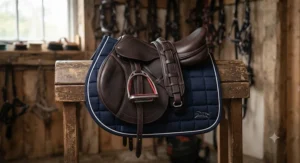
The standout feature is the properly forward-cut flap, closer in shape to what you’d expect from a dedicated jumping saddle than some of the flatter general-purpose budget options above. Expanding on that: a genuinely forward flap jumping saddle shortens the distance between your knee and the saddle’s support point, which helps maintain a secure lower leg over a fence.
Specs commonly run to synthetic leather-look construction, a close contact panel designed to minimise bulk between your leg and the horse’s side, and knee rolls sized for a supportive-but-not-bulky feel. In practice, close contact panels mean you’ll feel more of your horse’s movement through your seat and leg — brilliant for developing feel, but it also means less forgiveness if your position slips under pressure.
Honestly, this is the pick for riders doing regular club-level jumping, hunter trials, or unaffiliated eventing who want a saddle shaped properly for the job rather than a general-purpose compromise. It’s less suited to complete beginners who benefit from the extra security of a deeper-seated all-purpose design while they’re still finding their balance.
Bridleway saddles carry a solid reputation among UK riders for value-for-money synthetic ranges, and aggregated review themes across the brand’s saddle line tend to highlight comfortable, secure knee blocks as a strength, alongside the usual synthetic-panel caveat that flocking benefits from an annual check once the saddle has bedded in.
Pros:
- ✅ Genuinely forward-cut flap for a proper jumping position
- ✅ Close contact panel builds rider feel
- ✅ Solid reputation for synthetic value ranges
Cons:
- ❌ Less forgiving than deeper-seat all-purpose designs for beginners
- ❌ Flocking check recommended after the first season
Typically priced in the £150-£300 range depending on size and retailer, this is a strong mid-table pick for anyone whose riding has moved past “just starting out.”
7. Prideaux Synthetic Close Contact Jump Saddle — best for eventing-curious riders wanting more structure
The standout feature is the interchangeable gullet system, engineered specifically for the discipline of showjumping according to the manufacturer, Premier Equine — and it’s one of the more structurally serious saddles on this list while still landing under the £400 ceiling.
Specs include a synthetic build with reduced bulk under the leg for genuine close contact, seamless girth points (which cut down on rubbing and pressure points near the girth area), and a flexible polymer webbed tree beneath the panels. In practical terms, seamless girth points are a small detail that matters more than it looks — they reduce the chance of a horse developing girth-area sensitivity from repeated rubbing, something regular jumpers and eventers will do more of than occasional hackers.
Based on the spec comparison with the rest of this list, this is the saddle for riders stepping up toward regular unaffiliated eventing or serious club showjumping who want a design genuinely built for the discipline — not a general-purpose saddle wearing a jumping saddle’s badge. It asks more of your position than the beginner-friendly options above, rewarding riders who already have a reasonably established jumping seat.
As a more specialist product from a mid-sized UK manufacturer, independently verified customer review volume is smaller than for the giant synthetic brands, so treat any specific star ratings you see with a healthy pinch of caution and, where possible, look for saddle-fitter commentary rather than relying purely on retailer-hosted reviews.
Pros:
- ✅ Purpose-built jumping geometry, not a general-purpose compromise
- ✅ Seamless girth points reduce rubbing risk
- ✅ Interchangeable gullet for genuine fit adjustment
Cons:
- ❌ Smaller independent review base to verify against
- ❌ Less forgiving for riders still developing their jumping position
Sitting toward the £300-£400 range, this is the natural “stretch pick” on this list — the one to choose if you’ve got the top of the budget to spend and want the most discipline-specific structure for it.
Top 7 Jumping Saddles: Specs & Value Comparison
| Saddle | Adjustability | Panel Type | Girth Points | Best For | Price Range |
|---|---|---|---|---|---|
| ACES Equine Self-Adjusting Synthetic GP Jump Saddle | Changeable gullet | Webbed tree | Standard | New owners, growing horses | Under £150 |
| Pets2Care Synthetic Jumping GP Saddle | Changeable gullet | Polymer/webbed | Standard | Full-kit budget builders | Under £150 |
| Wintec 250 Jump Saddle | Simplified adjustable | Lightweight synthetic | Standard | Trusted-brand seekers | £250-£350 |
| HORSE Treeless FreeMax Jumping Saddle | Treeless flex | Flexible synthetic | Standard | Unusual/changing horse shapes | Under £200 |
| Shires Hi-Lite Self-Adjust Synthetic GP Saddle | Self-adjusting | Synthetic | Standard | Occasional jumpers | Under £200 |
| Bridleway Synthetic Close Contact Jump Saddle | Fixed/limited | Close contact synthetic | Standard | Club-level jumping | £150-£300 |
| Prideaux Synthetic Close Contact Jump Saddle | Interchangeable gullet | Flexible polymer tree | Seamless | Eventing-curious riders | £300-£400 |
Reading across the rows, adjustability is really the dividing line in this category — saddles with a genuine interchangeable or changeable gullet, like the ACES Equine Self-Adjusting Synthetic GP Jump Saddle, Pets2Care Synthetic Jumping GP Saddle, and Prideaux Synthetic Close Contact Jump Saddle, will generally outlast a horse’s changing shape better than fixed-tree budget options. If your horse is fully grown, fit, and stable in condition, that adjustability matters less; if you’ve got a youngster or a rehab case, it’s arguably the single most important spec on this table.
✨ Ready to compare options for yourself? Browse current listings and see what fits your budget today!
Setting Up Your New Saddle: A Practical Usage Guide
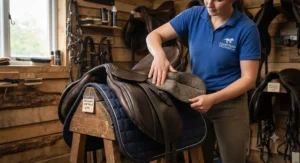
Getting a new jumping saddle under £400 home is only step one — how you set it up in the first month genuinely affects both its lifespan and your horse’s comfort. Start by resisting the urge to just chuck it on and ride: book a saddle fitter, even for a budget synthetic, because gullet width and panel placement still need checking against your specific horse’s back, not just the seat size you ordered.
In the first few rides, pay attention to how the saddle sits once you’re mounted rather than just when it’s static on the horse’s back — synthetic panels can behave slightly differently under rider weight than leather, and a saddle that looked level empty can tip forward or back once you’re up. A common early mistake is over-tightening the girth in one go rather than tightening gradually in stages as the horse relaxes, which applies to any saddle but matters more with lighter synthetic trees that can shift if the girth isn’t snug enough.
Maintenance-wise, synthetic saddles are genuinely lower effort than leather — a wipe with a damp cloth after muddy rides keeps most surfaces looking presentable — but don’t skip the underneath. Check stitching around knee blocks and girth straps monthly, since these are the components most likely to wear first on a budget build. If your saddle has a changeable gullet, get into the habit of checking the fit every few months rather than assuming a one-off fitting session covers you for the horse’s lifetime; the British Horse Society specifically recommends having your saddle checked at least every six months by a qualified fitter, and that guidance applies whether you paid £150 or £1,500.
Real-World Scenarios: Which Saddle Suits You?
The Pony Clubber on a tight family budget: riding a 14.2hh all-rounder, jumping small courses once or twice a week, and needing a saddle that can stretch across a growth spurt or two. The ACES Equine Self-Adjusting Synthetic GP Jump Saddle or Pets2Care Synthetic Jumping GP Saddle make sense here — low upfront cost, changeable gullets to track a growing pony, and low guilt if it gets muddy on a Saturday hunter trial.
The returning adult rider rebuilding a kit from scratch: back in the saddle after a break, riding a steady cob-type at a local livery yard, wanting something dependable without splurging while confidence rebuilds. The Wintec 250 Jump Saddle fits this brief nicely — a recognisable brand that reduces buying anxiety, easy care for someone re-learning yard routines, and enough resale value that switching later isn’t a financial write-off.
The unaffiliated eventer stepping up a level: schooling three times a week, aiming at Intro or 80cm events, riding a horse that’s fit and settled in shape, and wanting eventing tack that genuinely supports the jumping phase. The Prideaux Synthetic Close Contact Jump Saddle is the natural fit — the interchangeable gullet, seamless girth points, and purpose-built jumping geometry earn their keep at this training intensity in a way they wouldn’t for an occasional happy hacker.
How to Choose a Jumping Saddle Under £400
- Measure your horse’s back, not just your own seat size. A saddle that fits you perfectly but pinches your horse’s withers will cause far more problems than one that’s slightly the “wrong” seat size for you.
- Prioritise adjustability if your horse’s shape isn’t settled. Growing youngsters, rehab cases, and horses coming back into fitness all benefit from a changeable or interchangeable gullet system.
- Decide how forward-cut you actually need the flap. Regular jumpers benefit from a proper forward flap jumping saddle; occasional jumpers may prefer a general-purpose compromise with a slightly deeper seat.
- Factor in your riding frequency, not just your discipline. A saddle used four times a week needs more durable panels and stitching than one used for the occasional weekend hack-and-jump.
- Budget for a fitting, not just the saddle itself. A cheap saddle plus a proper fitting check beats an expensive saddle with no fitting check at all.
- Check girth point design if you jump regularly. Seamless or forward-set girth points reduce rubbing on horses working hard and sweating more.
- Read aggregated reviews with a critical eye. Smaller UK manufacturers often have a thinner review base — that doesn’t mean lower quality, just less publicly verified data to lean on.
Forward Flap Jumping Saddle vs General Purpose Saddle
It’s tempting to assume “jumping saddle” and “general purpose saddle” are basically the same thing wearing different labels, but the difference genuinely changes how you ride. A forward flap jumping saddle is cut so the flap sits further forward under your thigh, shortening the gap between your knee and the saddle’s support structure when you fold forward over a fence — which is precisely the position a general purpose saddle’s more centred flap doesn’t fully support.
In everyday terms, riders who jump two or three times a week tend to notice the difference most: a forward-cut flap makes it easier to keep your lower leg still and your seat light out of the saddle, while a general purpose saddle can leave you feeling like you’re fighting the flap position mid-stride. On the flip side, general purpose saddles win on versatility — if you’re hacking, doing a bit of flatwork, and jumping only occasionally, the more centred, slightly deeper seat of a GP saddle is genuinely more comfortable across a wider range of activities than a dedicated forward-cut design.
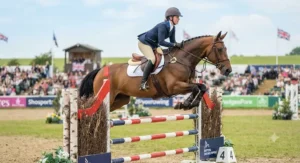
For riders working specifically toward eventing tack requirements, where the jumping phase demands a secure, forward position over solid fences, a genuine forward-cut design like the Bridleway Synthetic Close Contact Jump Saddle or Prideaux Synthetic Close Contact Jump Saddle earns its keep. For everyone else splitting time between disciplines, a well-fitted GP saddle with moveable knee blocks — which, as the British Horse Society notes, suits many riders at lower levels of competition — is often the more sensible single-saddle solution.
Common Mistakes When Buying a Jumping Saddle Under £400
Buying at this price point comes with its own specific pitfalls, separate from the usual “measure twice” advice. The biggest one is assuming budget automatically means compromise on safety — it doesn’t, provided you buy from a reputable manufacturer and still get the saddle properly fitted rather than skipping that step to save money.
A second common mistake is buying purely on seat size without checking gullet width or tree type, which matters enormously for horse comfort but gets overlooked when shoppers fixate on rider-facing specs. Third, many first-time buyers underestimate how quickly synthetic flocking can need attention compared to wool-flocked leather — not a dealbreaker, but a genuine ongoing cost that should factor into your total budget, not just the purchase price. Finally, some riders buy a dedicated jumping saddle when their actual riding is 80% hacking and 20% occasional small jumps — in that case, a general purpose saddle with movable knee blocks will usually serve better and offer more day-to-day comfort.
Long-Term Cost & Maintenance of Budget Jumping Saddles
The purchase price is only part of the real cost of ownership. Synthetic saddles at this price generally need less oiling and conditioning than leather — a genuine saving in both time and product cost over the years — but they can require more frequent flocking checks, particularly around the one-to-two-year mark, as budget panels settle faster than dense wool flocking in premium leather saddles.
Factor in a saddle-fitting check every six months as a recurring cost, whether that’s a modest fee to a qualified fitter or a DIY assessment if you’re confident doing so (though professional checks remain the safer default, especially for less experienced owners). Over a three-to-five-year ownership period, a £150 synthetic saddle with two or three fitting checks and the odd re-flock can end up costing a similar amount per year of use as a £1,000+ leather saddle bought once and rarely touched — the total cost of ownership gap narrows more than the sticker price suggests, which is worth remembering if you’re tempted to stretch the budget “because it’ll last longer” without actually checking that assumption against your own riding frequency.
Features That Actually Matter (And Those That Don’t)
At this price point, marketing language can make budget saddles sound more sophisticated than they are, so it’s worth separating genuine value from padding. A changeable or interchangeable gullet genuinely matters — it’s one of the few features in this bracket that meaningfully extends a saddle’s useful life as your horse changes shape. Seamless girth points matter if you jump or event regularly, since girth-area rubbing is a real, common issue for hard-working horses.
What matters less than it sounds: exact colour options and cosmetic stitching patterns, which affect nothing about fit or function; and headline weight figures, since the difference between a 6kg and a 7kg synthetic saddle rarely changes the practical carrying experience for most riders. Branded “cushioning technology” names sound impressive across the market, but what actually matters is how the panel performs under your specific horse’s back — a fitter’s assessment beats a marketing term every time.
Safety, Fit & UK Regulation Considerations
Saddle safety isn’t heavily regulated by UK law in the way, say, riding hats are — but that doesn’t mean there’s no standard to hold budget saddles to. The Society of Master Saddlers’ Qualified Saddle Fitter scheme is the widely recognised UK benchmark for professional fitting standards, and using a qualified fitter is the single most effective safety step available to any rider, regardless of what the saddle cost. If you’re planning to compete under British Eventing or British Showjumping affiliation, always check the current rule book’s approved tack guidance before assuming any saddle — budget or otherwise — is automatically permitted at every level.
Buying second-hand at this price point is common, and the British Horse Society’s own guidance is clear that whether new or used, having the saddle correctly fitted is essential for the safety and comfort of horse and rider — a cheap saddle that fits badly can cause real, ongoing welfare issues, while a modest synthetic saddle that’s properly fitted is a genuinely safe, sensible choice for the vast majority of riders in this bracket.
Frequently Asked Questions
❓ Can you get a decent jumping saddle under £400?
❓ Is a synthetic jumping saddle as good as leather?
❓ What's the difference between eventing tack and general jumping tack?
❓ How often should a budget saddle be refitted?
❓ Do I need a forward flap jumping saddle if I mostly hack?
Conclusion
There’s a persistent myth in the equestrian world that a serious rider needs a serious price tag, and hopefully this guide has poked a few holes in that. A genuinely good jumping saddle under £400 exists — several of them, in fact — provided you match the saddle’s strengths to your actual riding: adjustability for a changing horse, forward-cut structure for regular jumping, or budget-friendly simplicity for a rider just starting out.
The seven saddles covered here span true entry-level buys like the ACES Equine Self-Adjusting Synthetic GP Jump Saddle through to the more structured Prideaux Synthetic Close Contact Jump Saddle, and the right pick genuinely depends on your horse’s shape, your jumping frequency, and how much of the £400 ceiling you want to spend. Whichever you choose, the same rule applies regardless of price: get it properly fitted, keep checking that fit, and let the saddle work for your horse rather than against them.
✨ Don’t Miss These Exclusive Deals!
🔍 Take your jumping saddle search to the next level with these carefully selected options. Click on any highlighted item to check current pricing and availability. The right saddle will help you build a confident, comfortable partnership with your horse for years to come!
Recommended for You
- 7 Best Dressage Saddles Under £500 in 2026 (Honest UK Guide)
- Affordable General Purpose Saddle: 7 Brilliant Picks for 2026
- Pony Fly Rug UK: 7 Best Picks & Buying Guide (2026)
Disclaimer: This article contains affiliate links. As an Amazon Associate, I earn from qualifying purchases. If you purchase products through these links, we may earn a small commission at no additional cost to you.
✨ Found this helpful? Share it with your friends! 💬🤗
