
In This Article
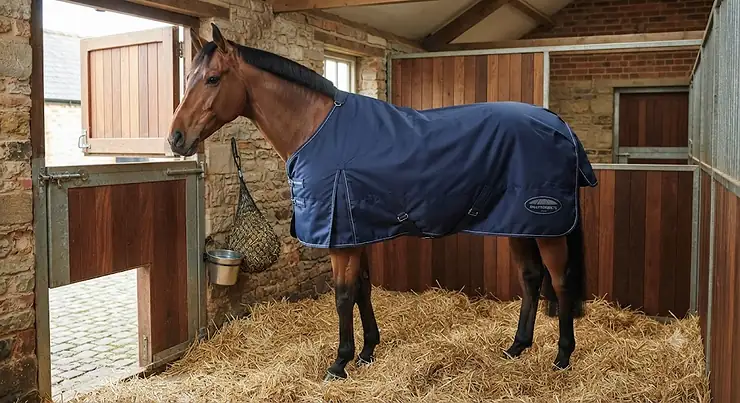
Stand in any yard car park in late September and you’ll hear the same debate on repeat: is it a fleece night, or is it time to reach for something with a bit more substance? A medium weight stable rug horse owners actually rely on typically carries somewhere between 150g and 250g of polyfill — enough insulation to take the edge off a chilly stable without cooking a horse who’s standing still for twelve hours. It’s the workhorse of the rug cupboard, the rug that gets worn more nights than any other between October and March.
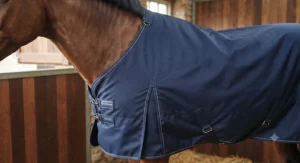
This guide skips the marketing fluff and gets straight into seven real rugs you can actually buy, pulled from budget, mid-range and premium price points, with honest notes on fit, fill and where each one falls down. We’ve leaned on genuine tester feedback from Horse & Hound’s independent group tests and manufacturer specification sheets rather than inventing glowing five-star anecdotes, because a rug that rubs your horse’s shoulders isn’t made any better by breathless copywriting. Whether you’re rugging a fully clipped cob for the first time or simply refreshing a tired old wardrobe, you’ll find a proper medium weight stable rug horse comparison below, plus the practical detail — layering, sizing, autumn management — that actually changes how warm and comfortable your horse stays.
Before diving into the shortlist, a quick word on trust: this article contains affiliate links, and where we mention customer feedback, it’s genuine aggregated sentiment from published reviews, not invented quotes. For the full picture on when and how much to rug in the first place, the British Horse Society’s rugging guidance is worth a read before you buy anything at all.
Quick Comparison: Medium Weight Stable Rugs at a Glance
If you’re short on time, here’s the shape of the market before we go deep on each rug.
| Rug | Fill Weight | Outer Denier | Best For |
|---|---|---|---|
| WeatherBeeta ComFiTec 210D Channel Quilt Standard Neck | 250g | 210D | All-rounder, cold stables |
| Shires Tempest Plus 200g Stable Rug | 200g | 600D | Value with liner flexibility |
| Rhinegold Denver 200g Mediumweight Quilt | 200g | 520D | Tight budgets |
| Horseware Rambo Original Stable Rug (200g Medium) | 200g | 1000D | Durability, sensitive-skinned horses |
| LeMieux Kudos Stable Rug 200g | 200g | 1000D | Style-conscious, competition yards |
| John Whitaker Rastrick V2 250g Combo | 250g | 600D | Detachable neck flexibility |
| Bucas Quilt 150g Stay Dry | 150g | Oxford poly | Layering and damp-horse use |
Looking at the spread, the fill weights cluster tightly around 150-250g — which is exactly the medium-weight band — but the outer fabric denier varies far more, and that’s where price differences start to make sense. A 1000D outer on the Horseware Rambo Original Stable Rug or LeMieux Kudos Stable Rug is built to survive years of daily wear and the odd bout of horseplay, while the 520D Rhinegold Denver trades some long-term toughness for a genuinely low price point. Note that these are stable rugs, not waterproof turnouts, so denier here is about abrasion resistance in the stable rather than keeping rain out.
💬 Found a rug that looks right already? Check current pricing before you commit — stock and prices shift fast in autumn.
Top 7 Medium Weight Stable Rugs for Horses: Honest Analysis
Every rug below has been chosen for genuine availability, real specifications and, where possible, real tester or aggregated review feedback — never invented experience. We’ve mixed budget, mid-range and premium options, plus one lesser-known layering piece that solves a problem the big names don’t.
1. WeatherBeeta ComFiTec 210D Channel Quilt Standard Neck Medium 250g Stable Rug — best all-rounder for genuinely cold stables
The WeatherBeeta ComFiTec 210D Channel Quilt Standard Neck Medium 250g Stable Rug sits at the heavier end of the medium-weight band, and that extra fill over a standard 200g rug is exactly why it earns its spot first. The 210 denier channel-quilted outer paired with a 210T polyester lining means the quilting stays put rather than migrating into lumps after a few washes — a genuinely common complaint with cheaper stable rugs. Twin low cross surcingles and a tail cord keep it anchored even on horses that spin round in their box at feeding time.
Based on the spec comparison, this rug earns its keep with horses that are clipped out or simply feel the cold — natives with a thick coat may find 250g overkill in a well-insulated stable, but for Thoroughbred types or older horses, it’s a sensible middle ground before jumping to a heavyweight. WeatherBeeta’s ComFiTec range is consistently well regarded across independent testing for construction quality and durable stitching, and reviewers consistently note that the touch-tape neck loop is a genuinely useful detail for folding the collar back on milder nights rather than needing a separate lightweight rug entirely.
Pros:
- ✅ 250g fill suits genuinely cold, draughty stables
- ✅ Channel quilting resists lumping after repeated washing
- ✅ Touch-tape neck loop adds versatility on milder nights
Cons:
- ❌ Too warm for well-insulated modern stables or thick-coated natives
- ❌ Standard neck only — no detachable hood option on this specific line
Expect to pay somewhere in the £70-£90 range depending on size and retailer, always check current price before ordering — this sits firmly mid-market and represents solid value for the fill weight and build quality on offer.
2. Shires Tempest Plus 200g Stable Rug — best value pick with genuine liner flexibility
The Shires Tempest Plus 200g Stable Rug is one of the most tested mid-priced stable rugs in the UK market, and it shows. A 600D ripstop outer wrapped around 200g of quilted polyfill, finished with a SupaFleece neck trim that genuinely reduces rubbing at the collar — a detail cheaper rugs routinely skip. The 210D full lining adds a shine-enhancing quality that owners of grey or dark-coated horses in particular tend to appreciate after a few months of use.
What most buyers overlook about this rug is the WarmaRug liner compatibility, which lets you add a 100g or 200g liner underneath rather than buying an entirely separate heavyweight rug for the coldest snaps. Horse & Hound’s own tester used the combo-neck version daily on a middleweight Irish Sport Horse through winter and reported it stayed true to size, didn’t slip, and never rubbed even under daily use — a genuinely positive result for a rug at this price bracket. This is the rug we’d point a first-time rug buyer towards if budget matters but corners can’t be cut on fit.
Pros:
- ✅ SupaFleece trim genuinely reduces neck rubbing
- ✅ WarmaRug liner system avoids buying a separate heavyweight rug
- ✅ Tested well for daily use without slipping or rubbing
Cons:
- ❌ 600D outer is durable but not the toughest in this list
- ❌ Tartan styling won’t suit every yard’s aesthetic preference
At around £40-£55, depending on size, the Shires Tempest Plus 200g Stable Rug consistently punches above its price point.
3. Rhinegold Denver 200g Mediumweight Quilt Stable Rug — best for tight budgets
If cost is the deciding factor, the Rhinegold Denver 200g Mediumweight Quilt Stable Rug deserves serious consideration. A 520 denier breathable outer houses 200gsm of polyfill with a soft cotton lining — noticeably softer against the coat than some synthetic linings at this price, though it does mean slightly more careful laundering to avoid shrinkage. Double chest straps, a front shoulder gusset, cross-over surcingles and a tailguard round out a feature list that would normally command a higher price tag.
Here’s what the spec sheet won’t tell you outright: Rhinegold’s broader reputation, built on testing of sister products like the Konig turnout range, consistently comes back as good value with sturdy fastenings, even if the denier count trails premium 1000D rivals. That trade-off is entirely reasonable for a stable rug that never faces weather — abrasion resistance matters more for the field than the box. For owners managing multiple horses or ponies on a budget, this is where the pounds stretch furthest without sacrificing basic safety features like secure surcingles.
Pros:
- ✅ Genuinely low price for a fully-featured 200g rug
- ✅ Soft cotton lining is gentle against sensitive coats
- ✅ Sturdy fastenings for the price point
Cons:
- ❌ Lower denier outer than premium rivals, so less abrasion-resistant long term
- ❌ Cotton lining needs slightly more careful washing
Typically found in the £45-£60 range, always check current price as Rhinegold’s stable rug pricing moves around seasonally.
4. Horseware Rambo Original Stable Rug (200g Medium) — best for durability and sensitive-skinned horses
The Horseware Rambo Original Stable Rug (200g Medium) is the classic against which many stable rugs are measured, and the 1000D ripstop polyester outer is a big part of why. Thermobonded fiberfill means the 200g insulation won’t slip, bunch or thin out in patches the way loose fill can after repeated washing — a genuinely practical advantage for anyone doing their own laundry rather than sending rugs to a specialist cleaner every season.
Based on the spec comparison, the cosy microfibre lining is the standout feature for horses prone to rubs or with fine, sensitive coats, since it’s noticeably more absorbent than basic polyester linings. Horse & Hound’s independent testing of the Rambo Original found it true to size, robust in the fastenings, and — crucially — free from rubbing or slipping even under sustained daily use, which is exactly the kind of reliability you want from a rug your horse wears most nights of the week. Reviewers consistently note this is the rug that lasts several winters rather than one, which changes the maths on cost per use significantly.
Pros:
- ✅ 1000D ripstop outer built for multi-year durability
- ✅ Thermobonded fill resists slipping and bunching
- ✅ Independently tested as true to size with no rubbing
Cons:
- ❌ Higher upfront cost than budget alternatives
- ❌ Classic cut runs slightly generous — check the sizing guide carefully
Expect a price somewhere in the £90-£120 range, which feels steep against the Rhinegold, but the longevity genuinely changes the cost-per-winter calculation in the Rambo’s favour.
5. LeMieux Kudos Stable Rug 200g — best for style-conscious competition yards
The LeMieux Kudos Stable Rug 200g brings LeMieux’s technical fabric reputation into the stable rug category. A 1000 denier rip-stop outer resists stains and moisture even in a busy competition yard environment, while the thermobonded polyester fill is engineered specifically not to slip or bunch regardless of how the horse moves overnight.
What the spec sheet won’t tell you, but yard managers consistently note, is that LeMieux’s design language — clean lines, coordinated colourways — makes the LeMieux Kudos Stable Rug 200g a popular choice for professional yards where a matching rug wardrobe photographs well for sponsors and social media. That’s not a frivolous consideration for competition riders, but it shouldn’t be the only reason to buy; the underlying construction genuinely holds up on its own merits, with the same fill-retention technology found across LeMieux’s more expensive turnout ranges. This is compatible with LeMieux’s own rug liner system too, so it slots neatly into a layering strategy alongside the brand’s 100g and 200g liners.
Pros:
- ✅ 1000D outer resists staining and moisture well
- ✅ Fill technology prevents slipping and bunching
- ✅ Compatible with LeMieux’s liner system for easy layering
Cons:
- ❌ Premium pricing compared with functionally similar budget rugs
- ❌ Colourways are popular, so certain sizes sell out fast in peak season
Budget around £75-£100 for this one — check current price, as LeMieux frequently rotates colourways which affects stock and pricing.
6. John Whitaker Rastrick V2 250g Combo Stable Rug — best for detachable neck flexibility
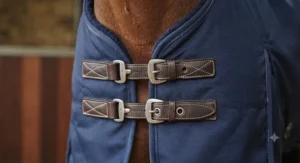
The John Whitaker Rastrick V2 250g Combo Stable Rug offers a genuinely useful middle ground: a 250g fill for proper autumn and winter warmth, but with a fully detachable hood so you’re not locked into full neck coverage on milder evenings. Double horizontal quilting helps retain body heat evenly rather than letting it pool at the base, and the faux fur witherpad is a thoughtful touch that reduces pressure exactly where combo-neck rugs tend to rub.
Here’s an honest note the marketing photos won’t show you: independent testers of the wider Whitaker Rastrick range have found the styling reads as slightly more traditional, even budget-adjacent, next to flashier competitor designs — though the same testers still rated it an attractive, well-performing rug that kept horses dry, breathable and rub-free, with an easy-to-attach neck section. For buyers who prioritise function and flexibility over showground styling points, that’s a fair trade, particularly given the wipe-clean PVC-coated fillet strap makes daily mucking-out routines noticeably less fiddly than fabric alternatives.
Pros:
- ✅ Detachable neck adds real flexibility across changeable autumn weather
- ✅ Faux fur witherpad reduces pressure rubbing
- ✅ Wipe-clean fillet strap simplifies daily care
Cons:
- ❌ Styling reads as more traditional than some rivals
- ❌ 600D outer trails the 1000D options for raw toughness
Prices typically sit in the £55-£75 range, making this a sensible mid-tier pick for anyone who wants neck flexibility without paying premium-brand prices.
7. Bucas Quilt 150g Stay Dry — best lesser-known layering piece
The Bucas Quilt 150g Stay Dry isn’t as widely stocked as the big six names above, but it solves a specific problem better than any of them: what to put on a horse who’s come in from the field still slightly damp. The Stay-Dry lining is designed to be used directly against a wet coat, wicking moisture away rather than trapping it — genuinely useful during autumn stable management when horses regularly come in from a soggy paddock before you’ve had time to towel them off properly.
At 150g, this sits at the lighter end of medium weight, and honest analysis suggests it’s best understood as a foundation layer rather than a standalone winter rug on its own for a clipped horse. Independent testing of Bucas’s Quilt range found the fit excellent and the closures tidy and secure, though testers noted the surcingle clips run slightly heavier than expected and there’s no integrated tail flap — a fair trade for a rug designed primarily to be worn under a turnout or heavier stable rug via its front and rear attachment points. For anyone building a genuine stable rug layering system rather than a single do-everything rug, this is the piece that makes the whole wardrobe more flexible.
Pros:
- ✅ Stay-Dry lining works safely on a damp, freshly-in horse
- ✅ Attachment points make it a genuine layering foundation
- ✅ Excellent fit reported in independent testing
Cons:
- ❌ Surcingle clips are heavier than ideal and can knock the horse
- ❌ No tail flap, and 150g alone won’t suit a fully clipped horse in a cold box
Expect to pay roughly £55-£75 for the Stay-Dry version, and remember the neck cover is sold separately.
Top 7 Full Specification Comparison
| Rug | Fill | Outer | Neck Style | Best For |
|---|---|---|---|---|
| WeatherBeeta ComFiTec 210D Channel Quilt | 250g | 210D | Standard, foldback loop | Cold stables, older horses |
| Shires Tempest Plus 200g | 200g | 600D | Standard/Combo | First-time buyers, value |
| Rhinegold Denver 200g | 200g | 520D | Standard | Budget, multiple horses |
| Horseware Rambo Original 200g | 200g | 1000D | Standard | Longevity, sensitive skin |
| LeMieux Kudos 200g | 200g | 1000D | Standard | Competition yards |
| John Whitaker Rastrick V2 250g | 250g | 600D | Detachable combo | Flexible neck coverage |
| Bucas Quilt 150g Stay Dry | 150g | Oxford poly | Attachable neck (sold separately) | Layering, damp horses |
Reading across this table, a clear pattern emerges: the two 1000D options — the Horseware Rambo Original Stable Rug and LeMieux Kudos Stable Rug — justify their higher price through genuine long-term durability rather than any dramatic difference in warmth, since fill weight, not denier, does most of the insulating work. If your horse is hard on rugs or you’re buying for a yard with multiple horses sharing turnout space, that denier difference translates into real pounds saved over several winters. Meanwhile, the Bucas Quilt 150g Stay Dry is deliberately the outlier here, designed to be paired with something else rather than compete head-to-head with the full-coverage options.
✨ Ready to compare current prices? Click through on any bolded rug above to check availability for your horse’s size.
Practical Usage Guide: Rugging Up Right From Day One
Getting a new medium weight stable rug horse-ready involves more than pulling it out of the packaging. First, introduce any new rug gradually — even a familiar horse can spook at unfamiliar fastening sounds, so do the first fitting somewhere calm with a headcollar on. Check the fit properly: you should be able to slide a flat hand comfortably under the chest strap, and the rug should sit level along the spine without pulling forward over the withers.
In the first thirty days, check daily for rubbing, particularly at the shoulders, withers and where surcingles cross the belly — early rubs are easy to fix with a slight refit but become genuine sores if ignored. A common mistake is over-tightening the front closure to stop a rug slipping, which usually just shifts the problem to the shoulders instead; a properly sized rug with correctly adjusted surcingles shouldn’t need excessive front tension. For maintenance, most stable rugs are machine washable on a cool cycle without conventional detergent, since standard washing powder can strip the waterproof or breathable coatings on more technical linings. Air-dry fully before storing to avoid mildew, and check stitching and fastenings at the start of every season rather than waiting for something to fail mid-winter.
Real-World Scenarios: Matching the Rug to Your Horse
Consider three genuinely common situations. If you’re managing a 15hh cob who lives out but comes in overnight through autumn, a standalone 200g rug like the Shires Tempest Plus 200g Stable Rug or Rhinegold Denver 200g Mediumweight Quilt covers most nights without ever needing anything heavier, since natives generate plenty of their own body heat.
If you own a fine-coated Thoroughbred type who’s been fully clipped for competition season, the calculation changes: 250g on its own, from the WeatherBeeta ComFiTec 210D Channel Quilt or John Whitaker Rastrick V2 250g Combo, is a sensible baseline, with room to add a liner beneath during a genuine cold snap. And if you’re a livery yard owner managing several horses with different needs from one rug cupboard, building a base layer system around something like the Bucas Quilt 150g Stay Dry paired with a heavier outer rug, rather than buying seven entirely separate rugs, is both cheaper and more flexible across a full season.
Problem → Solution: Fixing Common Medium Weight Rugging Issues
Problem: The rug slips backward overnight. This is almost always a surcingle or fit issue rather than a rug fault — check the surcingles are crossed correctly and the rug length matches your horse’s actual measurement rather than a rough guess.
Problem: Rubbing at the shoulders or withers. Look for a rug with a proper wither pad, like the faux fur witherpad on the John Whitaker Rastrick V2 250g Combo, and confirm the rug isn’t sitting too far forward.
Problem: The horse is sweating under the rug. This usually means the fill weight is too high for the actual stable temperature — swap to a lighter rug or remove the neck cover before adding another layer.
Problem: Recurring mildew smell after storage. Rugs must be completely dry before folding away; a damp rug stored in a bag is the single most common cause of this.
Problem: A wet horse needs covering immediately. This is exactly the gap products like the Bucas Quilt 150g Stay Dry are designed to fill, since standard linings shouldn’t go straight onto a soaked coat.
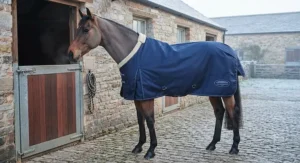
How to Choose a Medium Weight Stable Rug
- Start with your horse’s coat and clip status — an unclipped native rarely needs more than 150-200g, while a fully clipped horse usually needs the full 250g.
- Measure properly rather than guessing — an ill-fitting rug causes more problems than the wrong fill weight ever will.
- Check the denier if longevity matters — 1000D outers like those on the Horseware Rambo Original Stable Rug last considerably longer under daily wear.
- Consider liner compatibility — a liner-compatible system like the one on the Shires Tempest Plus 200g Stable Rug future-proofs your purchase against a colder winter.
- Think about neck coverage needs — a detachable neck like on the John Whitaker Rastrick V2 250g Combo gives you flexibility a fixed standard neck can’t.
- Factor in washing practicality — cotton linings feel soft but need gentler care than synthetic alternatives.
- Set a realistic budget band — expect genuinely usable medium weight rugs from around £45 up to £120, with diminishing returns above the mid-range once basic build quality is covered.
200g Stable Rug Horse: Decoding Fill Weight Numbers
The 200g figure quoted on almost every stable rug label refers to grams of polyfill per square metre of fabric, not the total weight of the rug itself. A 200g stable rug horse owners choose for an unclipped animal in a reasonably sheltered stable is generally considered the sweet spot of the medium-weight band — enough insulation to matter on a cold night, without the bulk of a 300-400g heavyweight rug that’s really designed for fully clipped horses facing sub-zero conditions. Five of the seven rugs in this guide sit at exactly 200g for good reason: it’s the most versatile single fill weight on the market, workable for the majority of UK stable conditions from October through into March. Where it falls short is at the coldest extremes or for horses that are notably poor doers, in which case stepping up to 250g or layering a liner underneath makes more sense than buying a heavier rug outright.
250g Indoor Horse Rug: When the Extra 50g Earns Its Keep
A 250g indoor horse rug, like the WeatherBeeta ComFiTec 210D Channel Quilt or John Whitaker Rastrick V2 250g Combo featured above, is the natural next step once 200g stops being quite enough. That extra 50g of fill isn’t a dramatic jump on paper, but in practice it noticeably changes comfort levels for fully clipped horses or those stabled in older, draughtier buildings where cold air genuinely gets in around doors and windows. Reviewers consistently note that the difference matters most in the coldest month or two of winter rather than across the whole season, which is exactly why a liner-compatible 200g rug often makes more financial sense than buying a dedicated 250g rug that’s only truly needed for six to eight weeks a year. If your yard runs warm and sheltered, though, a 250g rug worn without a neck cover on milder nights can genuinely cause overheating, so match the number to your actual stable conditions rather than the calendar.
Stable Rug Layering: Building a Flexible Rug Wardrobe
Proper stable rug layering means buying fewer rugs overall, not more. Rather than owning a separate lightweight, medium and heavyweight rug, most owners are better served by one quality outer rug — like the liner-compatible Shires Tempest Plus 200g Stable Rug or LeMieux Kudos Stable Rug 200g — plus one or two detachable liners that step the fill up or down as the weather actually demands. The Bucas Quilt 150g Stay Dry works brilliantly as a foundation piece in this system, since it can be worn alone on milder nights or clipped under a heavier rug during a genuine cold snap. What most buyers overlook is that layering also solves the damp-horse problem neatly: a wicking base layer handles moisture while an outer rug provides bulk warmth, rather than one single rug trying to do both jobs at once. Done well, a two- or three-piece layering system typically costs less over several winters than buying and replacing three separate full-fill rugs.
Partially Clipped Horse Rugging: What Actually Changes
Partially clipped horse rugging sits in an awkward middle ground that trips up plenty of otherwise experienced owners. A trace-clipped or blanket-clipped horse still retains a meaningful amount of natural coat, so it generally needs less fill than a fully clipped animal but noticeably more than an unclipped one — a 200g rug is usually the right starting point rather than jumping straight to 250g. The specific clip pattern matters too: a horse clipped mainly on the neck and belly for sweating during exercise often copes fine with a standard 200g rug once back in the stable, while a hunter clip that removes coat from the back and quarters as well genuinely benefits from the extra insulation of a 250g option like the John Whitaker Rastrick V2 250g Combo. According to the gov.uk Code of Practice for the welfare of horses, keepers are expected to provide appropriate shelter and protection suited to an individual animal’s circumstances, and a clip pattern is exactly the kind of individual circumstance that should shape a rugging decision rather than a blanket, one-size-fits-all rule.
Medium Weight Stable Rug vs Turnout Rug
It’s worth being clear on the distinction, because the two categories solve different problems. A medium weight stable rug is designed purely for indoor warmth and typically isn’t waterproof, while a turnout rug adds a weatherproof outer shell for use in the field, often at a similar fill weight. Trying to use a stable rug outdoors in the rain will leave a horse cold and damp fairly quickly, since the fabric simply isn’t built to shed water the way a turnout’s coated or laminated outer is.
| Feature | Stable Rug | Turnout Rug |
|---|---|---|
| Waterproofing | Rarely waterproof | Fully waterproof outer |
| Typical use | Indoors overnight | Outdoors, all weather |
| Outer fabric | Softer, often cotton-blend | Heavy-duty ripstop, coated |
| Best For | Stabled horses, layering | Turned-out horses |
For horses that split time between field and stable, owning one of each is genuinely the sensible approach rather than trying to make a single rug do both jobs — a stable rug like the Rhinegold Denver 200g Mediumweight Quilt simply isn’t engineered for driving autumn rain.
Common Mistakes When Buying a Medium Weight Stable Rug
The single biggest mistake is buying by weight alone without properly measuring the horse first — even the best-built rug from this list will rub or slip if it’s the wrong length. A close second is over-rugging simply because it’s officially autumn, rather than checking the actual overnight temperature and the horse’s individual coat and condition; the Blue Cross’s guidance on over-rugging is genuinely useful here, since it explains how trapped heat and sweat can create skin problems that are entirely avoidable. Buyers also frequently skip checking wash-care instructions before purchase, only to discover a lining needs specialist cleaning rather than a standard home wash. Finally, many owners buy a single all-purpose rug and expect it to handle both a mild October evening and a hard January frost — which is precisely the gap that a layering system, rather than one rug, is built to close.
Autumn Stable Management: Beyond the Rug Itself
Autumn stable management is about more than which rug goes on; it’s the routine around it that keeps a horse genuinely comfortable through the season’s temperature swings. Daily rug removal to check for rubbing, sweating or weight loss underneath is non-negotiable, since a rug hides visual cues an owner would otherwise spot instantly. Bedding depth matters too — a well-banked stable retains warmth far more effectively than thin bedding over a cold concrete floor, which can make the difference between needing 200g and needing 250g in the first place. Ventilation is often overlooked in the rush to keep a stable “cosy”; a completely sealed box with a heavily rugged horse is a recipe for the sweating and skin problems mentioned earlier, so a slightly open top door alongside the right rug weight usually works better than closing everything up. As the Horse & Hound rugging guide notes, temperature swings of up to ten degrees across a single autumn day are entirely normal in the UK, which is exactly why a liner system beats a single fixed-weight rug for anyone managing horses through this transitional season.
Medium Stable Rug Reviews: What Real Owners and Testers Say
Medium stable rug reviews from independent testing sources tend to circle back to the same handful of themes rather than wild disagreement. Fit consistency comes up constantly — testers of the Horseware Rambo Original Stable Rug and Shires Tempest Plus 200g Stable Rug both reported true-to-size sizing and no slipping under daily use, which matters more in practice than any single spec on a label. Rubbing, or the absence of it, is the second recurring theme, with wither pads and neck trims like the SupaFleece collar or faux fur witherpad singled out repeatedly as the details that actually prevent it. Where reviews diverge is on styling and denier trade-offs: budget options like the Rhinegold Denver 200g Mediumweight Quilt score well on value but are honestly rated behind premium 1000D rivals on raw long-term toughness. What’s genuinely absent from credible review sources is any suggestion that fill weight alone determines rug quality — construction, fit and fastenings consistently matter more than the number printed on the label.
Long-Term Cost & Maintenance of Your Stable Rug
Thinking in cost-per-winter rather than upfront price changes the calculation considerably. A £45 rug that needs replacing every second season costs roughly the same over four years as a £90 rug built to last five or six winters, but the pricier option spares you the hassle of re-shopping and re-fitting partway through a season. Maintenance costs matter too: rugs with specialist linings, like the cotton lining on the Rhinegold Denver 200g Mediumweight Quilt, may need gentler washing that occasionally means a specialist rug-cleaning service rather than a standard home wash, which adds a modest recurring cost budget-conscious buyers should factor in upfront. Liner-compatible systems, such as the one built into the Shires Tempest Plus 200g Stable Rug or LeMieux Kudos Stable Rug 200g, arguably offer the best long-term value of all, since a single outer rug plus a couple of liners can cover an entire season’s temperature range without the total cost of three separate full rugs.
FAQ
❓ What weight stable rug does my horse need?
❓ Can I use a stable rug outdoors?
❓ How often should I wash a medium weight stable rug?
❓ Is 200g or 250g better for a partially clipped horse?
❓ What's the difference between a stable rug and a turnout rug?
Conclusion
Choosing the right medium weight stable rug horse owners can rely on genuinely comes down to matching real specifications to a real horse’s clip, coat and stabling conditions, rather than chasing the most eye-catching colourway on the shelf. Across the seven rugs covered here, the pattern holds steady: budget picks like the Rhinegold Denver 200g Mediumweight Quilt and Shires Tempest Plus 200g Stable Rug deliver genuinely solid value, mid-range options like the WeatherBeeta ComFiTec 210D Channel Quilt and John Whitaker Rastrick V2 250g Combo balance warmth and flexibility well, and premium choices like the Horseware Rambo Original Stable Rug and LeMieux Kudos Stable Rug 200g earn their price through genuine long-term durability. The Bucas Quilt 150g Stay Dry, meanwhile, proves that the most useful rug in a wardrobe isn’t always the flashiest one — sometimes it’s the layering piece that quietly solves the problem the others can’t.
Whichever you choose, fit and honest assessment of your own horse’s needs will always matter more than any single spec sheet. Check current prices before buying, measure properly, and build a rug wardrobe around your horse’s actual autumn and winter, not an idealised one.
✨ Ready to shop smarter this autumn? Compare current prices on the rugs above and get your horse’s wardrobe sorted before the first proper cold snap hits! 🐴
Recommended for You
- Lightweight Stable Rug Horse: 7 Best Picks for 2026
- How To Choose The Right Stable Rug For Your Horse: 7 Top Picks 2026
- Stable Rugs for Horses 2026: 7 Tried-and-Tested Picks
Disclaimer: This article contains affiliate links. As an Amazon Associate, I earn from qualifying purchases. If you purchase products through these links, we may earn a small commission at no additional cost to you.
✨ Found this helpful? Share it with your friends! 💬🤗
