
In This Article
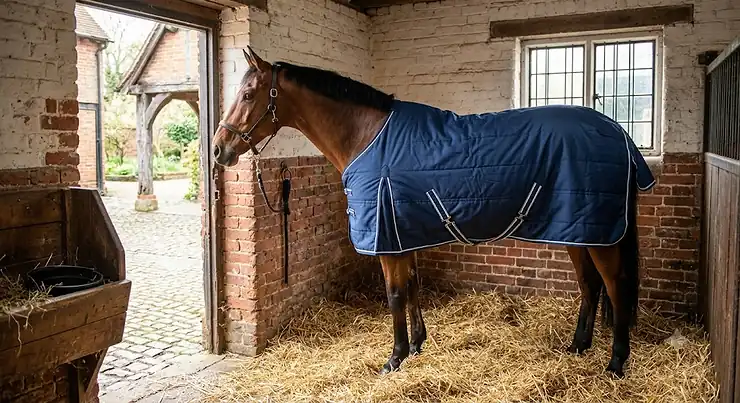
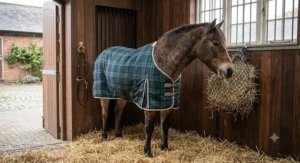
Somewhere around the third frosty morning of the year, every horse owner has the same internal argument in the feed room: is he cold, or am I just cold, and does that even matter? Stable rugs for horses exist precisely to take the guesswork out of that question, but walk into a tack shop or scroll an Amazon results page and you’re suddenly drowning in denier counts, fill weights and neck styles that all sound vaguely medical. A stable rug is a lightweight-to-heavyweight indoor blanket, typically made from a soft, non-waterproof outer fabric, designed to keep a stabled horse warm and clean without the rain protection a turnout rug needs — a design lineage that traces back to the traditional horse blanket, long used to protect stabled animals before modern synthetic fabrics existed. It sits differently to a turnout rug in almost every respect, from fabric weight to price, and picking the wrong one is a genuinely common (and avoidable) mistake.

This guide pulls together real products, real spec sheets, and honestly summarised review sentiment so you’re not just staring at a wall of options wondering which one won’t rub, slip, or leave your horse sweating by 9pm. We’ve researched seven actual stable rugs sold in the UK, spanning proper budget buys through to premium picks with genuine technical extras, and we’ll walk through fit, fill weight, and the trickier questions — like why some rugs seem to zap your horse with static every single evening. Whether you’re kitting out a first pony or replacing a threadbare stalwart that’s finally given up the ghost, you’ll leave this page knowing exactly what to look for and why it matters.
One quick housekeeping note before we dive in: Amazon prices shift constantly, so every figure below is a rough band rather than an exact quote — always check the current price on the product page before buying.
Quick Comparison Table
| Product | Fill Weight | Neck Style | Best For | Price Range |
|---|---|---|---|---|
| Shires Tempest Plus Combo | 0g / 100g / 200g | Combo (detachable-style) | Rug-wreckers, durability | £45-£75 |
| Swish Equestrian Stable Rug | 50g / 100g / 200g / 360g | Detachable | All-round value | £35-£65 |
| Epic Equestrian Classic | 50g / 100g / 200g / 400g | Standard | Widest size range | £25-£55 |
| Gallop Trojan Dual 200 Set | 200g | Detachable neck included | Budget bundle buyers | £40-£60 |
| WeatherBeeta Comfitec Classic Medium | ~220g equivalent | Standard | Clipped horses | £55-£90 |
| Horseware Rambo Ionic | 100g / 200g | Standard/combo options | Static-prone horses | £90-£140 |
| Whitaker Rastrick Combo 250 | 250g | Combo | Cold yards, premium finish | £75-£120 |
Looking at the spread here, the gap between the cheapest and priciest option isn’t really about warmth — a 200g fill is a 200g fill whether it costs £40 or £120. What you’re paying extra for further up the table is fabric durability, lining technology (anti-static, moisture-wicking) and finer construction details like reinforced surcingles. Budget-conscious owners with a placid, rug-respecting horse can comfortably shop from the top three rows; owners with a horse that fidgets, sweats easily, or has a static problem will get more genuine value from the WeatherBeeta, Horseware or Whitaker options further down.
💬 Just one click — help others make better buying decisions too!😊
Top 7 Stable Rugs for Horses: Expert Analysis
Coverage below spans genuine budget buys through to premium technical rugs, with a mix of standard, detachable and combo necks so there’s a sensible option whatever your horse’s coat, temperament and stable set-up look like.
1. Shires Tempest Plus Combo Stable Rug — best for rug-wreckers and daily hard use
The standout here is straightforward durability: this is the rug that survives a horse who treats “wearing a rug” as a personal challenge to destroy it. The outer is a robust denier fabric with a SupaFleece trim around the shoulders and mane, which in practice means fewer rub marks along the withers, a spot where cheaper rugs tend to wear thin within a season. Fill options run from a 0g summer sheet through to a 200g mid-season weight, and the combo neck style clips onto the body of the rug for horses who need a bit more coverage across the neck and shoulders without committing to a permanently attached hood.
Based on the spec comparison with other combo-style stable rugs in this bracket, the Tempest Plus earns its reputation on shoulder gusseting and cross surcingles that genuinely reduce slipping, rather than on flashy extras. It’s aimed squarely at owners who need one rug to survive a full winter of daily changes, turnout-to-stable transitions and the occasional roll in the shavings. Reviewers consistently report that it holds its shape well after repeated washing, and a recurring theme in aggregated feedback is praise for the true-to-size fit, which cuts down on the usual guesswork when ordering online.
Pros:
- ✅ SupaFleece trim reduces shoulder and wither rubbing
- ✅ Robust outer copes with daily rug-wrecker use
- ✅ True-to-size fit reported consistently by buyers
Cons:
- ❌ Combo neck sits slightly warmer than a standard neck
- ❌ Heavier fabric makes it bulkier to store than budget sheets
At a price in the £45-£75 range depending on size and fill, this sits in the mid-budget bracket — solid value if your horse is genuinely hard on rugs, though a lighter horse in a sheltered stable may find it more rug than they need.
2. Swish Equestrian Stable Rug — best British-brand value pick
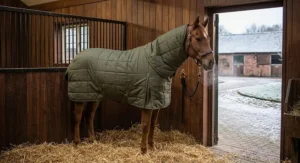
What most buyers overlook about this rug is the liner compatibility — it’s built to accept Swish’s own range of add-in liners, which means one shell rug plus a couple of liners can realistically cover you from a mild autumn evening right through to a proper cold snap, without buying three separate rugs. The detachable neck cover is genuinely detachable rather than just badge-worthy, so you can run it as a body-only rug on milder days.
On paper, the fill range (50g through to 360g) is unusually broad for a single product line, which explains why this rug turns up so often in “best value” round-ups from UK equestrian retailers. Large shoulder gussets and cross surcingles help it sit correctly without twisting overnight, and the rug is cut to sit slightly higher at the neck and shoulders than some competitors, specifically to reduce slipping back during the night — a sensible bit of design thinking rather than marketing fluff. Aggregated review sentiment consistently flags the anti-slip darts on the quarters as a genuine point of difference, with owners noting the rug stays put even on horses that roll enthusiastically.
Pros:
- ✅ Liner-compatible system covers a wide temperature range
- ✅ Anti-slip darts keep the rug from twisting overnight
- ✅ Detachable neck genuinely detaches, not just decorative
Cons:
- ❌ Highest fill option (360g) is a lot of rug to store
- ❌ Fewer size options than some premium competitors
Priced in the £35-£65 bracket depending on fill weight, this is arguably the strongest pound-for-pound value pick on this list, particularly if you’re planning to build up a liner system over time.
3. Epic Equestrian Classic Stable Rug — widest size range, broad-fit option available
The short version: if you own a mini Shetland or a 17.2hh warmbood, this range has probably got you covered, with sizes running from 2’9″ right through to 7’6″. That size spread alone makes it worth knowing about even before you factor in the price. The outer fabric carries a Teflon-style coating designed to help resist staining from stable bedding and general grubbiness, which matters more than it sounds — a stable rug that looks permanently filthy after one week isn’t doing your horse’s presentation any favours if you’re showing or simply proud of a clean yard.
There’s also a broad-fit version specifically cut for horses with a wider chest, neck and shoulders, which is a detail most budget ranges simply don’t bother offering. Based on the spec sheet, the standard neck design and 420D outer put this firmly in the budget-to-mid category rather than competing with heavier-duty combo rugs, and that’s reflected honestly in the price. Reviewers note the soft polyester lining helps prevent rubbing and keeps the coat smooth, and a common thread in feedback is that it represents strong value for owners managing several horses on a budget, since the low unit cost makes multi-buying realistic.
Pros:
- ✅ Size range covers minis through to giant warmbloods
- ✅ Broad-fit option for wide-chested or cobby types
- ✅ Teflon-style coating helps resist staining
Cons:
- ❌ 420D outer is less rugged than heavier-duty rivals
- ❌ Standard neck only, no combo or detachable option
Sitting in the £25-£55 range, this is the sensible pick for yards with multiple horses of very different shapes and sizes, where buying seven identical premium rugs simply isn’t in the budget.
4. Gallop Equestrian Trojan Dual 200 Stable Rug & Neck Set — best budget bundle with included neck cover
Here’s what most buyers overlook about bundle rugs: buying the neck cover separately from most brands can add another £20-£30 onto your total spend, so a set that includes a properly matched detachable neck from the outset is quietly one of the better budget decisions you can make. The 200g fill sits squarely in the mediumweight bracket, appropriate for a clipped or thin-coated horse through a typical UK autumn and into early winter, without tipping into “walking duvet” territory.
What most buyers overlook about it is how well a matched set fits compared with mixing and matching a rug and neck cover from different ranges — attachment points, denier and colour all line up properly, which reduces the risk of pressure points where two mismatched pieces meet. This is a practical, no-frills option rather than a technical showcase, and it’s honest about that positioning rather than dressing itself up with marketing language it can’t back up. Aggregated feedback tends to describe it as solid entry-level kit — not the rug you’ll still be using in five winters’ time, but genuinely serviceable for its price point, particularly for owners just starting out who don’t yet know their horse’s full rug wardrobe needs.
Pros:
- ✅ Matched neck cover included, saving a separate purchase
- ✅ 200g fill suits clipped horses through autumn/early winter
- ✅ Straightforward, budget-friendly entry point
Cons:
- ❌ Fewer fill-weight options than more established ranges
- ❌ Basic fastenings compared with premium alternatives
Typically priced in the £40-£60 range as a set, this is a genuinely sensible starting point for a first-time owner building a rug wardrobe from scratch.
5. WeatherBeeta Comfitec Classic Standard Neck Medium — best for clipped horses through the shoulder seasons
This one earns its place through moisture management rather than raw warmth. The lining is designed to wick moisture away from the coat, which matters enormously for a clipped horse that’s come in from exercise slightly damp — a stable rug that traps that moisture against the skin is doing more harm than good, potentially leaving a horse colder overnight than if it wore nothing at all. WeatherBeeta’s Comfitec range has built a strong reputation specifically around this wicking technology, and the medium weight (roughly equivalent to a 200g fill) makes it a genuinely popular pick for horses that are clipped but still doing regular work.
Here’s what the spec sheet won’t tell you, but user reports consistently suggest: this rug performs particularly well as the “transition” piece in a layering system, worn under a turnout rug on colder days or on its own overnight in a well-insulated stable. It’s not marketed as an ultra-premium option, but reviewers repeatedly single out the standard neck’s cut as sitting comfortably without restricting the shoulder, which matters for horses in regular ridden work who need full freedom of movement even while rugged.
Pros:
- ✅ Wicking lining actively manages post-exercise dampness
- ✅ Cut allows full shoulder movement for horses in work
- ✅ Reliable mid-weight for clipped horses in shoulder seasons
Cons:
- ❌ Standard neck only, so shoulders can feel exposed in cold snaps
- ❌ Sits at a higher price point than basic own-brand options
Expect to pay somewhere in the £55-£90 range, which puts it above true budget rugs but still comfortably below the premium technical end of the market.
6.Horseware Rambo Ionic Stable Rug— best for horses prone to static shocks
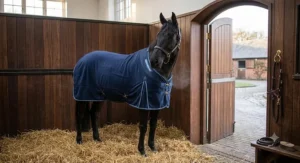
If you’ve ever had a horse flinch and fling its head up the moment you go to remove a rug, you already understand why this one exists. Static build-up in synthetic linings is a genuinely well-documented nuisance in UK forums and equestrian communities, particularly during dry, cold spells when there’s less moisture in the air to dissipate the charge, and Horseware’s Ionic range specifically targets that problem through a lining designed to reduce static generation rather than just tolerating it. In practice, this means less of the crackle-and-flinch routine that makes some horses genuinely wary of being rugged up at all.
Based on the spec comparison with standard nylon-lined rugs, the ionic lining technology is the clear differentiator here rather than the fill weight itself, which comes in fairly conventional 100g and 200g options. What most buyers overlook is that this is as much a behavioural-welfare purchase as a warmth purchase — for a horse that’s become head-shy or difficult to rug because of repeated static shocks, this can meaningfully improve the whole rugging routine, not just the warmth outcome. Reviewers and forum discussions around static-prone liners consistently point to fabric choice as the actual culprit behind shocks, which lends real credibility to a rug built specifically to address it.
Pros:
- ✅ Ionic lining specifically engineered to reduce static build-up
- ✅ Genuinely useful for head-shy or static-sensitive horses
- ✅ Premium brand backing with established quality control
Cons:
- ❌ Noticeably pricier than non-technical alternatives
- ❌ Fill range is narrower than some rival ranges
Sitting at £90-£140, this is a premium buy, and honestly not one every owner needs — but for the specific problem it solves, the value case is strong.
7. Whitaker Rastrick Combo 250 Stable Rug — best premium pick for genuinely cold yards
The Rastrick range carries a reputation built on solid, no-nonsense construction, and the 250g combo fill puts this rug at the heavier end of the stable rug spectrum — appropriate for older horses, those with finer coats, or yards that are simply cold and draughty regardless of what the thermometer outside says. The combo neck design covers the neck and shoulders without the bulk of a fully separate hood, striking a reasonable middle ground between warmth and freedom of movement.
What most buyers overlook about heavier stable rugs generally is that fill weight alone doesn’t tell the whole story — construction quality around the surcingles, tail flap and shoulder gussets determines whether that warmth actually stays put through a restless night. On the spec sheet, this rug includes the kind of reinforced fastenings and reflective detailing you’d expect from a premium range, useful for visibility if you’re leading a rugged horse across a yard in the dark winter evenings that define a British stable routine from October onwards. Aggregated feedback on the Rastrick combo range consistently highlights fit consistency across sizes as a strength, with fewer reports of the sizing inconsistencies that plague some competitor ranges.
Pros:
- ✅ 250g fill genuinely suits cold, draughty yards
- ✅ Reflective detailing adds visibility on dark winter evenings
- ✅ Consistent sizing reported across the range
Cons:
- ❌ Too warm for mild autumn evenings or well-insulated stables
- ❌ Premium price point compared with mid-range combo rugs
Priced around £75-£120, this is a considered investment pick for anyone whose yard genuinely earns the description “bracing” every winter.
Practical Usage Guide: Setting Up Your Horse’s Stable Rug Routine
Buying the rug is honestly the easy part. Getting the routine right around it is where most first-time owners trip up, and it’s worth remembering that appropriate rugging sits within your wider legal duty of care as a keeper, as set out in Defra’s code of practice for the welfare of horses, ponies, donkeys and their hybrids. Start by checking fit properly before the first cold night arrives, not during it: lay the rug flat and measure from the centre of the chest to the end of the rug, then compare that against a soft-tape measurement of your horse from the centre of the chest, around the widest part of the body, to the point of the buttock. If your horse falls between sizes, sizing up is generally the safer call unless they’re particularly narrow-chested, where an oversized rug can shift and rub.
In the first thirty days of use, check under the rug daily — not just a quick glance, but an actual hand slid under at the withers and behind the elbow, feeling for warmth, dryness and any early rubbing. New rugs are the most likely to cause pressure points simply because the horse hasn’t yet “broken them in,” and catching a rub in its first day is infinitely easier to manage than dealing with an open sore two weeks later. A common first-month mistake is over-tightening the chest straps to stop a rug slipping, when the actual fix is usually correcting the cross surcingles or fillet string tension instead.
Maintenance-wise, stable rugs should be brushed out daily to clear bedding and hair, and washed according to the label roughly every four to six weeks during heavy winter use, more often if your horse sweats under the rug regularly. Reproofing isn’t generally necessary for stable rugs since they’re not designed to be waterproof, but the lining should be checked periodically for matting, which reduces breathability and can contribute to the very moisture-trapping problem a good stable rug is meant to avoid. Rotate between at least two rugs if you can, giving each one a full day to air out between uses — a rug that’s constantly damp with sweat loses much of its insulating value and becomes a breeding ground for the kind of skin irritation nobody wants to deal with mid-winter.
Real Horse Owner Scenarios: Which Stable Rug Suits Your Yard
Consider three fairly typical UK owners, each with genuinely different needs despite all shopping in the same product category. First, a livery yard owner with a clipped, competition-fit warmblood in daily work, stabled overnight in a reasonably well-insulated barn. For this profile, something like the WeatherBeeta Comfitec Classic Medium makes practical sense — the moisture-wicking lining handles the post-exercise dampness that’s an everyday reality for a horse in regular work, and the standard neck keeps things simple for a routine that already involves plenty of rug changes.
Second, picture a family with a hardy native pony kept at a DIY yard with a draughty field shelter doubling as a stable, on a tight monthly budget. Here, the Epic Equestrian Classic in a lighter fill weight is the sensible call — the low unit cost matters when you’re also budgeting for farriery, feed and the twenty other costs that come with pony ownership, and the wide size range means it’s easy to size correctly for a smaller, cobby build without paying premium-range prices for the privilege.
Third, an older Thoroughbred-type with a fine coat, retired from work but prone to feeling the cold and, as it happens, historically head-shy about being rugged because of static shocks from an old nylon-lined rug. This is precisely the profile the Horseware Rambo Ionic was designed for — the combination of a genuine welfare issue (static-related head-shyness) and a straightforward physiological one (thin skin, poor natural insulation) justifies the higher spend, because the alternative is a horse that actively dreads a routine task every single evening.
Common Stable Rugging Problems, Solved
Slipping rugs are one of the most frequent complaints, and the fix is rarely “buy a bigger rug” — it’s almost always about surcingle tension and fillet string use. Cross surcingles should allow a flat hand’s width of movement, tight enough to stop the rug rotating but loose enough not to restrict breathing or movement. A fillet string looped loosely around the tail, not clipped tight, stops the back of the rug blowing up in a draughty stable without pinching.
Rubbing at the shoulders and withers is the second big pain point, and it’s frequently a fit problem disguised as a fabric problem. Before assuming you need a rug with a fancier lining, check that the rug isn’t simply too tight across the front, forcing the shoulder seam to sit exactly where the horse moves most. A properly cut combo or shaped-shoulder rug, like the Shires Tempest Plus reviewed above, solves this at the design level rather than relying on extra padding to mask an underlying fit issue.
Static shocks, as covered in more detail below, are a genuine and under-discussed problem, particularly with synthetic-lined rugs in cold, dry conditions — the practical fixes range from a specifically anti-static lining through to simple home remedies like a light water spray on the rug before removal. Overheating is the flip side of the coin: a horse sweating under a rug, especially around the base of the ears or under the rug line, is a signal to drop a fill weight, not add one, since horses find it considerably harder to cool down than to warm up. Finally, persistent muddy staining on stable rugs is usually a sign a turnout rug isn’t being fully dried before the horse comes in — always allow turnout rugs to dry and brush off before the horse transitions into its stable rug, rather than layering a stable rug directly over damp bedding residue.
How to Choose a Stable Rug for Horses
Choosing correctly comes down to seven practical checks, each worth going through in order before you commit to a purchase.
- Establish whether your horse is clipped or unclipped. Clipping removes a significant amount of natural insulation, and clipped horses typically need one full fill-weight category more than an unclipped horse in the same conditions.
- Measure your horse properly, not by memory. A soft tape from the centre of the chest to the point of the buttock gives you the number to match against the manufacturer’s size chart, rather than guessing based on a rug that fitted two years and one growth spurt ago.
- Check your stable’s actual conditions, not the weather app. A modern, well-insulated barn holds heat very differently to an old, draughty timber stable, so two horses in identical outdoor conditions may need entirely different indoor rugging.
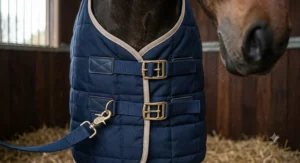
- Decide on neck style based on coverage needs. Standard necks suit milder conditions and horses prone to losing mane hair under a neck rug; combo and detachable necks suit colder yards and clipped horses needing fuller coverage.
- Match fill weight to realistic use, not worst-case scenario. It’s far more practical to layer a lighter rug with a liner on the coldest nights than to own one heavyweight rug that leaves your horse sweating on every mild one.
- Factor in known sensitivities. A horse with a static history, sensitive skin, or a track record of rubbing needs specific technical features (anti-static lining, soft-touch trims) prioritised over price alone.
- Budget for at least two rugs, not one. Owning a single stable rug means no backup while it’s being washed, and rotating rugs genuinely extends the lifespan of both.
Stable Rug Tog Guide: Understanding Fill Weights
Fill weight is the horse-world’s answer to a duvet’s tog rating, and it’s measured in grams (g) rather than togs, but the underlying logic is identical: the higher the number, the more insulation packed inside. A 0g rug is essentially a fabric sheet with no insulating fill at all, useful for keeping a clean, dry horse tidy rather than adding warmth. Lightweight rugs run from roughly 50g to 100g, suited to cool autumn evenings or lightly clipped horses. Mediumweight sits around 150g to 250g, the most commonly stocked category and a sensible default for clipped horses through a typical winter. Heavyweight starts at roughly 250g-300g and climbs beyond, reserved for genuinely cold conditions, older horses, or those with very fine coats and limited natural insulation.
| Fill Weight Band | Grams | Typical Horse | Typical Conditions |
|---|---|---|---|
| No fill | 0g | Unclipped, tidy indoors | Mild, dry |
| Lightweight | 50g-100g | Lightly clipped | Cool autumn/spring |
| Mediumweight | 150g-250g | Clipped, average coat | Standard winter nights |
| Heavyweight | 300g+ | Fine-coated, older, exposed yard | Cold snaps, draughty barns |
The important nuance this chart can’t fully capture is that a 200g stable rug and a 200g turnout rug rarely feel identical to the horse, since a turnout rug’s wind-resistant outer blocks chill in a way a breathable stable fabric simply can’t replicate indoors. In a draughty barn specifically, that difference matters more than the number on the label suggests, so it’s worth treating this chart as a starting point rather than gospel, adjusting up or down based on how your own stable actually behaves on a cold night.
✨ Don’t Miss These Exclusive Deals!
🔍 Take your horse’s winter wardrobe to the next level with these carefully selected stable rugs. Click through to check current pricing and availability, and give your horse the genuinely cosy, comfortable stable season they deserve!
Horse Stable Temperature: Rugging by the Thermometer
There is no single official UK rugging standard, but guidance from equine vets and industry bodies clusters fairly consistently around similar temperature bands, and it’s worth stating plainly: a healthy, unclipped horse is generally comfortable without any rug down to around 0°C, and over-rugging causes more welfare problems in practice than under-rugging does. A horse’s thermoneutral zone — the range in which it doesn’t need to expend extra energy to stay warm or cool — typically sits between roughly 5°C and 25°C, considerably wider than a human’s comfortable range, which is worth remembering the next time you feel chilly and instinctively reach for an extra rug on a horse that’s perfectly content.
| Temperature | Unclipped Horse | Clipped Horse |
|---|---|---|
| Above 10°C | No rug needed | Sheet or lightweight (0g-50g) |
| 5°C to 10°C | Usually no rug | Lightweight (50g-100g) |
| 0°C to 5°C | No rug, or lightweight if wet/windy | Mediumweight (150g-250g) |
| Below 0°C | Mediumweight if elderly/thin | Heavyweight (300g+) |
Reading this table sensibly means adjusting for wind, rain and your individual horse rather than treating it as a strict rulebook — a combination of wet and windy conditions at 8°C can chill a horse more than a calm, dry day at 2°C, which is exactly why weather performance and fabric quality matter as much as the raw temperature reading. The most reliable practical check remains sliding a hand under the rug at the withers and behind the elbow: warm and dry means the rug is right, hot and clammy means drop a layer, cold or a fluffy raised coat means your horse is working to generate its own heat and needs more help. For a broader look at how domesticated horses’ rugging needs differ from their wild counterparts, Horse & Hound’s detailed rugging guide is a genuinely useful deeper read.
Indoor Horse Rug vs Turnout Rug: What’s the Difference
It’s a mistake many new owners make, assuming a rug is a rug regardless of whether the horse is inside or out, but the two categories are built for fundamentally different jobs. An indoor horse rug — what we’ve been calling a stable rug throughout this guide — is designed for warmth and cleanliness in a sheltered environment, using a lower-denier, non-waterproof outer fabric that prioritises breathability and softness over weather resistance. A turnout rug, by contrast, is built around a genuinely waterproof and windproof outer, typically at a much higher denier, because it has to survive actual British weather rather than a dry barn.
The practical upshot is that a stable rug used outdoors in the rain will soak through and become both useless and potentially harmful, trapping cold moisture against the coat, while a turnout rug used indoors is often too warm, too heavy and too stiff for comfortable stable use, sometimes causing more rubbing than a purpose-built stable rug would. Some owners layer a lightweight stable rug under a turnout rug for genuinely cold, wet conditions, which is a sensible use of both categories rather than a contradiction, provided the two rugs are compatible in size and don’t bunch or slip against each other. If you’re only ever going to own one type initially, match the purchase to how your horse actually lives: a horse stabled overnight every night needs a stable rug first; a horse living out around the clock needs a turnout rug first.
Anti-Static Horse Rug Technology Explained
Static shocks around rug changes are a genuinely common complaint in UK horse-owner forums, and they’re not simply an annoyance — a horse that’s been shocked repeatedly while being rugged can become head-shy, anxious, or reluctant to stand still for a routine that should be entirely unremarkable. The underlying cause is friction between synthetic fibres, particularly nylon linings, which generates a static charge that has nowhere to safely discharge until the rug is lifted away from the coat, at which point the horse (and often the handler) gets an unpleasant jolt.
Cold, dry weather makes the problem measurably worse, since water vapour in humid air normally provides a conduit that lets static charge dissipate gradually rather than building up; less moisture in the air during a cold snap means more noticeable shocks. Anti-static or “ionic” linings, like the one used in the Horseware Rambo Ionic reviewed above, are engineered specifically to reduce this charge build-up rather than simply tolerating it, and premium equestrian brands increasingly market antibacterial-and-anti-static combination linings as a dual hygiene-and-comfort feature. For owners not ready to invest in a technical lining, practical workarounds exist too: lightly dampening the rug before removal, washing linings with fabric softener to reduce fibre friction, or simply choosing a natural-fibre-blend lining over pure synthetic where possible. It’s a small, unglamorous detail in the wider rugging conversation, but for a horse that’s genuinely bothered by it, solving the static problem can transform an entire evening routine.
Stable Rug Horse Reviews & Buying Mistakes to Avoid
Genuine review sentiment across UK stockists and Amazon listings tends to cluster around a few recurring themes worth knowing before you buy. Fit consistency comes up constantly — reviewers frequently note that a rug “came up small” or “large” compared with the size chart, which is precisely why measuring your own horse properly, rather than trusting memory or a previous rug’s label, remains the single most useful thing you can do before ordering. Durability of surcingles and clips is another common thread, with cheaper rugs occasionally drawing criticism for fastenings that wear out well before the fabric does, while more established ranges tend to earn praise specifically for hardware that survives multiple winters.
When shopping for a stable rug horse owners are, understandably, often tempted to buy on price alone, but a recurring mistake flagged in aggregated feedback is choosing a rug based purely on the lowest listed price without checking the actual fill weight needed for the horse and yard in question — a heavily discounted heavyweight rug is no bargain if it leaves a lightly worked, unclipped horse overheating every night. Another common misstep is skipping the neck-cover decision entirely and assuming a standard neck will do, only to discover mid-winter that the exposed neck and shoulder area is where the horse actually loses the most warmth. On Amazon UK specifically, checking the “Options” dropdown for available sizes before adding to basket avoids the frustrating scenario of ordering the wrong size simply because it was the one shown in the listing photo, and reading the most recent reviews (rather than the oldest, most-upvoted ones) gives a more accurate picture of current stock quality, since manufacturing consistency can shift between batches.
FAQ
❓ What's the difference between a stable rug and a turnout rug?
❓ How do I know what size stable rug my horse needs?
❓ Can I use a stable rug for turnout in mild weather?
❓ Why does my horse's rug give off static shocks?
❓ How often should I wash a stable rug?
Conclusion
Picking the right stable rug for horses really comes down to three honest questions: how cold does your actual stable get, is your horse clipped or thin-coated, and does your horse have any specific sensitivities worth designing around, whether that’s a static problem, a history of rubbing, or an unusual size. None of the seven rugs covered here is universally “best” — the Epic Equestrian Classic earns its place through sheer size-range flexibility and budget accessibility, while the Horseware Rambo Ionic solves a genuinely specific welfare problem that a handful of owners will recognise immediately and most others simply won’t need to worry about.
What matters more than any single product recommendation is the process: measure properly, match fill weight to real conditions rather than the coldest night of the year, and budget for at least two rugs so you’re never caught out mid-wash cycle. Do that, and almost any of the options above will serve your horse well through a British winter. Get the fit and fill weight wrong, however, and even the most expensive premium rug on this list won’t deliver the comfort your horse actually needs.
✨ Found this helpful? Share it with your friends! 💬🤗
Recommended for You
- Waterproof Breathable Horse Rug: 7 Reliable Picks for 2026
- 7 Best Waterproof Horse Rugs UK 2026
- Best High Neck Turnout Rug Horse: 7 Expert UK Picks for 2026
Disclaimer: This article contains affiliate links. As an Amazon Associate, I earn from qualifying purchases. If you purchase products through these links, we may earn a small commission at no additional cost to you.
✨ Found this helpful? Share it with your friends! 💬🤗
