
In This Article
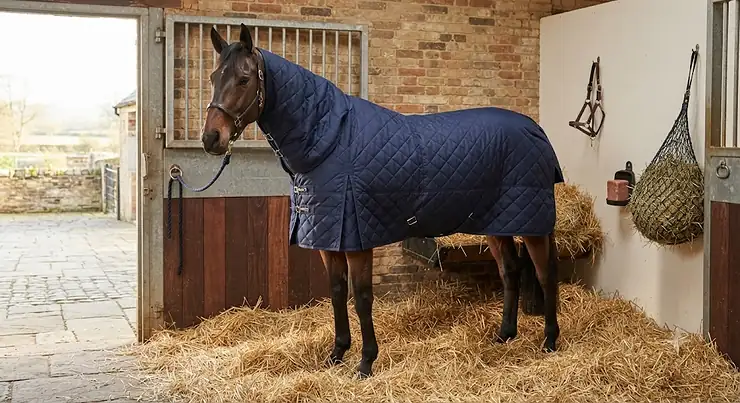
Picture your horse on a January night, wind rattling the stable door, breath fogging in the cold air. That’s the exact scenario a heavyweight stable rug horse owners reach for is built to solve. A heavyweight stable rug is an indoor blanket, typically filled with 300g-450g of polyfill insulation, designed to keep a stabled horse warm without the waterproofing bulk of a turnout rug. It’s not a fashion statement or an afterthought – it’s a genuine welfare tool, especially once a horse is clipped or getting on in years.
This guide skips the fluff you’d get from a product listing. Instead, you’re getting honest, spec-by-spec analysis of seven real rugs on the UK market right now, from budget-friendly options to premium picks that competition yards swear by. We’ll dig into fill weights, denier ratings, neck styles, and – crucially – which horse actually needs which rug, because “heaviest wins” is a myth that’s cost more than one owner an overheated, sweaty horse.
Whether you’re weighing up a 400g stable rug horse specialists recommend for a fully clipped cob, or you’re simply trying to work out if your current rug is doing its job through a proper British winter, you’ll find grounded, sourced answers here – not guesswork.
Quick Comparison Table
| Rug | Fill | Neck | Best For | Price Range |
|---|---|---|---|---|
| Rambo Stable Rug 400g | 400g | Standard/detachable | All-round warmth, first-time buyers | £130-£170 |
| Rambo Optimo Stable Plus 400g | 400g | Detachable, split-tech | Competition horses, mane care | £220-£280 |
| WeatherBeeta ComFiTec Channel Quilt Heavy Combo 400g | 400g | Combo (full neck) | Value-conscious combo buyers | £90-£130 |
| Shires Tempest Plus 360g Combo | 360g | Combo | Rug-wreckers, daily durability | £75-£100 |
| LeMieux Arika Stable-Tek 350g | 350g | Standard, liner-compatible | Layering systems, moisture control | £110-£150 |
| Swish Equestrian Stable Rug 360g | 360g | Detachable | Budget-first buyers | £45-£65 |
| Masta Regal Stable Rug 425g | 425g | Standard | Hard-to-warm, older, thin-skinned horses | £95-£125 |
Looking at this line-up, the spread of fill weights from 350g to 425g matters more than it looks at first glance – a difference of 50-75g of polyfill can be the gap between a horse that’s cosy and one that’s shivering by 3am. Budget doesn’t map neatly onto warmth either: the Swish Equestrian Stable Rug punches well above its price point on fill-per-pound value, while the Rambo Optimo Stable Plus costs more largely for movement technology and mane protection rather than raw heat. Anyone shopping by price alone should read the full breakdown below before deciding.
💬 Found a favourite already? Tap through to check today’s availability before it sells out!
Top 7 Heavyweight Stable Rugs: Expert Analysis
1. Rambo Stable Rug 400g — best all-round classic for cold winter nights
The Rambo Stable Rug 400g has been a fixture in UK tack rooms for years, and the reason is fairly simple: it does the fundamentals well without overcomplicating things. The 1000D ripstop polyester outer is genuinely tough — this is a much denser weave than the 210D fabric used on many budget rugs, meaning fewer snags from headcollars, feed buckets or an enthusiastic scratch against the stable wall. Sandwiched inside is 400g of thermobonded fibrefill, which in practice means it holds its loft (and therefore its warmth) far longer than loose polyfill that migrates and thins out after a few washes.
Based on the spec comparison, this rug sits squarely in the “no-nonsense heavyweight” category rather than the technical end of the market — there’s no split-technology gusseting here, so horses with a very active stable manner may feel slightly more restriction through the shoulder than with the Optimo below. Reviewers consistently note the microfibre lining keeps coats notably shinier over a season, and the double front closure holds up well against horses that lean on doors.
Pros:
- ✅ Genuinely tough 1000D ripstop outer resists everyday wear
- ✅ Thermobonded fill keeps its loft wash after wash
- ✅ Compatible with the wider Horseware liner system
Cons:
- ❌ No split-technology gusseting for very active horses
- ❌ Detachable neck sold separately on some variants
At around £130-£170 depending on size and colourway, the Rambo Stable Rug 400g represents strong value for a first heavyweight rug that should comfortably last several winters.
2. Rambo Optimo Stable Plus 400g — best for competition horses and mane care
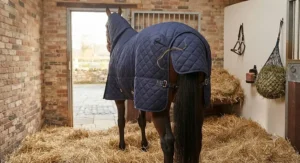
Where the classic Rambo keeps things simple, the Rambo Optimo Stable Plus 400g is built for horses that move around a lot in the stable — think big-moving warmbloods, youngsters, or anything that paces. Its standout feature is Split Technology: an articulated pivotal dart behind the shoulder that lets the rug flex with the horse’s stride instead of pulling tight or twisting, which on paper means less rubbing at the point of shoulder during a full night’s movement.
What most buyers overlook about this model is the wither pad, which lifts the rug fabric clear of the mane roots — a small detail, but one that genuinely reduces mane thinning over a season of use, according to owners who’ve compared it directly against standard-cut rugs. The bungee-style fillet cord (PVC-covered) is also a quiet upgrade over the tie-string design most competitors still use, since it self-adjusts as the horse moves rather than working loose.
Pros:
- ✅ Split Technology reduces shoulder rub during movement
- ✅ Wither pad genuinely helps protect the mane
- ✅ Self-adjusting bungee fillet cord stays secure
Cons:
- ❌ Premium price compared with standard-cut rugs
- ❌ Sizing runs slightly generous, per owner reports
Priced in the £220-£280 range, this is the rug to budget for if mane condition and freedom of movement matter more to you than saving on the initial outlay.
3. WeatherBeeta ComFiTec Channel Quilt Heavy Combo 400g — best value combo-neck heavyweight
The WeatherBeeta ComFiTec Channel Quilt Heavy Combo 400g earns its spot here because it solves a common winter headache: needing full neck coverage without buying a separate neck cover. The combo design means the neck section is permanently attached but can be folded back and secured with touch-tape when a standard neck style suits better, which is genuinely useful for horses that only need the extra coverage during the coldest snaps.
The channel-quilted construction is worth explaining rather than just listing: quilting stitches the fabric into vertical channels that stop the 400g polyfill from bunching at the bottom of the rug over time, which is a common failure point on cheaper unquilted designs. Reviewers consistently mention that the 210D outer, while lighter than the Rambo’s 1000D, still copes fine with typical stable wear, though it’s not the rug you’d choose for a horse that regularly rubs on fencing.
Pros:
- ✅ Combo neck folds back for versatile coverage
- ✅ Channel quilting stops fill from bunching
- ✅ Strong value relative to full-neck competitors
Cons:
- ❌ 210D outer is less rugged than premium alternatives
- ❌ Twin low cross surcingles need regular adjustment checks
At roughly £90-£130, this is a genuinely smart pick for owners who want neck coverage flexibility without paying combo-rug premium prices.
4. Shires Tempest Plus 360g Combo — best for horses that are hard on rugs
Horse & Hound’s own tester used the Shires Tempest Plus combo daily on a middleweight Irish Sport Horse through winter and reported it stayed true to size without slipping or rubbing, which is a meaningful real-world endorsement for a rug aimed at daily, no-fuss use. The durable outer and SupaFleece trim combination is the headline feature here — the fleece trim at contact points (wither, shoulder) reduces friction exactly where standard rugs tend to cause rub marks.
Here’s what to weigh up: at 360g fill, this sits slightly below the true 400g heavyweight tier, so it suits horses in moderately cold UK stables rather than the coldest, draughtiest yards. What most buyers overlook is that the buckle fastening at the chest, paired with adjustable straps, makes this one of the easier heavyweight rugs to fit correctly first time — a detail that matters more than it sounds, since an ill-fitting rug is a recognised cause of rubbing injury.
Pros:
- ✅ Independently tested for fit and daily durability
- ✅ SupaFleece trim reduces rubbing at pressure points
- ✅ Easy buckle fastening simplifies correct fitting
Cons:
- ❌ 360g fill is a notch below full 400g heavyweight
- ❌ Detachable neck adds to overall cost
Expect to pay around £75-£100, making this one of the most dependable mid-range choices for horses that are simply tough on kit.
5. LeMieux Arika Stable-Tek 350g — best for building a layered rugging system
The LeMieux Arika Stable-Tek 350g stands out less for raw fill weight and more for its role in a flexible rugging system. Its diamond ripstop outer is treated to resist staining and shed light moisture, which matters more than it might seem in a stable that gets any condensation or damp bedding contact overnight. On the spec sheet, 350g reads as mid-heavyweight, but reviewers note that layering it with a compatible LeMieux liner — bib, neck or full liner — effectively creates a heavier, fully customisable rug without buying multiple standalone blankets.
Based on the spec comparison, this is the rug for owners who dislike having a wardrobe of single-purpose rugs cluttering the tack room. The double T-bar front closure is a genuine upgrade over single-buckle designs, spreading pressure across two points rather than one, which reduces the chance of the closure popping open if a horse rolls.
Pros:
- ✅ Stain and light-moisture resistant diamond ripstop outer
- ✅ Fully compatible with the LeMieux liner system
- ✅ Double T-bar closure is more secure than single buckles
Cons:
- ❌ 350g alone may not suffice in the coldest yards without a liner
- ❌ Liners are sold separately, adding to total cost
Priced around £110-£150, this rug rewards owners thinking beyond one winter and toward a proper multi-season system.

6. Swish Equestrian Stable Rug 360g — best budget-first heavyweight
Horse & Hound rated the Swish Equestrian Stable Rug as their value pick, and the reasoning holds up under scrutiny: a 1200D outer at this price point is unusually durable, and the SupaFleece trim (again) tackles the rub-prone areas that budget rugs typically neglect. The rug is available in standard neck or combo (100g/200g) neck variants, giving buyers flexibility without upgrading to a pricier range.
What the spec sheet won’t tell you, but reviewer sentiment suggests, is that the 360g fill performs closer to a true heavyweight than its price would imply, likely thanks to the quality of the quilting keeping the fill evenly distributed. The tail flap and fillet string are standard rather than premium, so don’t expect the self-adjusting bungee cords found on pricier rugs — but for the money, this remains one of the strongest heavyweight entry points on the UK market.
Pros:
- ✅ 1200D outer unusually durable for the price bracket
- ✅ SupaFleece trim at key rub points
- ✅ H&H-rated value pick with strong fill retention
Cons:
- ❌ Standard fillet string rather than self-adjusting cord
- ❌ Fewer colourway options than premium competitors
At roughly £45-£65, this is the rug to start with if budget is the primary constraint this winter.
7. Masta Regal Stable Rug 425g — heaviest fill for hard-to-warm horses
When owners on equestrian forums discuss the genuinely heaviest stable rugs available, the Masta Regal Stable Rug 425g comes up repeatedly as one of the highest fill weights sold as a standard (non-combo) product. That extra fill over the standard 400g tier is aimed squarely at horses that struggle to hold condition or warmth: older horses, native breeds crossed with finer blood, or anything recovering from illness where energy shouldn’t be spent shivering.
Based on the spec comparison, the trade-off for that extra warmth is bulk and, in milder conditions, a real risk of overheating — this is not a rug for a mild autumn evening or a horse in hard work that sweats readily. Reviewers who’ve used comparably heavy rugs note that owners often pair a 400g+ rug with careful daily temperature checks rather than leaving it on regardless of conditions, which lines up with welfare guidance on monitoring rugged horses.
Pros:
- ✅ Among the highest standard fill weights available
- ✅ Genuinely effective for hard-to-warm horses
- ✅ Straightforward standard-neck design, easy to fit
Cons:
- ❌ Easy to overheat a horse if conditions turn milder
- ❌ Bulkier fit than 350-400g alternatives
Priced around £95-£125, this is a specialist pick rather than a default choice — reserve it for horses that genuinely need the extra grams.
Practical Usage Guide: Getting the Most From a Heavyweight Rug
Buying the right rug is only half the job — fitting and maintaining it properly is what actually keeps a horse warm and injury-free. Start by measuring from the centre of the chest, along the body, to the point of the buttock; most heavyweight rugs run true to standard sizing charts, but always check the specific brand’s chart rather than assuming a size carries across ranges.
In the first 30 days, check the rug daily for slipping, rubbing at the shoulder or wither, and any dampness underneath — a horse sweating under a rug that’s too heavy for the actual stable temperature is one of the most common early mistakes. Surcingles should allow a flat hand to fit between the strap and the belly; too loose and the rug shifts overnight, too tight and it restricts breathing and movement.
Maintenance-wise, most heavyweight rugs are machine washable at 30°C, though the fill can compact if tumble-dried, so air-drying away from direct heat is the safer routine. Reproofing isn’t usually necessary for stable rugs since they aren’t waterproof by design, but checking surcingle stitching and buckle wear every few weeks prevents a sudden failure at 2am on the coldest night of the year.
✨ Ready to kit your horse out properly this winter? Check today’s stock on the models above before the cold snap hits!
Real-World Scenarios: Matching the Rug to the Horse
Consider three genuinely different horses and how the choice actually plays out. First, a fully clipped 16.2hh warmblood in regular winter work, stabled overnight in a draughty Yorkshire yard: this horse needs a true 400g rug like the Rambo Optimo Stable Plus or Rambo Stable Rug 400g, ideally with a neck cover, because clipping has removed the natural insulation that would otherwise do a lot of the work.
Second, a 24-year-old native pony in light work, living out with a field shelter but occasionally stabled during storms: here a mid-heavyweight option like the LeMieux Arika Stable-Tek 350g, layered with a liner only on the coldest nights, avoids overheating an animal that isn’t clipped and still carries some natural coat.
Third, a budget-conscious livery owner with a cob that’s a notoriously hard doer in winter but easy to keep warm: the Swish Equestrian Stable Rug 360g delivers solid warmth without the premium price tag, freeing up budget for hay and bedding instead. In each case, the “best” rug isn’t the heaviest on paper — it’s the one matched to clip status, workload, age and the actual stable environment.
Problem → Solution: Common Stable Rugging Issues
Even a well-chosen rug can create problems if a few common pitfalls aren’t addressed. Rubbing at the shoulder or wither is usually a fit issue rather than a fabric one — check the neck opening size before assuming the rug itself is faulty, and consider a rug with shoulder gussets or a wither pad, like the Rambo Optimo Stable Plus.
Overheating and sweating under a heavyweight rug typically signals the fill weight doesn’t match the conditions; drop to a mid-weight option like the LeMieux Arika Stable-Tek 350g or remove the rug during milder spells rather than leaving a 400g+ rug on regardless of temperature.
Slipping rugs, particularly overnight, are almost always down to loose surcingles or a rug that’s too large — retighten straps and recheck sizing rather than adding extra fillet straps as a workaround. Persistent mane rubbing points to a design lacking wither protection; switching to a rug with an integrated wither pad solves this far more reliably than adding padding after the fact. Finally, a rug losing its warmth over a season usually means the fill has migrated — channel-quilted designs like the WeatherBeeta ComFiTec Channel Quilt Heavy Combo are specifically built to prevent this.
How to Choose a Heavyweight Stable Rug for Horses
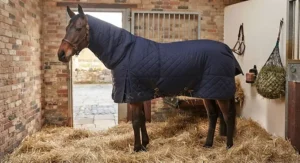
- Assess clip status first. A fully clipped horse loses most natural insulation and will almost always need a genuine 300g-400g+ rug, while an unclipped horse may only need a lightweight sheet.
- Factor in age and body condition. Older horses and those with less body fat regulate temperature less efficiently, so err toward the heavier end of the range.
- Check your stable’s actual temperature, not just the outside weather — a well-insulated barn behaves very differently to an exposed timber stable block.
- Match neck style to your routine. Combo or detachable necks add flexibility if temperatures swing through the season, while standard necks suit consistently cold conditions.
- Consider denier rating for durability, especially if your horse is boisterous or shares a barn with others prone to nipping rugs.
- Think about your layering strategy. A mid-weight rug plus a liner, such as the LeMieux system, can be more versatile than one fixed heavyweight rug.
- Set a realistic budget, but weigh cost-per-winter rather than sticker price alone — a £150 rug lasting five seasons often beats a £50 rug replaced every year.
Common Mistakes When Buying a Heavyweight Stable Rug
The single biggest mistake is buying by fill weight alone without considering the individual horse — a 425g rug like the Masta Regal on an unclipped, hardy cob in a sheltered barn is a fast route to a sweaty, uncomfortable animal. A close second is ignoring fit in favour of features; a rug with brilliant split-technology gusseting still causes rubbing if the neck opening or length is wrong for that specific horse’s conformation.
Skipping the denier rating is another common error — buyers focus entirely on fill grams and overlook that a 210D outer on a rug shared with a rug-wrecker will tear within a season, regardless of how warm the fill is. Some owners also assume “heaviest available” equals “best value,” when in practice a well-fitted 350g rug like the LeMieux Arika Stable-Tek, layered sensibly, often outperforms a fixed 425g rug across a full winter of variable UK weather. Finally, neglecting to check washing and drying instructions before buying can shorten a rug’s working life considerably, since tumble-drying compacts fill in ways that permanently reduce warmth.
Stable Rug vs Rug Liner Combo: Which Wins for Deep Winter?
A single fixed heavyweight rug and a mid-weight rug plus liner system solve the same problem in different ways, and neither is universally “better.” A standalone heavyweight, such as the Rambo Stable Rug 400g, offers simplicity: one purchase, one fitting routine, no compatibility checks. That suits owners who want to rug once and not think about it again through the season.
A stable rug vs rug liner combo approach — pairing something like the LeMieux Arika Stable-Tek 350g with a compatible liner — trades that simplicity for adaptability. On a mild December evening, the rug alone suffices; on a genuinely bitter January night, the liner adds warmth without buying a second full rug. The value case is strongest for owners in regions with genuinely variable winter temperatures, since a fixed 400g rug can’t be “turned down” the way a liner system can. The downside is added cost if you’re starting from scratch, plus one more compatibility factor to check before purchase.
What to Expect: Real-World Performance of a 400g Stable Rug Horse Owners Choose
Specs on a page rarely tell you what a rug actually feels like to use through a real winter. In practice, a genuine 400g stable rug horse owners fit correctly should keep a clipped horse comfortable through UK stable temperatures without additional layering on most nights, based on the aggregate of fill performance data and owner reporting across the rugs reviewed here. On the coldest nights — think sustained sub-zero with wind exposure — even a 400g rug may benefit from a liner or stable sheet underneath for genuinely cold-sensitive horses.
Reviewers consistently note that channel-quilted 400g rugs, such as the WeatherBeeta ComFiTec Channel Quilt Heavy Combo, maintain even warmth distribution better over a season than unquilted equivalents, where fill can bunch toward the rug’s lower edge after repeated washing. Day-to-day, expect to check the rug each morning for damp patches (a sign of overheating or condensation), shifted surcingles, and any rubbing before it becomes a sore.
Clipped Horse Winter Stabling: Getting Fill Weight Right
Clipped horse winter stabling is where fill-weight decisions matter most, because clipping deliberately removes the coat that would otherwise regulate temperature. The British Horse Society notes that while an unclipped horse typically stays comfortable down to around 5°C in its winter coat, a clipped horse loses that buffer entirely and needs appropriate rugging to compensate.
In practice, this means a fully clipped horse stabled overnight through a British winter generally needs a genuine 300g-425g rug, scaled to how much coat was removed — a trace clip needs less than a full body clip. What most buyers overlook is that clipped horses also need more frequent rug changes as daytime temperatures rise, since a rug left on into a mild afternoon can cause exactly the overheating and sweating that undermines the whole point of clipping. Reviewers with fully clipped competition horses tend to favour rugs like the Rambo Optimo Stable Plus 400g, prizing the freedom-of-movement design for horses in regular winter work.
Long-Term Cost & Maintenance
A heavyweight stable rug is rarely a one-season purchase, so total cost of ownership matters more than the initial price tag. A premium rug like the Rambo Optimo Stable Plus, priced around £220-£280, that lasts six or seven winters works out considerably cheaper per season than a £50 budget rug replaced every year or two due to fill compaction or torn outers.
Washing costs also add up: most heavyweight rugs need specialist rug-washing services or a large-capacity machine, typically £15-£25 per wash at a professional cleaner, and doing this once or twice a season extends the rug’s working life significantly. Denier rating is the strongest predictor of longevity here — a 1000D outer like the classic Rambo Stable Rug will typically outlast a 210D equivalent by several seasons under identical use, even though the sticker price is higher upfront.
Heated Stable Care: Do You Still Need a Heavy Fill Stable Rug Horse Owners Rely On?
Heated stable care — barns fitted with heat lamps, insulated walls or underfloor systems — is becoming more common on UK competition yards, and it does change the rugging equation somewhat. In a genuinely heated or well-insulated barn, a full 400-425g rug like the Masta Regal may be more than a horse needs, risking overheating even in the depths of winter.
That said, heated stabling doesn’t remove the need for rugging altogether, particularly for clipped horses, since heat lamps rarely warm a barn evenly and draughts near doors or windows persist regardless of ambient heating. A heavy fill stable rug horse owners in heated barns typically reach for is a mid-weight option, such as the LeMieux Arika Stable-Tek 350g, reserving the true heavyweight rugs for unheated stabling or particularly cold-sensitive individuals. The key habit, heated barn or not, is checking the horse daily rather than assuming the environment does all the work.
The Warmest Stable Rug for Horses: Separating Marketing From Fact
Every brand claims its rug is the warmest, so it’s worth being specific about what actually drives warmth rather than taking marketing copy at face value. Fill weight is the primary factor, but it’s not the only one — quilting pattern, lining material and neck coverage all meaningfully affect real-world warmth independent of the grams printed on the label.
Based on the spec comparison across this list, the genuinely warmest options are the Masta Regal Stable Rug 425g for raw fill weight, and the Rambo Optimo Stable Plus 400g with its neck cover attached for warmth distributed across the whole horse rather than just the body. A 400g rug without a neck, left standard, will run noticeably cooler around the throat and poll than a combo or detachable-neck equivalent at the same fill weight — a detail marketing copy rarely spells out clearly.
Best Winter Stable Rug: A Buyer’s Decision Framework
If your horse is fully clipped and stabled overnight in an unheated barn, choose a true 400g+ rug with a neck cover, such as the Rambo Optimo Stable Plus or Rambo Stable Rug 400g, because clipping removes the insulation a lighter rug would otherwise rely on. If your horse is unclipped but elderly or a poor doer, choose a mid-to-heavyweight option like the LeMieux Arika Stable-Tek 350g, because natural coat plus moderate fill usually suffices without risking overheating.
If budget is the binding constraint, choose the Swish Equestrian Stable Rug 360g, because it delivers genuine heavyweight performance without the premium pricing of technical features you may not need. If your horse is notoriously hard on kit, choose the Shires Tempest Plus 360g Combo, because its tested durability and fit outweigh marginal warmth differences. And if you’re building a flexible multi-season system rather than buying once, choose a liner-compatible rug over a fixed heavyweight every time.
Safety, Regulations and Compliance for UK Stable Rugs
Rugging decisions fall under general animal welfare responsibilities in the UK. Owners and keepers are legally required to meet a horse’s welfare needs under the Animal Welfare Act 2006, and the government’s official code of practice for horses, ponies, donkeys and their hybrids sets out expectations around shelter, environment and appropriate protection from extremes of temperature — rugging falls squarely within this.
Practically, this means checking rugs daily for fit and signs of overheating isn’t just good practice, it’s part of a reasonable duty of care. Ill-fitting rugs left unchecked can cause rubbing injuries or, in the case of overheating, contribute to skin conditions such as rain scald when a horse sweats persistently under an unsuitable rug. Buying a well-fitted rug from a reputable brand and inspecting it regularly is the simplest way to stay on the right side of both welfare guidance and common sense.

FAQ
❓ What weight stable rug does a clipped horse need in winter?
❓ Is a 400g stable rug too warm for an unclipped horse?
❓ How often should you wash a heavyweight stable rug?
❓ Can you use a stable rug and liner together?
❓ What's the difference between a stable rug and a turnout rug?
Conclusion
Choosing the right heavyweight stable rug horse owners can rely on through a genuine British winter comes down to matching fill weight, neck style and durability to your specific horse rather than defaulting to the heaviest option on the shelf. A fully clipped competition horse and an elderly, unclipped native pony have entirely different needs, and the seven rugs covered here — from the dependable Rambo Stable Rug 400g to the specialist Masta Regal Stable Rug 425g — reflect that range deliberately.
Whichever you land on, the habits matter as much as the purchase: check fit weekly, monitor for overheating daily, and don’t assume “warmer is always better.” A well-chosen, well-maintained rug will comfortably see your horse through several winters rather than one.
✨ Don’t Miss These Exclusive Deals!
🔍 Take your horse’s winter comfort to the next level with the rugs covered above. Click through to check current pricing and availability before the next cold snap arrives!
Recommended for You
- Medium Weight Stable Rug Horse: 7 Proven Picks for Autumn 2026
- Lightweight Stable Rug Horse: 7 Best Picks for 2026
- How To Choose The Right Stable Rug For Your Horse: 7 Top Picks 2026
Disclaimer: This article contains affiliate links. As an Amazon Associate, I earn from qualifying purchases. If you purchase products through these links, we may earn a small commission at no additional cost to you.
✨ Found this helpful? Share it with your friends! 💬🤗
