
In This Article
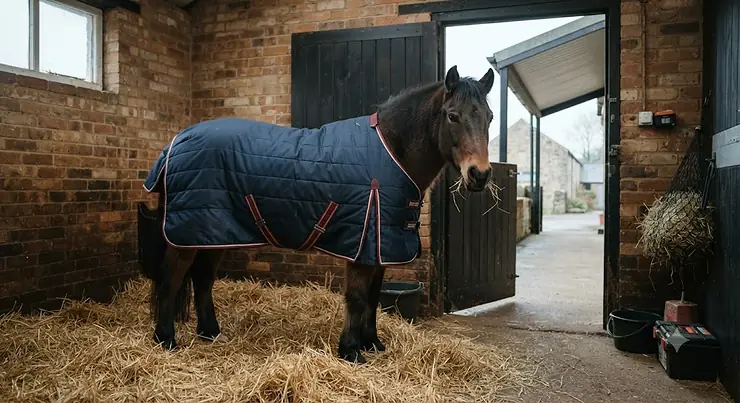
There’s a particular kind of guilt that sets in the first time you walk past your pony’s stable on a frosty November evening and realise he’s still wearing his summer coat and nothing else. A pony stable rug is an indoor blanket, usually filled with polyester wadding and fastened with chest straps and cross surcingles, designed to keep a stabled pony warm and clean without the waterproofing a turnout rug needs. It’s not the same job as a turnout rug, and buying the wrong one is one of the most common (and most expensive) mistakes new pony owners make. I’ve spent the past few weeks digging through spec sheets, forum arguments, and Horse & Hound’s rug test archives so you don’t have to, and what follows is a proper, warts-and-all comparison of seven real rugs currently sold to UK owners.
Before we get into individual products, it’s worth saying plainly: fit trumps fill weight every single time. A brilliantly engineered 300g heavyweight rug that gapes at the withers or drags on the ground will do more harm than a modest 100g rug that actually sits where it should. According to the British Horse Society’s rugging guidance, poor fit is one of the leading causes of rubbing and discomfort in rugged horses and ponies, so measuring properly before you shop matters more than any brand name below.
This guide covers budget, mid-range and premium stable rugs, plus fleece alternatives, so whether you’ve got a fine-coated show pony or a hairy native cob-type who barely needs rugging at all, there’s something here that fits your yard, your budget and your pony’s actual needs.
Quick Comparison Table
| Rug | Fill Weight | Outer Denier | Best For |
|---|---|---|---|
| Shires Tempest Original 100g | 100g | 210D | Budget-friendly spring/autumn layer |
| WeatherBeeta ComFiTec Channel Quilt | 100-360g | 600D | All-round mid-range durability |
| Mark Todd Pony Fleece Rug | Fleece (no fill) | N/A | Travel, cooling down, mild nights |
| Rhinegold Elite Fleece Rug | Fleece (no fill) | N/A | Cheapest fleece alternative |
| Shires Tempest Plus 200g Combo | 200g | 1200D | Detachable-neck mid-heavyweight |
| Horseware Rambo Stable Rug 200g | 200g | 1000D | Long-term durability, premium build |
| Gallop Ponie 100g Stable Rug | 100g | 600D | Ultra-budget pony-specific option |
Looking at the spread above, the honest takeaway is that fill weight alone tells you almost nothing about how a rug will actually perform. The Shires Tempest Original 100g and Gallop Ponie 100g Stable Rug share an identical fill weight but sit at opposite ends of the durability spectrum because of their outer denier, while the fleece options carry no insulating fill at all and instead rely on trapped air within the fabric loops for a much gentler layer of warmth. Buyers on a first-pony budget should weigh outer fabric toughness just as heavily as the grams-of-fill number printed on the label.
💬 Bookmark this table now — you’ll want to scroll back to it once you’ve read the full breakdown below.
Top 7 Pony Stable Rugs: Expert Analysis
1. Shires Tempest Original 100g — best budget lightweight layer
The Shires Tempest Original 100g opens our list because it’s genuinely the rug most UK pony owners reach for first, and that popularity isn’t accidental. Its 210 denier polyester outer paired with 100g of quilted polyfill means it handles the awkward “not quite cold enough for heavyweight, too cold for nothing” window of early spring and late autumn without overheating a pony who’s still holding some summer coat. Reviewers on Amazon consistently report that the cross surcingles and double front buckles are straightforward for children and less confident handlers to fasten, which matters a lot if your pony is looked after by more than one person. What most buyers overlook about this model is that the lightweight build makes it genuinely reasonable for daily use rather than an occasional extra layer — it’s thin enough to leave on for long stretches without a native-type pony sweating underneath it. Based on the spec comparison with heavier rugs on this list, this one suits fine-coated ponies, those living in milder parts of the UK, or as a base layer under a turnout combo on chillier nights. Aggregated review sentiment is strongly positive on fit and value, though a handful of owners note the 210D outer can pick up small tears if a pony is boisterous or shares a stable with another. Expect to pay somewhere in the £30-£45 range depending on size, and for what it does, that price feels fair rather than a bargain.
Pros:
- ✅ Genuinely lightweight for daily stable use
- ✅ Easy double-buckle fastening for beginners
- ✅ Good value at the lower end of the price scale
Cons:
- ❌ 210D outer isn’t built for rough or boisterous ponies
- ❌ Too thin alone for properly cold winter nights
2. WeatherBeeta ComFiTec Channel Quilt — best all-round mid-range durability
The WeatherBeeta ComFiTec Channel Quilt earns its mid-range spot through genuinely clever engineering rather than marketing gloss. Its 600 denier polypropylene channel-quilted outer is a noticeable step up in toughness from the entry-level rugs above, and the memory foam wither relief pad — a feature WeatherBeeta has carried across its ComFiTec range — lifts the rug fractionally off a pony’s withers to reduce the pressure points that cause rubbing on narrower-backed types. Here’s what to weigh: this rug is sold across a run of fill weights from around 100g up to 360g, so you’re really buying into a system rather than a single product, and picking the wrong weight defeats the point of the clever construction underneath it. Reviewers consistently note that the channel quilting keeps the fill from migrating and clumping after repeated washes, a common complaint with cheaper quilted rugs. What the spec sheet won’t tell you, but owners report, is that the covered buckle design reduces the annoying situation where exposed metal clips catch on stable door bolts or fence wire. This is the rug for owners who want one dependable brand they can stick with for years rather than chase bargains every season, and prices typically sit in the £70-£95 range depending on the fill weight chosen.
Pros:
- ✅ Durable 600D outer that resists fill migration
- ✅ Memory foam wither relief reduces rubbing
- ✅ Available across a full range of fill weights
Cons:
- ❌ Costs meaningfully more than budget alternatives
- ❌ Range of options can overwhelm first-time buyers
3. Mark Todd Pony Fleece Rug — best lightweight fleece for travel and cooling down
The Mark Todd Pony Fleece Rug is not technically a stable rug in the padded, insulated sense, but it earns its place because so many pony owners actually use a good fleece as their go-to indoor layer for mild weather, sweaty cool-downs after exercise, or travel. Made from a wicking, breathable fleece fabric with a fleece wither protection pad, its double front buckles and adjustable low cross surcingles mirror the fastenings you’d expect on a proper filled rug, just without the bulk. Based on the spec comparison, the appeal here is versatility rather than raw warmth — this is the rug that comes out after a sweaty schooling session to wick moisture away before a pony goes back in its stable, and doubles as a light stable layer on genuinely mild nights. What most buyers overlook is how well fleece breathes compared with a quilted 100g rug of similar thickness, which matters enormously for a clipped pony prone to getting damp and chilled rather than properly cold. Reviewers describe it as a hardworking, do-everything piece of kit rather than a showpiece, and at a typical £20-£35 range it’s one of the most cost-effective additions any pony owner’s wardrobe can make.
Pros:
- ✅ Genuinely multi-purpose: cooler, travel and light stable use
- ✅ Wicks moisture far better than a quilted rug
- ✅ Affordable enough to own more than one
Cons:
- ❌ Offers minimal warmth on genuinely cold nights
- ❌ Fleece pills over time with heavy machine washing
4. Rhinegold Elite Fleece Rug — cheapest fleece alternative on the market
The Rhinegold Elite Fleece Rug sits directly alongside the Mark Todd option as a fleece stable layer, and honestly is the rug I have to be most balanced about. On specs alone it looks nearly identical: anti-pill fleece, double chest straps with eyelets, cross-over surcingles and a fillet string, all wrapped in what the brand calls a “luxury” finish with twin rope binding. Individual Amazon reviews are often warm, with owners describing a cosy, well-fitting product their pony settled into happily. However, aggregated sentiment across equestrian forums is genuinely more mixed for Rhinegold as a brand than for some competitors here, with a recurring theme of buckles and linings that some owners find less robust over repeated seasons, and fit that can run narrower through the shoulder on certain pony builds. Reviewers consistently note the value proposition is strong at the point of purchase, which is precisely why it earns a spot on this list — as a cheap fleece to keep as a spare, a travelling rug, or a first purchase while you learn what shape suits your pony, it’s hard to beat on price. What the spec sheet won’t tell you is that buyers planning to rely on one fleece rug daily for years may want to budget for the Mark Todd instead, while those wanting a cheap second or third rug in rotation will likely be perfectly happy here. Expect prices in the £20-£30 range.
Pros:
- ✅ Among the cheapest fleece rugs widely available
- ✅ Warm reviews on comfort and initial fit
- ✅ Useful as a spare or travelling rug
Cons:
- ❌ Mixed forum sentiment on long-term durability
- ❌ Shoulder fit can run narrow on broader ponies
5. Shires Tempest Plus 200g Combo — best mid-heavyweight with detachable neck
Stepping up in both warmth and price, the Shires Tempest Plus 200g Combo brings a 1200 denier outer and SupaFleece trims that Horse & Hound’s own reviewer praised as feeling genuinely well designed rather than gimmicky when tested on a middleweight Irish Sport Horse-type. Reviewers consistently note the WarmaRug-compatible neck loops as a standout feature, since it means one rug can be layered up or down as autumn slides into proper winter rather than needing an entirely separate heavyweight purchase. Based on the spec comparison, the 200g fill sits comfortably between the lightweight options above and true winter-weight rugs, making this a sensible middle purchase for owners who rug once properly rather than buying three separate weights across the season. What most buyers overlook is the detachable combo neck, which suits ponies who find full-neck rugs restrictive around the poll but still benefit from neck coverage on the coldest nights. The Horse & Hound reviewer did note the neck could run slightly short for horses who graze with their heads right down, a detail worth checking against your own pony’s conformation before buying. Prices typically land in the £55-£75 range, and for the added durability and versatility, that feels like reasonable value rather than a premium markup.
Pros:
- ✅ Genuinely versatile with WarmaRug layering system
- ✅ Detachable neck suits ponies who dislike full coverage
- ✅ Praised by professional reviewers for build quality
Cons:
- ❌ Neck can run short on ponies who graze low
- ❌ Pricier than entry-level 100g alternatives
6. Horseware Rambo Stable Rug 200g — best premium build for long-term durability
The Horseware Rambo Stable Rug 200g is the rug on this list built with the least compromise, and the 1000 denier ripstop polyester outer is the clearest evidence of that. Rambo has built its reputation on turnout rugs that survive years of field use, and that same construction philosophy carries into its stable range, meaning this rug is aimed squarely at owners who’d rather pay once than replace a rug every couple of seasons. The 200g Thermobonded fiberfill is genuinely well suited to clipped ponies who need reliable warmth without excess bulk, and the moisture-absorbent microfibre lining is a noticeably softer finish against the coat than the polyester linings found on cheaper rugs further up this list. Reviewers consistently note that Horseware’s double front closure and cross surcingle system feels more premium in hand — sturdier buckles, better stitching at stress points — though several also point out that this is reflected fully in the price. What most buyers overlook is that this rug is also compatible with Horseware’s liner system, so a single Rambo stable rug plus a liner can effectively cover three different warmth levels across a full winter, arguably offsetting the higher upfront cost over several years. Prices typically sit in the £120-£150 range, which puts this firmly in premium territory, but the long-term cost-per-use case is genuinely strong if you keep a pony for many seasons.
Pros:
- ✅ Exceptionally durable 1000D ripstop construction
- ✅ Premium microfibre lining reduces coat friction
- ✅ Liner-compatible for flexible layering across seasons
Cons:
- ❌ Highest upfront price of any rug on this list
- ❌ Overkill for owners needing only occasional light rugging
7. Gallop Ponie 100g Stable Rug — best ultra-budget pony-specific option
Rounding out the list, the Gallop Ponie 100g Stable Rug is aimed specifically at pony owners who need something affordable without resorting to a generic own-brand rug of unclear quality. Its 600 denier outer is actually tougher on paper than the entry-level Shires option further up this list, despite typically selling for less, which is exactly the kind of detail a simple price comparison would miss. Based on the spec comparison, this rug makes sense as a genuinely serviceable first stable rug, a spare for washday rotation, or an option for a yard pony who doesn’t need show-quality finishing. Aggregated customer sentiment from UK equestrian retailers is generally positive for the price point, with owners typically describing it as good value rather than exceptional, which is a fair and honest way to frame a budget product. What most buyers overlook is that a tougher outer denier at this price point often means a slightly heavier, less “technical” feel than premium alternatives, so don’t expect the featherlight handling of pricier rugs. For a pony that lives a straightforward, unfussy life in a standard yard setup, this is a sensible, low-risk purchase, typically priced in the £25-£35 range.
Pros:
- ✅ Tougher outer denier than some pricier rivals
- ✅ Genuinely pony-specific sizing and cut
- ✅ Sensible spare or first-rug purchase
Cons:
- ❌ Fewer premium finishing touches than top-tier brands
- ❌ Smaller review pool than more established brands
Practical Usage Guide: Getting Your Pony’s Stable Rug Right From Day One
Buying the rug is honestly the easy part. Getting the fit right, and building a sensible routine around it, is where most first-time owners trip up in those first few weeks. Start by measuring your pony properly: run a tape from the centre of the chest, along the side of the body, to the point of the buttock, and round up to the nearest standard size rather than down — a rug that’s slightly generous is far safer than one that’s tight across the shoulders. Once the rug is on, check that the front straps allow a flat hand’s width of movement, that the surcingles are crossed underneath (never straight across) to avoid pressure on the spine, and that the tail flap sits without pulling.
In the first thirty days, get into the habit of removing the rug daily, even if it feels like extra work, specifically to run your hands over the shoulders, withers and chest for any early signs of rubbing or heat. Common early mistakes include leaving surcingles too loose (letting the rug ride up and twist overnight) or too tight (restricting movement and breathing). Wash new rugs before first use where the label allows, since factory finishes can occasionally irritate sensitive skin, and always dry rugs fully before storing to avoid mildew developing in the fill.
Real-World Scenarios: Stable Comfort Wear for Every Type of Pony
Different ponies genuinely need different approaches to stable comfort wear, and the clearest way to explain this is through a few realistic profiles. Take a fine-coated 13.2hh show pony, clipped for the winter showing season and stabled overnight: this pony needs proper insulating comfort wear like the WeatherBeeta ComFiTec Channel Quilt at a higher fill weight, because a clipped coat provides almost no natural insulation and a fleece alone simply won’t cut it once temperatures drop.
Compare that with a native-type Welsh section pony living out most of the year but stabled occasionally during storms: this pony likely needs nothing heavier than the Shires Tempest Original 100g or even just the Mark Todd Pony Fleece Rug as an occasional layer, since native breeds carry thick natural coats that do most of the insulating work themselves, and over-rugging a hardy pony can cause overheating and sweating that’s arguably worse than the cold it’s meant to prevent.
Finally, picture a veteran 25-year-old pony with reduced muscle mass and poorer natural thermoregulation: here, reliable, consistent comfort wear like the Horseware Rambo Stable Rug 200g matters more, since older ponies often struggle to maintain body condition through a cold winter and benefit from dependable, well-fitted warmth rather than budget rotation between rugs of inconsistent quality.
Problem → Solution: Fixing Common Pony Rug Fails
Problem: Rug keeps slipping backward. This is almost always down to surcingles that aren’t crossed properly or a chest fit that’s slightly too wide. Re-cross the surcingles underneath the belly and check the chest strap sits snugly, not loosely, against the breastbone.
Problem: Rubbing at the shoulders or withers. Usually a sign the rug is either the wrong shape for your pony’s build or has lost its shape after repeated washing. A rug like the WeatherBeeta ComFiTec Channel Quilt with a wither relief pad can solve this directly, but sometimes simply sizing up half a size resolves shoulder rubbing entirely.
Problem: Pony sweating under the rug. This nearly always means the fill weight is too heavy for the conditions or the pony’s coat state. Swap to something lighter like the Mark Todd Pony Fleece Rug on milder nights rather than leaving a heavyweight rug on regardless of temperature.
Problem: Buckles and clips freezing or seizing in cold weather. Covered buckle designs, like those on the WeatherBeeta ComFiTec Channel Quilt, reduce this significantly, but a light smear of silicone spray on exposed metal parts before winter sets in also helps enormously.
Problem: Rug smells musty despite regular washing. This typically means the rug wasn’t fully dried before storage. Hang rugs over a rail in a ventilated space for at least 24 hours before folding away, particularly with thicker fills like the 200g options on this list.
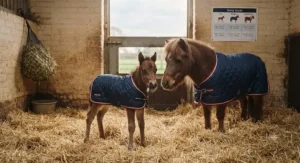
How to Choose an Indoor Rug for Ponies
Choosing the right indoor rug for ponies genuinely comes down to five practical criteria, and working through them in order saves an enormous amount of trial and error.
- Measure first, shop second. An accurate length measurement from chest to buttock is the single biggest factor in comfort and safety, and it should always come before you look at brands or price.
- Match fill weight to your pony’s coat state, not the calendar. A clipped pony in October needs more insulation than an unclipped native pony in January, so let coat condition drive the decision.
- Check the denier rating against your pony’s temperament. Boisterous, playful ponies who roll and rub need a tougher outer like 600D or above; quieter types can manage on a lighter 210D fabric.
- Decide between standard neck, combo, or fleece. Combo necks suit ponies who need full coverage; standard necks suit those who dislike restriction; fleece suits mild-weather and travel use.
- Factor in washing and maintenance realistically. A rug you’ll actually wash regularly is more useful long-term than a technically superior one that’s a hassle to maintain.
- Set a genuine budget across the season, not per rug. Owning two mid-weight rugs on rotation is often more practical than one expensive heavyweight rug worn daily without a break.
- Read aggregated reviews for your pony’s specific size range. Fit complaints often cluster around particular sizes rather than the whole range, so search reviews for your pony’s size bracket specifically where possible.
Common Mistakes When Buying a Stable Rug for Ponies
The single biggest mistake owners make when buying a stable rug for ponies is measuring once, guessing the fit will be “close enough,” and never re-measuring as the pony grows or changes shape across seasons. Ponies, particularly younger ones, can change measurably in a single year, and a rug that fit perfectly last winter can be genuinely unsafe a year later. A second common mistake is chasing the heaviest fill weight available on the assumption that warmer always means better; as covered above, over-rugging a hardy native pony can cause discomfort just as easily as under-rugging a fine-coated one.
A third mistake is buying based on price alone without checking aggregated review sentiment for durability, which is exactly why brands like Rhinegold appear further down some owners’ repeat-purchase lists despite attractive upfront pricing. Finally, many first-time buyers overlook maintenance requirements entirely, buying a rug that needs specialist washing or reproofing without budgeting the time or cost that upkeep demands.
Pony Fleece Stable Rug vs Filled Stable Rug: Which Wins?
This is one of the most genuinely useful comparisons a new pony owner can understand, because a pony fleece stable rug and a filled stable rug are not interchangeable products, despite often being displayed side by side in shops. A fleece rug, like the Mark Todd Pony Fleece Rug or Rhinegold Elite Fleece Rug, provides warmth through trapped air within the fabric loops and excels at wicking moisture, making it the clear winner for cooling a sweaty pony down after exercise or for gentle overnight use in mild weather. A filled stable rug, like the Shires Tempest Original 100g or WeatherBeeta ComFiTec Channel Quilt, uses polyester wadding sandwiched between two fabric layers and wins decisively once temperatures drop meaningfully or a pony is clipped, since fleece alone simply cannot replicate that level of insulation.
| Factor | Fleece Rug | Filled Stable Rug |
|---|---|---|
| Warmth level | Light | Moderate to heavy (100-300g) |
| Moisture wicking | Excellent | Moderate |
| Typical price | Lower | Moderate to higher |
| Best For | Cooling down, travel, mild nights | Genuine cold-weather stabling |
The clearest way to interpret this table is that most pony owners genuinely benefit from owning both rather than choosing one over the other. Using a fleece as the everyday layer through autumn and reserving a proper filled rug like the Shires Tempest Plus 200g Combo for the depths of winter gets the best of both approaches without overspending on warmth you don’t need most of the year.
Lightweight Stable Blanket vs Heavyweight: Matching Weight to Season
A lightweight stable blanket in the 100g range, such as the Shires Tempest Original 100g or Gallop Ponie 100g Stable Rug, is designed for the shoulder seasons of spring and autumn, when a pony needs a touch of warmth overnight but genuinely nothing more. A heavyweight rug, sitting anywhere from 200g up to 350g or beyond, is built for the coldest months and for clipped or older ponies who can’t generate enough body heat on their own. Reviewers consistently note that the mistake isn’t choosing the wrong weight outright, but failing to switch between them as the season actually changes rather than by the calendar date alone. A mild December week doesn’t need the same rug as a genuinely frosty one, and owners who keep both a lightweight blanket and a heavier option on hand, swapping based on the forecast, report far fewer issues with sweating or chilling than those who rug for the season and forget about it.
✨ Don’t Miss These Exclusive Deals!
🔍 Take your pony’s winter wardrobe to the next level with these carefully selected stable rugs. Click on any highlighted item to check current pricing and availability. These picks will help you create a cosy, well-fitted setup your pony will genuinely thank you for! 🐴
Features That Actually Matter (And Those That Don’t)
Cutting through marketing language, a handful of features genuinely affect day-to-day rug performance: outer denier rating, wither relief padding, and covered buckle designs all make a real, measurable difference to comfort and longevity. A higher denier outer, as seen on the Horseware Rambo Stable Rug 200g, directly reduces tear risk from rolling, rubbing, or shared stable space, and this matters far more in practice than most owners realise until their cheaper rug develops a hole.
On the other hand, some heavily marketed features add less real-world value than their branding suggests. “Anti-static” linings, for instance, sound impressive but make minimal difference to a stabled pony’s daily comfort compared with simple, well-fitted lining fabric. Similarly, elaborate colour-matched accessory ranges look attractive in a tack room but do nothing for warmth or fit, and pony owners on a budget shouldn’t feel they’re missing out by skipping them.
What to Expect: Real-World Performance in the Stable
On paper, a 100g rug and a 200g rug might look like a modest difference, but in practice the jump is noticeable within the first cold week of ownership. A 100g rug like the Shires Tempest Original 100g genuinely feels like a light jumper — useful, comfortable, but not something you’d rely on in a proper frost. Step up to a 200g rug like the Shires Tempest Plus 200g Combo, and the difference in how quickly a pony’s coat lies flat and settled after a cold night becomes obvious to anyone handling them daily.
What the spec sheet won’t tell you is how differently rugs behave once they’re genuinely wet from an unexpected leak in the roof or a splashy water trough nearby — thicker fills like the 200g Thermobonded fiberfill in the Horseware Rambo Stable Rug 200g take noticeably longer to dry than a 100g equivalent, which matters if your yard has limited drying space during a wet spell.
Long-Term Cost & Maintenance of Pony Stable Rugs
Thinking in terms of total cost of ownership rather than just the upfront price changes the maths on several rugs in this list quite significantly. The Horseware Rambo Stable Rug 200g, despite sitting at the top of the price range, is built to survive many more wash-and-wear cycles than budget alternatives, meaning its genuine cost-per-year over a five-year ownership period can work out comparable to, or even cheaper than, replacing a £30 budget rug every single season.
| Rug | Approx. Price Range | Expected Lifespan | Best For |
|---|---|---|---|
| Gallop Ponie 100g Stable Rug | £25-£35 | 1-2 seasons | Budget, spare, or occasional use |
| Shires Tempest Original 100g | £30-£45 | 2-3 seasons | Everyday light use |
| Shires Tempest Plus 200g Combo | £55-£75 | 3-4 seasons | Regular mid-heavyweight use |
| Horseware Rambo Stable Rug 200g | £120-£150 | 5+ seasons | Long-term, daily reliability |
Reading the table above, the value verdict genuinely shifts depending on how long you expect to keep your pony and how heavily the rug gets used. For a pony on loan for a year or two, the budget end of the table makes complete financial sense; for a pony you expect to keep for a decade, the maths behind the premium option starts looking considerably more reasonable than the sticker price alone suggests.
Maintenance-wise, most stable rugs are machine washable at home on a large-capacity machine, though heavier fills like 200g and above often need a launderette-sized machine or specialist equestrian laundry service to wash and rinse properly. Budget an annual reproofing check for any rug’s outer fabric, even stable rugs that aren’t marketed as waterproof, since a compromised outer coating can let damp through to the fill and shorten a rug’s usable life considerably.
Safety, Fit and Welfare: What BHS Guidance Says
Rugging decisions aren’t purely about comfort — they sit within a genuine welfare framework in UK law. Under the Code of Practice for the Welfare of Horses, Ponies, Donkeys and their Hybrids, owners have a legal duty of care to ensure animals in their charge have a suitable environment, which includes appropriate protection from cold where a pony’s natural coat and living conditions don’t provide adequate warmth on their own.
Practically, this means checking a rug daily for signs of rubbing, ensuring surcingles and straps are neither too tight nor too loose, and being honest about whether a hardy native-type pony genuinely needs rugging at all versus simply being left to manage with its natural coat and adequate stable shelter. Over-rugging a pony that doesn’t need it isn’t a welfare positive; it can cause overheating, excessive sweating, and skin problems just as readily as leaving a genuinely cold pony unrugged. When in doubt, a quick hand-check under the rug at the base of the neck — feeling for a comfortably warm rather than hot or cold patch — remains one of the simplest and most reliable checks any owner can do.
FAQ
❓ How do I know what size stable rug my pony needs?
❓ Can I use a stable rug for turnout?
❓ What fill weight does my pony need for winter?
❓ How often should I wash a pony stable rug?
❓ Is a fleece rug enough for a stabled pony in winter?
Conclusion
Choosing the right pony stable rug really does come down to matching fill weight, outer durability and neck style to your individual pony’s coat, temperament and living situation, rather than simply picking whichever option looks smartest in a catalogue photo. Budget-conscious owners are well served by the Shires Tempest Original 100g or Gallop Ponie 100g Stable Rug, while those wanting one dependable rug for years to come should look seriously at the Horseware Rambo Stable Rug 200g despite the higher upfront cost. For anything in between, the WeatherBeeta ComFiTec Channel Quilt and Shires Tempest Plus 200g Combo both offer a genuinely sensible middle ground, and no pony owner’s rug collection is really complete without a fleece option like the Mark Todd Pony Fleece Rug for the countless mild days and post-exercise cool-downs that a heavier rug simply isn’t suited to.
Whichever you choose, always check current pricing and stock before buying, since availability and prices shift regularly, and prioritise proper measuring over brand loyalty every time. A well-fitted budget rug will always outperform a beautifully specced one that doesn’t sit right on your particular pony.
Recommended for You
- Pony Turnout Rug: 7 Best Waterproof Picks Tested for 2026
- Fleece Exercise Sheet for Horses: 7 Best Warm-Up Rugs (2026)
- Waterproof Exercise Sheet for Horses: 7 Top Picks for 2026
Disclaimer: This article contains affiliate links. As an Amazon Associate, I earn from qualifying purchases. If you purchase products through these links, we may earn a small commission at no additional cost to you.
✨ Found this helpful? Share it with your friends! 💬🤗
