
In This Article
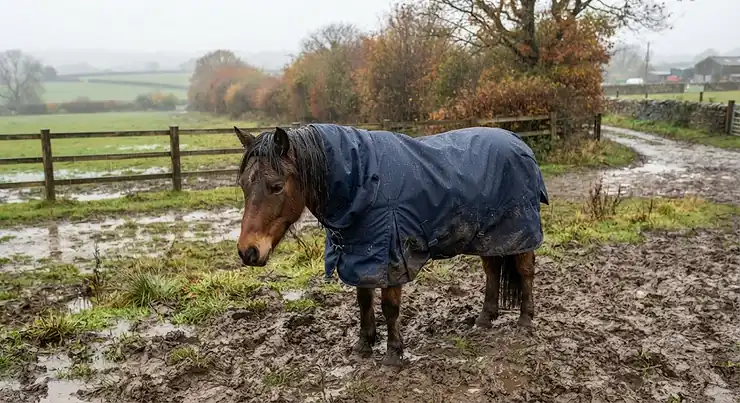
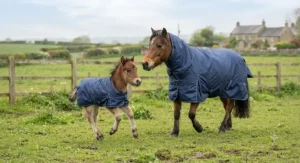
Ponies are drama queens about the weather. Give a pony half an excuse — a bit of drizzle, a stiff breeze, a sky that looks vaguely grey — and they’ll stand at the gate looking personally betrayed by the British climate. Which is exactly why finding the right pony turnout rug matters more than most non-horsey people would ever guess. A pony turnout rug is a fitted, waterproof outdoor blanket designed to keep a pony warm and dry while turned out in the field, and getting the fit, fill weight and fabric right can be the difference between a happy, glossy pony and a shivering, rain-scalded one.
Here’s the thing nobody tells you when you first go shopping for a pony turnout rug: ponies are not just small horses. Their proportions are stockier, their necks shorter, their bellies rounder, and a rug cut for a fine-boned Thoroughbred will hang off a native pony like a sail. That’s before you even get into the maze of denier ratings, fill weights and “combo neck” versus “standard neck” jargon that most listings throw at you without explanation.
I’ve spent time digging through real specifications, aggregated review sentiment and comparative data across the UK market to pull together seven genuinely worthwhile options — from budget rain sheets to premium, fully-loaded turnouts — plus the analysis to help you actually choose between them. Whether you’re kitting out a Shetland, a Welsh Section A, or a chunkier native cob-type pony, you’ll find something that fits both your pony and your budget below. Waterproofing standards, sizing pitfalls, and the small breed horse rug sizing quirks that catch out so many first-time buyers are all covered in detail further down.
Quick Comparison Table
Before diving into the full breakdown, here’s a snapshot to help you narrow things down fast.
| Product | Fill Weight | Best For | Price Range |
|---|---|---|---|
| Shires Tempest Original 200g | 200g | All-round mid-season warmth | Around £45-£65 |
| Rhinegold Torrent 0g | 0g (no fill) | Cheapest genuine rain cover | Under £60 |
| WeatherBeeta ComFiTec Classic 0g Combo | 0g (no fill) | Awkward, cobby pony shapes | £70-£100 range |
| Horseware Amigo Hero 900 Pony 200g | 200g | Sturdiest classic-cut all-rounder | £70-£95 range |
| Ruggles Shetland/Miniature 200g V2 | 200g | True Shetland and mini sizing | £40-£70 range |
| Shires Tempest Plus 300g | 300g | Toughest pick for rug-wreckers | £70-£100 range |
| WeatherBeeta ComFiTec Premier Free | 100g-medium | Premium pick, 3-year warranty | £120-£150 range |
Looking at this table, the spread tells its own story: there’s no single “best” pony turnout rug, only the best one for your particular pony’s build, coat type and how much punishment it’ll take. Budget buyers gravitate toward the Rhinegold Torrent 0g or entry-level Shires Tempest Original, while owners of genuine Shetlands or minis should look hard at the Ruggles Shetland/Miniature 200g V2 before assuming a “small” horse rug will do. Meanwhile, if your pony has ever turned a rug into confetti, the extra spend on the Shires Tempest Plus 300g or the WeatherBeeta ComFiTec Premier Free will likely pay for itself over a single winter.
💬 Found a rug that looks perfect for your pony? Save this comparison and share it with a fellow pony owner who’s still guessing at sizes!
Top 7 Pony Turnout Rugs: Expert Analysis
Every product below has been researched using real manufacturer specifications and genuine aggregated customer sentiment from retailer review pages, Trustpilot and equestrian forums. Where individual reviews couldn’t be independently verified, that’s stated plainly rather than invented.
1. Shires Tempest Original 200g — best all-round mid-season warmth
The Shires Tempest Original 200g is the rug most UK pony owners will already recognise, and there’s a reason it’s one of the most popular turnout collections in the country. Its 600 denier ripstop outer with ShireTex durable water repellent finish is rated waterproof to 3000mm and breathable to 3000g/m², numbers that translate into a rug that shrugs off a typical British downpour without trapping condensation against your pony’s back.
What that 200g polyfill actually means in practice is medium warmth — enough to take the edge off a properly cold, damp autumn night without cooking a pony that still has some natural coat. Based on the spec comparison with lighter 0g sheets and heavier 300g options, this sits squarely in the “most days of the year” zone, which is exactly why it’s the collection’s best-seller. It’s compatible with the WarmaRug liner system too, so you can bump up the warmth for a cold snap without buying an entirely new pony turnout rug.
Reviewers consistently report that Shires rugs run true to size and that customer service and delivery are fast and reliable — Trustpilot reviews repeatedly mention next-day dispatch and rugs that fit “perfectly” straight out of the bag. A recurring theme in forum discussions, however, is that the depth through the belly can run an inch or two shorter than expected on rounder-bodied ponies, so it’s worth checking your pony’s girth measurement against the size chart rather than guessing from height alone.
Pros:
- ✅ ShireTex DWR finish stays genuinely waterproof without PFC chemicals
- ✅ WarmaRug liner compatible for flexible extra warmth
- ✅ Fast dispatch and consistently well-reviewed customer service
Cons:
- ❌ Some owners report the cut runs slightly shallow through the belly
- ❌ Detachable neck can sit snugly on finer-boned pony types
At the time of research, the Shires Tempest Original 200g sits in the around £45-£65 range depending on size, making it strong value for a rug that covers most of the UK pony-owning calendar.
2. Rhinegold Torrent 0g — cheapest genuine waterproof cover
If your pony already carries a thick native coat and just needs something to keep the rain off, the Rhinegold Torrent 0g is worth a serious look. This is a no-fill, waxed-look polyester/nylon outdoor rug aimed squarely at owners who want waterproofing without paying for warmth they don’t need — a sensible way to avoid the over-rugging risk that both vets and welfare charities warn against.
On paper, this means it’s the cheapest genuinely waterproof turnout option on this list, and aggregated Amazon review sentiment backs that up: customers repeatedly describe it as good value and genuinely rainproof, with several praising how well it held up through heavy downpours. What most buyers overlook, though, is that “large” sizing on this particular rug does not automatically mean “large pony” — a notable cluster of reviews specifically flag that it comes up too big for mini Shetlands, so this is one to measure carefully rather than eyeball.
Reviewers also raise mixed feedback on the Velcro fastenings and inner lining stitching over extended use, with some owners reporting these components wearing faster than the outer fabric itself. That’s a fair trade-off at this price point, but it does mean this rug suits owners who want an affordable, cheerful outdoor rug for ponies rather than a decade-long investment piece.
Pros:
- ✅ Genuinely waterproof in sustained heavy rain, per multiple reviewers
- ✅ One of the most budget-friendly options for rain-only cover
- ✅ Lightweight waxed-style material that’s easy to handle and store
Cons:
- ❌ Sizing runs generously large — check measurements for mini Shetlands
- ❌ Velcro and inner lining stitching reported to wear over time
Priced under £60 in most sizes at the time of research, the Rhinegold Torrent 0g delivers solid value as a first waterproof pony turnout rug or a spare for the yard.
3. WeatherBeeta ComFiTec Classic 0g Combo Neck — best for awkward, cobby shapes
Ponies with a short neck, deep barrel and generous shoulder are notoriously hard to rug properly, and the WeatherBeeta ComFiTec Classic 0g Combo Neck is one of the few options specifically praised for solving that problem. Its 600 denier ripstop outer with repel shell coating is both waterproof and breathable, and the integrated combo neck — rather than a separate, detachable cover — avoids the gap-at-the-withers problem that plagues cobby types wearing standard-neck rugs.
Here’s what the spec sheet won’t tell you, but reviewers note: the traditional side gusset construction gives genuinely natural movement for grazing and rolling, which matters enormously for a pony that spends most of its day with its head down in the field. One owner reviewing this exact rug for their “awkward-to-fit pony” specifically called out that it provided great coverage despite that awkward shape, which is about as strong an endorsement as this category gets.
Because it’s a 0g fill, this is a three-season rug rather than a deep-winter one — reviewers are clear that it needs layering underneath for genuinely cold nights, which is a sensible design choice rather than a flaw, since it keeps the rug versatile across autumn, spring and mild winter days.
Pros:
- ✅ Integrated combo neck solves fit issues on cobby, short-necked ponies
- ✅ Shoulder gussets allow natural grazing and rolling movement
- ✅ Owners specifically praise coverage on awkward-to-fit shapes
Cons:
- ❌ No Velcro reinforcement on chest fastenings, per one detailed review
- ❌ 0g fill provides no standalone warmth — needs layering in deep cold
Expect to pay in the £70-£100 range for the WeatherBeeta ComFiTec Classic 0g Combo Neck, which is a fair premium for solving a fit problem that otherwise leads to constant rug-shuffling and rubbed shoulders.
4. Horseware Amigo Hero 900 Pony 200g Medium — sturdiest classic-cut all-rounder
The Horseware Amigo Hero 900 Pony 200g Medium brings genuine heavyweight-brand durability down to pony proportions. Its 900 denier polyester outer is noticeably tougher than the 600D fabric used on several rivals on this list, and the classic cut with front leg arches is designed to give a pony real freedom of movement without the rug riding up or twisting when it canters off across the field.
Based on the spec comparison, 200g fill places this firmly in the medium-warmth bracket — broadly comparable to the Shires Tempest Original, but with a tougher outer shell that better suits a pony known for barging through gateways or rubbing on fence posts. The double front fastening plus two adjustable cross surcingles are a practical touch: reviewers describe the fit as secure even in blustery weather, with the rug staying in place rather than slipping round.
What most buyers overlook about Horseware’s pony-specific lines is that they can come up smaller through the body than the equivalent length in a standard horse rug, since they’re genuinely cut to native pony proportions rather than simply shortened. If your pony is a broader native type rather than a finer riding pony, it’s worth double-checking the width as well as the length before you commit.
Pros:
- ✅ 900D outer holds up well to daily paddock knocks and scrapes
- ✅ Classic cut with leg arches gives genuine freedom of movement
- ✅ Double front fastening and cross surcingles keep it secure in wind
Cons:
- ❌ Amigo pony sizing can come up smaller-bodied than expected for the length
- ❌ No combo/high-neck version in this specific line — needs a separate neck cover
At the time of research, this sits in the £70-£95 range across most sizes, positioning it as a mid-range investment for owners who want brand-name durability without paying premium prices.
5. Ruggles Shetland/Miniature 200g V2 Teflon — best true Shetland sizing
This is the one specialist pick on this list, and it earns its place because of a problem genuinely raised again and again by real owners: mainstream “pony” sizing frequently isn’t small enough for a true Shetland, miniature or Section A. The Ruggles Shetland/Miniature 200g V2 Teflon is built specifically for these smaller proportions rather than being a scaled-down horse rug, with a soft polyester lining, shoulder gussets for movement, and a Teflon fabric protector layered onto the waterproof, breathable outer to boost stain and water resistance over time.
On equestrian forums, this brand comes up repeatedly and consistently when owners of genuine Shetlands ask for recommendations, often ranked above bigger household names for this specific size bracket — one forum thread on finding a rug for a “mini shet” saw multiple owners independently recommend Ruggles for both fit and durability, while flagging that some mainstream brands “leaked” or ran too big. The elasticated poll feature on the neck cover is a small but sensible detail, protecting against wind and driven rain around a pony’s most exposed point.
The honest trade-off here is choice and reach: as a smaller specialist brand, Ruggles doesn’t have the colour range, size grading or sheer review volume of the big names, and it’s typically bought direct or through smaller equestrian retailers rather than being a constant presence on Amazon. For a genuine Shetland, mini or Section A, though, that specialism is precisely the point.
Pros:
- ✅ Purpose-built for true Shetland, mini and Section A proportions
- ✅ Teflon fabric protector adds extra stain and water resistance
- ✅ Repeatedly recommended above generic “small” rugs on equestrian forums
Cons:
- ❌ Smaller brand footprint means fewer stockists and reviews to compare
- ❌ Colour and style range more limited than mainstream competitors
Pricing typically falls in the £40-£70 range depending on size and weight, making it competitively priced despite the specialist fit — well worth it if you’ve struggled with rugs that simply don’t suit small breed horse rug sizing.
6. Shires Tempest Plus 300g — toughest pick for rug-wreckers
Every yard has one: the pony who treats a brand-new turnout rug as a personal chew toy within a fortnight. The Shires Tempest Plus 300g exists specifically for that pony. Its 1200 denier ripstop outer is roughly double the fabric weight of the standard Tempest Original range, engineered to resist the tearing and rubbing that comes from rolling on rough ground, barging through hedges, or play-fighting with a field companion.
The 300g fill puts this at the heavyweight end of the spectrum, appropriate for clipped ponies, older ponies who struggle to regulate body heat, or particularly exposed, wind-battered paddocks through the depths of winter. It’s worth being honest here, though: this level of fill is genuinely too warm for an unclipped, healthy native pony on all but the coldest days, and stacking a heavyweight rug on a pony that doesn’t need it risks the overheating and restricted natural behaviour that welfare bodies specifically warn against — more on that in the safety section below.
Forum sentiment on the tougher Tempest line is broadly very positive, with multiple long-term owners reporting years of use without rips even on ponies known for destroying cheaper rugs, though a small number of older reviews mention isolated rip complaints on specific weight variants — a reminder that no fabric is entirely indestructible against a truly determined pony.
Pros:
- ✅ 1200D ripstop outer built to survive genuine rug-wreckers
- ✅ 300g fill delivers serious warmth for clipped or older ponies
- ✅ WarmaRug compatible for further layering flexibility if needed
Cons:
- ❌ Bulkier and heavier than the Original range, less packable for storage
- ❌ Overkill warmth for a healthy, unclipped native pony most of the year
Expect a price in the £70-£100 range for the Shires Tempest Plus 300g, reflecting the significantly tougher fabric — a sensible upgrade spend if you’re tired of patching torn rugs every season.
7. WeatherBeeta ComFiTec Premier Free/Plus Dynamic II Medium — premium choice with 3-year warranty
At the top of this list sits the WeatherBeeta ComFiTec Premier Free/Plus Dynamic II Medium, and the extra spend buys features you genuinely won’t find further down the price ladder. The 1200D triple-weave outer with repel shell coating is rated by WeatherBeeta as “super strong,” and independent review testing backs that impression up, describing the finish, binding and leather detailing as looking built to last for years rather than a single season.
What most buyers overlook about this rug is the memory foam wither relief pad — a small addition that contours to a pony’s shape and physically lifts the rug fabric off the withers, meaningfully reducing the friction-based rubbing that ruins so many ponies’ coats over a long winter. Reflective strips front and back are a genuinely practical safety feature too, making a dark-coated pony easy to spot with a head torch on a black winter evening, something the RSPCA specifically recommends when caring for animals outdoors in low light.
Independent reviewing from Horse & Hound rated a very similar model as delivering on its promises, with testers noting it hadn’t let in any water and still looked close to new despite heavy use, concluding that the combination of features and a three-year warranty justified the higher price. The main honest drawback is cost — this is comfortably the priciest rug on this list — and one reviewer noted the extra-large tail flap can flap noisily in strong wind, a minor quirk rather than a dealbreaker.
Pros:
- ✅ Memory foam wither relief pad genuinely reduces rubbing
- ✅ Reflective strips make spotting your pony after dark far easier
- ✅ Backed by a three-year warranty, reviewed as strong long-term value
Cons:
- ❌ Noticeably pricier than every other pick on this list
- ❌ Extra-large tail flap can flap in strong wind, per one reviewer
At the time of research, this sits in the £120-£150 range — a genuine investment piece, but one that independent testing suggests earns its keep over several winters.
Top 7 Products: Full Specification Comparison
| Product | Outer Fabric | Fill Weight | Neck Type | Best For |
|---|---|---|---|---|
| Shires Tempest Original 200g | 600D ripstop | 200g | Standard/detachable | Shires Tempest Original 200g — everyday mid-season use |
| Rhinegold Torrent 0g | Waxed polyester/nylon | 0g | Standard | Rhinegold Torrent 0g — cheap, reliable rain cover |
| WeatherBeeta ComFiTec Classic 0g Combo | 600D ripstop | 0g | Combo (integrated) | WeatherBeeta ComFiTec Classic 0g Combo — awkward pony shapes |
| Horseware Amigo Hero 900 Pony 200g | 900D polyester | 200g | Standard | Horseware Amigo Hero 900 Pony 200g — tougher build |
| Ruggles Shetland/Miniature 200g V2 | 1200D + Teflon | 200g | Standard/detachable | Ruggles Shetland/Miniature 200g V2 — true Shetland/mini sizing |
| Shires Tempest Plus 300g | 1200D ripstop | 300g | Detachable/full | Shires Tempest Plus 300g — rug-wreckers, heavy winter |
| WeatherBeeta ComFiTec Premier Free | 1200D triple-weave | Medium | Detach-a-neck | WeatherBeeta ComFiTec Premier Free — premium, long-term value |
Scanning across this table, the fabric weight tells you almost as much as the price tag: anything below 900 denier is fine for a placid pony but a false economy for a known rug-wrecker, where the Shires Tempest Plus 300g or WeatherBeeta ComFiTec Premier Free‘s heavier fabrics earn their keep. Meanwhile, the neck type column highlights a genuinely underrated decision point — a combo or integrated neck, like the one on the WeatherBeeta ComFiTec Classic 0g Combo, solves fit problems that no amount of surcingle-tightening will fix on a short-necked native.
Practical Usage Guide: Getting the Most From Your Pony Turnout Rug
Buying the right pony turnout rug is only half the job — using it properly is what actually keeps your pony comfortable and extends the rug’s working life by years rather than months.
Start with a proper fitting session before the first cold snap, not during it. Measure your pony from the centre of the chest, along the side, to the point of the buttock, and cross-check that figure against the specific brand’s size chart rather than assuming sizes are universal — as the reviews above show, this varies noticeably between manufacturers. Once fitted, do the “fist test”: you should be able to fit a flat hand between the rug and your pony’s shoulder without it gaping loosely elsewhere.
In the first thirty days, check the rug daily for rubbing, particularly at the withers, shoulders and where the leg straps sit — early rubs are far easier to treat than established sores. A common mistake is leaving cross surcingles too loose, which lets the rug shift and twist when a pony rolls; they should be crossed and adjusted so there’s a hand’s width of give, not more.
For maintenance, most polyester turnout rugs need reproofing once the water no longer beads on the surface, typically once or twice a season depending on use — a wash-in or spray-on waterproofer restores the DWR (durable water repellent) coating that wears down through UV exposure and general grime. Store rugs clean and completely dry over summer; damp storage is the single biggest cause of mildew and premature fabric breakdown in turnout rugs left in a tack room over the warmer months.
Real-World Scenarios: Which Pony Turnout Rug Suits Your Situation?
Reading specs is one thing — matching them to your actual situation is another. Here are three common pony-owning profiles and the reasoning behind each recommendation.
The livery-yard leisure pony. If you’re a working owner visiting a DIY or part-livery yard once or twice a day, with a hardy native pony that lives out year-round, the Shires Tempest Original 200g or Horseware Amigo Hero 900 Pony 200g cover the vast majority of conditions without requiring you to swap rugs constantly. Both are mid-weight, genuinely waterproof, and forgiving of a slightly imperfect fit thanks to adjustable straps.
The Shetland or mini owner battling constant fit problems. If you’ve already been through two or three “pony-sized” rugs that gape at the neck or drag on the ground, stop reaching for generic small sizes and go straight to the Ruggles Shetland/Miniature 200g V2. It’s built to true Shetland and Section A proportions from the outset, which solves the underlying problem rather than compensating for it with extra straps and safety pins.
The budget-conscious first-time pony owner. If you’re kitting out a first pony on a tight budget and just need reliable rain cover for a native type with plenty of natural coat, the Rhinegold Torrent 0g gets you genuinely waterproof, workable cover without overspending on warmth your pony’s own coat may already provide — always in line with the “rug only when genuinely needed” welfare guidance covered further down.
How to Choose a Pony Turnout Rug
Cutting through the marketing, here’s the actual decision process worth following, in order.
- Measure your pony properly first. Get an accurate length measurement and, ideally, a girth measurement too — this single step prevents more returns than anything else on this list.
- Match fill weight to coat and clip status, not the calendar. A clipped pony needs far more warmth in October than an unclipped native needs in January.
- Check the neck type against your pony’s shape. Cobby, short-necked ponies generally do better in a combo or integrated neck than a standard neck with a separate cover.
- Prioritise denier rating if your pony is hard on rugs. 1200D fabrics cost more but last dramatically longer on a known rug-wrecker.
- Look for genuine waterproof and breathable ratings, not just marketing claims. Numbers like 3000mm waterproof and 3000g/m² breathable, where published, give you something concrete to compare between brands.
- Factor in adjustability. Cross surcingles, leg straps and adjustable chest closures all help a rug earn its keep through a pony’s changing weight and coat over a season.
- Budget for reproofing, not just the initial purchase. A cheaper rug reproofed regularly can outlast an expensive rug left to degrade, so factor ongoing care into your overall spend.
What is a Pony Turnout Rug?
A pony turnout rug is a shaped, weatherproof outdoor blanket, secured with chest and leg straps, designed specifically to fit pony proportions and protect a pony from rain, wind and cold while they’re turned out in a field or paddock.
Small Breed Horse Rug Sizing: Getting the Fit Right
This is where most first-time buyers get caught out, and it deserves its own dedicated look. A Shetland pony can stand anywhere from around 71cm to a maximum of 107cm at the withers, according to the Shetland Pony Stud-Book Society standard referenced on Wikipedia — a huge range that means “one size fits all” pony rugs simply don’t exist for genuinely small breeds.
Here’s what the spec sheet won’t tell you: a pony-labelled rug from a mainstream brand is very often just a shortened version of a horse rug, scaled down in length but not necessarily in width, depth through the barrel, or neck circumference. That’s precisely why a Shetland, miniature or Section A can end up swamped in fabric that technically matches their length measurement but hangs wrong everywhere else — the exact complaint that shows up repeatedly in forum discussions about mini-sized rugs from otherwise reputable brands.
The practical fix is twofold. First, measure width and depth as well as length wherever a retailer publishes those figures. Second, for genuinely small breeds, lean toward specialist ranges — like the Ruggles Shetland/Miniature 200g V2 covered above — that are pattern-cut for true small-breed proportions from scratch, rather than assuming the smallest size in a general pony range will do. Reviewers who’ve made this switch consistently report better coverage, fewer rubs and less day-to-day fiddling with straps.
Waterproof Pony Turnout Rug vs Traditional Stable Rug
It’s a common mix-up for newer pony owners: assuming a stable rug will do double duty outdoors. It won’t, and understanding why helps explain what you’re actually paying for in a proper waterproof pony turnout rug.
| Feature | Waterproof Turnout Rug | Traditional Stable Rug | Best For |
|---|---|---|---|
| Outer fabric | Ripstop polyester, DWR-treated | Cotton or quilted, non-waterproof | Turnout rug for outdoor use |
| Waterproofing | Rated to 2000-3000mm+ | None — designed for dry, indoor use | Turnout rug in wet weather |
| Fastenings | Cross surcingles, leg straps | Simple surcingles only | Turnout rug for windy paddocks |
| Typical use | Field, all-weather turnout | Stable, indoor overnight use | Stable rug for dry, sheltered nights |
A stable rug used outdoors will soak through in the first proper shower, and a wet rug against a pony’s skin is worse than no rug at all — it traps cold, damp fabric directly against the coat rather than letting rain run off. Conversely, a genuine waterproof turnout rug is engineered with taped seams, cross surcingles to stay secure through rolling, and leg straps to stop it riding up in wind, none of which a stable rug needs or has. If your pony genuinely lives out, a proper outdoor rug for ponies simply isn’t optional in wet British conditions, even at the budget end of the market.
✨ Ready to sort your pony’s winter wardrobe? Compare the seven picks above and grab the one that matches your pony’s shape and your budget! 🐴
Common Mistakes When Buying a Pony Turnout Rug
Even experienced owners fall into a handful of predictable traps when shopping for a pony turnout rug.
Buying on height alone, without checking width or girth, is the single most common error — and the one behind most of the “runs small” or “swamped my pony” complaints found in reviews across every brand covered here. A close second is over-buying warmth: reaching straight for a 300g heavyweight rug because it “sounds warmer,” when a genuinely native, unclipped pony may only need a 0g or 100g rug for most of the season. Reviewers and vets alike flag over-rugging as a real welfare issue, not just a wasted purchase.
Ignoring denier rating is another frequent mistake, particularly for owners with a known rug-wrecker — a cheap 600D rug on a pony that rolls constantly on stony ground simply won’t last a season, however good the waterproofing. Finally, skipping reproofing maintenance is an easy oversight: even the best waterproof pony turnout rug loses its water-repellent finish over time through UV exposure and general wear, and a rug that’s quietly stopped being waterproof looks identical to one that hasn’t — until the first heavy downpour proves otherwise.
What to Expect: Real-World Performance in British Weather
Specs on a page are one thing; how a pony turnout rug actually behaves through a genuine British winter is another. Expect a well-fitted 0g or 100g rug to comfortably handle the drizzly, changeable stretches that make up most of an average UK autumn — damp mornings, the odd proper downpour, blustery but not bitter afternoons. This is where breathability numbers matter as much as waterproofing ones: a rug that’s waterproof but not breathable traps condensation against the coat, leaving a pony damp from the inside even though no rain has actually got through.
Once temperatures drop consistently below around 5°C, particularly for clipped, older or finer-coated ponies, a 200g-300g rug earns its place, and this is exactly the threshold the British Horse Society points to in its own guidance on when to rug a horse or pony. In real-world terms, that means most hardy, unclipped native ponies genuinely don’t need heavyweight rugs for large parts of a typical winter — they cope surprisingly well with their own coat plus a lighter weatherproof pony wear layer, reserving the heavyweight options for genuine cold snaps or after clipping.
Wind resistance is the underappreciated factor most buyers forget to consider. A rug can be perfectly waterproof and still leave a pony cold if it’s not cutting wind chill effectively, which is where a snug, well-fitted cut with a proper tail flap and secure leg straps earns its keep over a baggier, ill-fitting alternative — regardless of how impressive the fill weight looks on paper.
Long-Term Cost & Maintenance
Thinking purely in terms of purchase price misses most of the real cost picture with a pony turnout rug. A cheaper 600D rug reproofed twice a year and stored properly can realistically last two to three winters before the fabric starts to fail; a tougher 1200D rug on a gentle pony can easily stretch to four or five. Run the maths per season rather than per purchase, and the gap between a budget and premium option often narrows considerably.
Reproofing spray or wash-in treatment typically costs a fraction of the rug itself and is the single highest-value maintenance step available — it’s genuinely cheaper to reproof a rug twice a season than to replace one that’s failed early. Repairs are the other factor: a rug with a repairable tear on a robust ripstop fabric is often worth patching, while a cheaper fabric that’s torn through in multiple places usually isn’t. Factor in that a rug-wrecker pony effectively “taxes” cheaper rugs disproportionately, which is exactly why the extra upfront spend on something like the Shires Tempest Plus 300g or the WeatherBeeta ComFiTec Premier Free often works out cheaper per winter of actual use than repeatedly replacing budget alternatives.
Safety, Regulations & Turnout Rug Compliance
There’s no statutory UK regulation dictating exactly what a pony turnout rug must be made from, but there is clear, well-established welfare guidance worth taking seriously. The RSPCA’s own winter care advice for horses and ponies is explicit that over-rugging causes real welfare issues, including overheating and restricting a pony’s normal social and self-grooming behaviours, and specifically recommends only rugging in appropriate weather conditions rather than as a blanket default.
Practically, that means checking a rug daily rather than fitting it and forgetting it — straps can loosen, fabric can rub, and weather can change faster than a rug swap happens. Fit is itself a safety issue as much as a comfort one: a rug that’s too loose can slip and become a trip or panic hazard if a pony gets a leg caught in a strap, while one that’s too tight restricts movement and can cause pressure sores at the withers and shoulders. Reflective elements, like those on the premium pick covered above, are also a genuinely practical safety feature for anyone catching a pony in low winter light, echoing the RSPCA’s own advice on wearing and using reflective gear around horses in the dark.
Problem → Solution Guide: Fixing Common Pony Rug Issues
Problem: The rug keeps slipping backward. This is almost always a girth or cross-surcingle issue rather than a rug fault — tighten the cross surcingles so they cross under the belly with only a hand’s width of slack, and check the chest straps aren’t so loose that the whole rug can rotate.
Problem: Rubbing at the withers or shoulders. Check the fit first; a rug that’s too tight through the neck opening concentrates pressure exactly there. If the fit is correct, a wither-relief pad — like the memory foam feature on the WeatherBeeta ComFiTec Premier Free — or a fleece wither pad liner can solve persistent rubbing on an otherwise well-fitting rug.
Problem: The rug is no longer waterproof. Before assuming the rug’s failed entirely, check whether water is beading and running off the surface or soaking straight in — if it’s soaking in, a wash-in or spray reproofer will usually restore performance rather than requiring a full replacement.
Problem: My Shetland or mini pony is swimming in every “pony” rug I try. This is the small breed horse rug sizing issue covered in detail above — the fix is switching to a genuinely specialist small-breed range, such as the Ruggles Shetland/Miniature 200g V2, rather than continuing to size down within a standard pony range.
Problem: My pony destroys rugs within weeks. Move up in denier rating rather than persisting with lighter fabrics — the 1200D outer on options like the Shires Tempest Plus 300g is specifically engineered to resist this kind of wear, and the extra cost is usually lower than repeatedly replacing a cheaper rug.
Buyer’s Decision Framework
If your pony is a hardy, unclipped native living out year-round, choose a 0g or 100g rug because that’s genuinely enough insulation for most of a British winter without risking overheating. If your pony is clipped, elderly or fine-coated, choose a 200g-300g rug because they’ve lost or never had the natural insulation to cope with sustained cold. If your pony is a true Shetland, mini or Section A, choose a specialist small-breed range first, because standard pony sizing frequently doesn’t translate to their proportions. If your pony is known for destroying rugs, choose the highest denier rating you can afford, because fabric toughness saves money over a season far more reliably than a cheaper rug replaced twice.
FAQ
❓ Do ponies really need a turnout rug in the UK?
❓ What fill weight is best for a pony turnout rug?
❓ How do I know if a pony turnout rug fits correctly?
❓ Can I buy a good pony turnout rug on Amazon?
❓ How often should a waterproof pony turnout rug be reproofed?
Conclusion
Choosing the right pony turnout rug really comes down to three honest questions: how warm does your pony’s own coat already keep them, how hard are they on their kit, and are their proportions closer to a standard pony or a genuine small breed like a Shetland? Get those three answers right, and almost any of the seven options covered here will serve your pony well through a British winter.
For most owners with a hardy, average-proportioned pony, the Shires Tempest Original 200g or Horseware Amigo Hero 900 Pony 200g cover the bulk of the year sensibly. Budget-conscious buyers needing reliable rain cover should look at the Rhinegold Torrent 0g, while true Shetland, mini or Section A owners will get a noticeably better fit from the Ruggles Shetland/Miniature 200g V2 than from any generic “small” pony size. Ponies with a track record of destroying rugs deserve the tougher fabric on the Shires Tempest Plus 300g, and anyone wanting the fullest feature set — and willing to pay for it — should look hard at the WeatherBeeta ComFiTec Premier Free.
Whichever you choose, measure properly, check real review sentiment rather than marketing copy, and remember that even the best waterproof pony turnout rug only works as well as its fit allows. Your pony — and their patience for standing at the gate in the rain — will thank you for getting it right.
Recommended for You
- Fleece Exercise Sheet for Horses: 7 Best Warm-Up Rugs (2026)
- Waterproof Exercise Sheet for Horses: 7 Top Picks for 2026
- Combo Fly Rug for Horses: 7 Best Picks Reviewed (2026)
Disclaimer: This article contains affiliate links. As an Amazon Associate, I earn from qualifying purchases. If you purchase products through these links, we may earn a small commission at no additional cost to you.
✨ Found this helpful? Share it with a fellow pony owner! 💬🐴
