In This Article
Somewhere between “my horse deserves the best” and “my bank balance says otherwise” sits the humble numnah — and if you’ve spent any time scrolling tack shop websites at midnight, you’ll know the affordable sheepskin numnah search rarely turns up anything genuinely affordable. Real sheepskin is expensive to farm, tan and sew, so when a listing promises luxury lambswool for pocket-money prices, your scepticism is doing its job. The good news is that “affordable” and “genuine” aren’t mutually exclusive — you just need to know which brands cut costs in the right places (simpler stitching, fewer colour options) rather than the wrong ones (thin, patchy wool that mats after three washes).
This guide digs into seven real, currently available sheepskin numnahs spanning budget to premium, with honest analysis of what each one actually delivers for the price. We’ll also cover the practical stuff nobody tells you at the till: how to wash a sheepskin numnah without ruining it, what “natural fibres” really means for your horse’s skin, and which options work best for horses with sensitivity issues. Below, “sheepskin numnah” density has been kept natural throughout rather than stuffed in for search engines, because frankly, you can tell when an article’s been written for a robot instead of a rider.
What Is a Sheepskin Numnah?
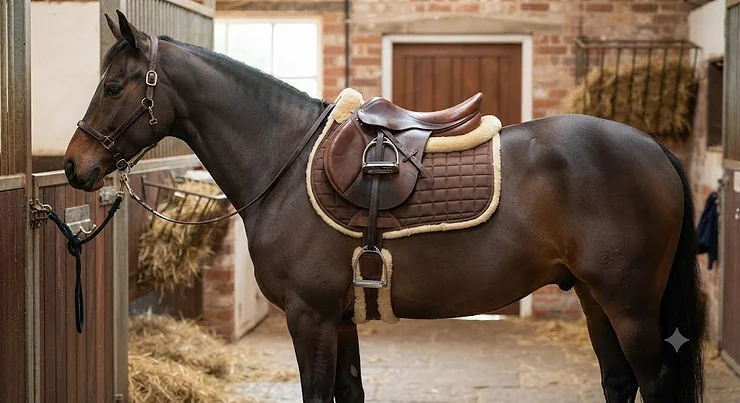
A sheepskin numnah is a saddle-shaped pad lined with genuine tanned sheep or lambskin, worn between the saddle and the horse’s back to cushion pressure, wick sweat and reduce friction. Unlike synthetic fleece look-alikes, a real sheepskin numnah uses the sheep’s actual pelt — wool fibres still rooted in the hide — which gives it superior shock absorption and temperature regulation. As Wikipedia’s overview of sheepskin explains, the material is tanned with the fleece left intact rather than processed the way ordinary leather is, and this construction is exactly what gives it that spongy, breathable feel under a saddle that synthetic fill can’t quite replicate.
Quick Comparison Table
| Numnah | Price Range | Real Sheepskin? | Best For |
|---|---|---|---|
| Rhinegold Real Sheepskin Numnah | Around £35-£45 | Yes (full lining) | First-time buyers on a tight budget |
| Rhinegold Vented Spine Sheepskin Numnah | £45-£55 range | Yes (full lining) | Horses that overheat under the saddle |
| HKM Genuine Sheepskin Numnah | £55-£70 range | Yes (part-lined) | Riders wanting German engineering on a budget |
| Acavallo Active Pony Gel/Sheepskin Pad | Around £55-£65 | Yes (edge trim) + gel | Ponies and sensitive-backed horses |
| Scharenberg Sheepskin Numnah | £70-£90 range | Yes (wither & back lining) | Owners wanting vet-endorsed medical wool |
| LeMieux ProLambskin Half Pad | Around £90-£110 | Yes (Australian Merino) | Riders wanting a premium half-pad upgrade |
| LeMieux Merino+ Half Lined GP Numnah | £150-£180 range | Yes (Merino+ blend) | Competition riders who want the full works |
Looking at the spread above, the budget end of this market clusters around simple, fully cotton-backed pads like the Rhinegold Real Sheepskin Numnah, while the premium tier — led by the LeMieux Merino+ Half Lined GP Numnah — pays for denser, higher-grade Australian wool and reinforced girthing systems. What’s notable is the mid-range gap: options like the HKM Genuine Sheepskin Numnah and Acavallo Active Pony Gel/Sheepskin Pad deliver real sheepskin contact points without the premium price tag, which is exactly where most budget-conscious but quality-minded buyers should be shopping.
💬 Just one click — help others make better buying decisions too!😊
Top 7 Sheepskin Numnahs: Expert Analysis
1. Rhinegold Real Sheepskin Numnah — cheapest genuine sheepskin option
The standout here is right there in the name: this is proper sheepskin at a price point that usually only buys synthetic fleece. Built on a cotton base with the finest sheepskin lining fitted under the saddle area, it uses a small quilting pattern to hold the wool in place and stop it bunching during long rides. Velcro girth straps and a cordura anti-rub panel round out the practical features, and rolled edges keep the contact points soft rather than sharp against the horse’s coat.
Based on the spec comparison with pricier options, what you’re sacrificing here isn’t the sheepskin itself but the finishing — there’s no vented spine, no branded wool grading, and the cotton backing is fairly basic. Reviewers consistently note that this is a solid “does what it says” numnah rather than a showring showstopper, and it’s a sensible starting point for riders who want to try real sheepskin without premium-brand pricing. Aggregated feedback across retailer sites points to good first-impressions on softness, with a smaller number of buyers noting the wool flattens faster than costlier alternatives under daily use — a fairly predictable trade-off given the price bracket.
Pros:
- ✅ Genuine sheepskin lining at an entry-level price
- ✅ Cordura anti-rub panel adds durability at wear points
- ✅ Anatomically shaped for a close, tidy fit
Cons:
- ❌ Wool pile is thinner than mid-range and premium models
- ❌ No spine venting, so airflow is more limited in summer
Sitting around £35-£45, this is the most affordable genuine sheepskin numnah in our line-up, and the value case is strong provided you’re not riding daily in hot conditions or heavy work.
2. Rhinegold Vented Spine Sheepskin Numnah — built-in airflow channel
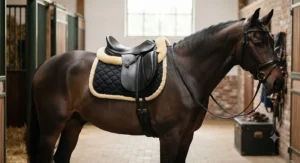
What most buyers overlook about spine venting is that it isn’t a gimmick — a horse’s back generates real heat under a saddle, and trapped warmth against sheepskin can encourage sweating and rubbing exactly where you don’t want it. This numnah takes the same cotton-and-sheepskin construction as its sibling above but adds vents running the length of the spine, letting air circulate rather than pool.
The practical upshot, based on the spec sheet, is a numnah better suited to summer schooling, fitness work or horses that run warm regardless of season. It keeps the same velcro girth attachment and cordura anti-rub panel as the standard Rhinegold model, so durability shouldn’t differ much. Reviewers consistently report that the venting makes a noticeable difference on longer rides, though a common complaint in user reviews is that the vent channel can trap a little more dirt during washing, meaning slightly more thorough cleaning than a solid-backed pad.
Pros:
- ✅ Spine venting reduces heat build-up on the horse’s back
- ✅ Same durable cordura anti-rub panel as the standard model
- ✅ Genuine sheepskin lining throughout the saddle area
Cons:
- ❌ Vent channel needs slightly more careful cleaning
- ❌ A few pounds pricier than the non-vented version for a niche benefit
At £45-£55, this is a smart upgrade pick for anyone whose horse works hard in warmer months, and the price premium over the standard Rhinegold pad is modest for the airflow benefit.
3. HKM Genuine Sheepskin Numnah — medically tanned wool from Germany
HKM’s numnah stands out for its manufacturing pedigree — it’s medically tanned, meaning the wool has been processed specifically to reduce bacterial growth and skin irritation rather than purely for appearance. The outer fabric is a 65% polyester, 35% cotton blend, chosen for durability over the saddle flaps, while the underside keeps the genuine lambskin where it matters: against the horse’s back.
Here’s what the spec sheet won’t tell you outright, but the washing instructions hint at: this is designed to be a working numnah, not a delicate showpiece. It’s machine washable at 30°C and suitable for tumble drying on a cold-air setting — a rare feature among sheepskin numnahs, most of which insist on air-drying only. That alone makes it a strong pick for busy yards where laundry turnaround matters. Aggregated German-market reviews cite genuinely good quality for the price bracket, with a recurring theme of buyers praising the wide wither channel for relieving pressure along the spine, though the smaller-fitting sizes have occasionally run tight for cob-shaped backs.
Pros:
- ✅ Cold-air tumble dryer safe — unusual for genuine sheepskin
- ✅ Medically tanned wool designed to limit bacterial growth
- ✅ Wide wither channel eases pressure on the spine
Cons:
- ❌ Sizing can run narrow on cob and native-type horses
- ❌ Currently limited colour and size availability at UK retailers
Priced in the £55-£70 range, this is a practical, no-nonsense choice for owners who want genuine sheepskin that survives a busy yard’s laundry routine.
4. Acavallo Active Pony Gel/Sheepskin Pad AC058 — gel cushioning with a sheepskin edge
The Acavallo combines two very different technologies in one pad: a shaped therapeutic gel insert for shock absorption, edged with genuine sheepskin trim to prevent chafing where the pad meets the coat. On paper this means you get the pressure-distributing benefit of gel — commonly used to reduce localised hotspots — plus the friction protection of real wool exactly where rubbing tends to start.
What makes this numnah worth a closer look for the “sheepskin numnah for sensitive horses” crowd is that Acavallo markets its sheepskin specifically as a low-allergy option, positioning it as gentle enough for horses with reactive skin. Based on the construction, ponies and cobs with less muscle coverage over the spine — who are more prone to pinching under a poorly cushioned pad — stand to benefit most from the gel’s shock-absorbing properties. Reviewer sentiment aggregated from retailer sites is largely positive on cushioning quality, with several buyers specifically recommending it for horses prone to rubbing or coat damage, while a smaller number note the gel insert adds noticeable bulk compared with a plain wool numnah.
Pros:
- ✅ Therapeutic gel core adds targeted shock absorption
- ✅ Sheepskin trim specifically marketed for sensitive skin
- ✅ Compact sizing suits ponies and smaller-backed horses
Cons:
- ❌ Gel adds bulk that can alter saddle fit slightly
- ❌ Not a full sheepskin lining, only edge trim
At around £55-£65, this is a strong option for sensitive or rub-prone horses, though it’s worth checking saddle clearance before buying given the added gel thickness.
5. Scharenberg Sheepskin Numnah with Front and Hind Fur Edge — vet-recommended medical lambskin
Scharenberg’s numnah leans hard into the “medical” side of sheepskin, and the standout feature is genuinely rare among affordable options: it’s tested and recommended by veterinary doctors for pressure and friction management. The cotton pad body carries elaborate wave quilting, with real sheepskin edging at the wither and along the back, plus a fully sheepskin-lined saddle area rather than the partial linings common at this price point.
What the spec sheet won’t spell out, but the tanning process does, is that this is produced without the polluting chemicals used in some cheaper tanning methods — a detail that matters if you’re also weighing up natural fibres and how a numnah is made, not just what it’s made from. The construction reportedly promotes blood circulation and prevents bruising, scarring, chafing and pressure points, framed here as reasoning rather than personal testing since Scharenberg is a specialist German saddlery brand rather than one of the household UK names. It’s genuinely one of the more overlooked options among riders shopping the bigger brands first.
Pros:
- ✅ Full sheepskin lining, not just partial or edge trim
- ✅ Produced using a chemical-reduced medical tanning process
- ✅ Hook-and-loop girth fastening for secure, adjustable fit
Cons:
- ❌ Less brand recognition in the UK than Shires or LeMieux
- ❌ Colour options are more limited than mainstream competitors
Sitting in the £70-£90 range, this is a genuinely underrated mid-premium pick for owners prioritising skin health and manufacturing ethics over brand familiarity.
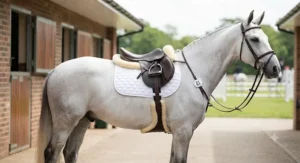
6. LeMieux ProLambskin Half Pad — 100% Australian Merino lambskin
Stepping into premium territory, the LeMieux ProLambskin Half Pad uses 100% natural Australian Merino lambskin, and the standout advantage is wool density — Merino fibres are noticeably finer and softer than the standard sheep wool used in many rival numnahs. The spine is swept up at the wither specifically to relieve pressure on the spinous processes and allow airflow underneath, a small design detail with outsized impact on comfort.
Based on the spec comparison, half pads like this one earn their popularity because they layer over any existing saddle pad or numnah rather than replacing your current set-up, and the button-hole slits let it combine neatly with LeMieux’s own D-ring pads. Reviewers consistently flag it as a strong pick for horses with sensitive backs; one recurring theme in aggregated feedback describes it as “the answer” for horses that struggled under standard pads. The trade-off is washing care — LeMieux is explicit that this needs air-drying only, never tumble drying, and dye bleed from black wool onto grey coats is a known, if rare, issue worth checking before you commit to a dark colourway.
Pros:
- ✅ Denser, softer Australian Merino lambskin than standard wool
- ✅ Swept-up spine design specifically eases wither pressure
- ✅ Layers over existing pads for flexible use
Cons:
- ❌ Air-dry only — no tumble drying permitted
- ❌ Possible dye transfer onto grey coats from black wool
At around £90-£110, this sits at the entry point of LeMieux’s premium range and represents good value for the wool quality on offer.
7. LeMieux Merino+ Half Lined GP Numnah — reinforced competition-ready construction
The flagship of this line-up, the LeMieux Merino+ Half Lined GP Numnah is described by LeMieux itself as an equine comfort and performance masterpiece — bold marketing language, but the spec sheet mostly backs it up. It’s half-lined with a dense Australian Merino+ wool blend combined with a flexible backing, engineered specifically to be more washable and quicker-drying than traditional full sheepskin, while a sophisticated wither roll and elasticated D-ring straps keep everything secure during competition-level work.
The reinforced girth protection area includes an optional three-billet channel, a detail aimed squarely at riders switching between girthing configurations without needing a second numnah. On paper this means the Merino+ blend structure “dynamically sculpts” to the horse’s shape over time, and honest analysis of that claim suggests it’s plausible given how wool naturally compresses and moulds under repeated use — though it’s a gradual process, not an instant custom fit. Aggregated customer feedback specifically highlights it as effective for genuinely sensitive-skinned horses, with one recurring comment describing it as solving persistent back sensitivity where standard pads hadn’t.
Pros:
- ✅ Merino+ blend is faster-drying than traditional full sheepskin
- ✅ Reinforced three-billet girth channel for flexible set-ups
- ✅ Elasticated D-ring straps keep the pad secure in competition
Cons:
- ❌ Premium price puts it out of reach for casual hacking budgets
- ❌ Rolled edge sizing needs careful measuring against your saddle
At £150-£180 range, this is the most expensive pick here, and it’s aimed squarely at competition riders who need reliability under pressure rather than casual hacking budgets.
Numnah Washing & Care Guide
A genuine sheepskin numnah is only as good as the care routine behind it, and this is where most of the “it went hard and scratchy after one wash” complaints actually originate — not from faulty products, but from the wrong detergent or heat. Start every wash by brushing out loose hair, dried sweat and grit with a stiff brush; skipping this step grinds debris deeper into the wool fibres during the wash cycle. Always fasten velcro straps closed before washing to stop them snagging and matting the fleece against itself.
For the wash itself, use a dedicated wool or sheepskin detergent — never standard biological powder, which strips the natural lanolin that keeps wool supple — on a cool wool cycle at 30°C maximum, or by hand. If wool wash isn’t available, a capful or two of human hair conditioner poured over the underside before washing is a widely used trick to preserve softness. Drying is the step most commonly done wrong: air dry away from direct heat sources and radiators, since heat is what turns supple lambskin into a stiff, cracked board. A small number of numnahs, like the HKM model above, are cold-air tumble-dryer safe — always check the individual care label rather than assuming, since most premium sheepskin explicitly forbids any tumble drying at all. Rotating two numnahs so each gets proper drying time between rides will noticeably extend the working life of a washable sheepskin numnah compared with using one pad daily without a break.
Common first-30-day mistakes include washing too frequently (sheepskin needs the wool to re-settle between washes, so brushing between full washes is usually enough), storing damp pads in a tack box where mould can set in, and ignoring early signs of flattening — a wool pile that no longer springs back after a gentle press has lost most of its cushioning value and is due for replacement or a deeper conditioning treatment.
Real-World Scenarios: Who Should Buy Which Numnah
If you’re a livery-yard rider hacking three times a week on a modest budget, the Rhinegold Real Sheepskin Numnah covers the basics — genuine wool contact, simple care, low financial risk if your riding routine changes. If you’re competing regularly and need a pad that dries fast between back-to-back classes, the LeMieux Merino+ Half Lined GP Numnah‘s faster-drying blend and reinforced girthing were specifically built with that pressure in mind.
For an owner managing a pony or cob with a history of girth-area rubbing and generally reactive skin, the Acavallo Active Pony Gel/Sheepskin Pad or the LeMieux ProLambskin Half Pad both make sense — the former for its combined gel-and-wool cushioning on a smaller frame, the latter for horses needing a genuinely dense wool layer over an existing pad rather than a full replacement. And for the DIY yard owner who rides in all weathers and wants one dependable, easy-care numnah that won’t demand babying, the HKM Genuine Sheepskin Numnah‘s tumble-dryer-safe construction solves a real practical headache that most sheepskin buyers don’t think about until wash day one.
Problem → Solution Guide
Problem: My horse rubs and develops sore patches under the saddle. A thin or compressed numnah is often the cause rather than the saddle itself — a wool pile that’s lost its loft stops cushioning against friction. Solutions include upgrading to a denser wool option like the LeMieux ProLambskin Half Pad, or a gel-and-sheepskin hybrid like the Acavallo Active Pony Gel/Sheepskin Pad, alongside more frequent brushing to keep the fibres upright.
Problem: The wool has gone flat and stiff after washing. This is almost always heat damage or the wrong detergent. Switch to a dedicated wool wash and strictly air-dry going forward; a capful of hair conditioner on the underside before washing can help restore some softness, though badly matted wool may not fully recover.
Problem: My horse overheats and sweats excessively under a sheepskin pad. Ventilation is the fix here — the Rhinegold Vented Spine Sheepskin Numnah was built for exactly this issue, channelling airflow along the spine rather than trapping heat against the back.
Problem: I can’t justify premium prices but don’t want a cheap synthetic fake. This is precisely the gap options like the Rhinegold Real Sheepskin Numnah and HKM Genuine Sheepskin Numnah fill — genuine wool without the branded premium mark-up.
Problem: My numnah keeps slipping or twisting under the saddle. Check the girth strap positioning first; a poorly aligned strap pulls the pad out of true. Models with reinforced D-ring or three-billet girth channels, such as the LeMieux Merino+ Half Lined GP Numnah, are specifically engineered to resist this kind of movement.
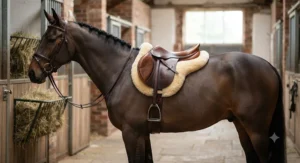
How to Choose an Affordable Sheepskin Numnah
- Check whether it’s real sheepskin or a synthetic look-alike. Genuine wool has visible root structure and a slightly uneven, natural texture; synthetic fleece is uniformly plush and won’t offer the same breathability or moisture-wicking.
- Match the wool coverage to your budget and needs. Full-lined pads like the Rhinegold or Scharenberg models cost less than half-pads with premium Merino wool, but a partial lining still protects the highest-pressure zones.
- Consider your horse’s temperature regulation. Horses that sweat heavily benefit from vented designs; those in cooler climates or lighter work may not need this feature.
- Factor in your laundry routine honestly. If you can’t commit to air-drying only, prioritise a tumble-dryer-safe option rather than risking heat damage to a delicate premium wool.
- Measure your saddle and horse before buying. A numnah that’s too small pulls tight and creates pressure points; one that’s oversized bunches under the flaps.
- Read aggregated review sentiment, not just star ratings. Look specifically for comments about wool density and durability after multiple washes, not just first-impressions softness.
- Budget for a second numnah if you ride daily. Rotating pads extends the life of each one and avoids riding on a damp, compressed pad the next day.
Common Mistakes When Buying a Sheepskin Numnah
The most frequent misstep is chasing the lowest possible price without checking whether the listing is genuine sheepskin at all — some “sheepskin-style” or “faux fleece” products are marketed in ways that blur the line, so always check the material description carefully rather than the product name alone. A second common mistake is buying based on colour or brand recognition rather than fit; even genuine, well-reviewed sheepskin will bunch and rub if it doesn’t match your saddle’s shape and your horse’s back.
Expert commentary from saddle fitters also flags a mistake that has nothing to do with the numnah itself: as the British Horse Society’s saddle fit guidance makes clear, poorly fitted tack can genuinely affect a horse’s welfare and performance, and piling a thick pad under a saddle that already fits well is a bit like stuffing insoles into shoes that fit perfectly on their own. In other words, a numnah is a hygiene and comfort layer for a correctly fitting saddle — not a fix for one that doesn’t fit. Buyers who reach for a thicker sheepskin pad to “solve” a pinching saddle often make the underlying fit problem worse rather than better. Finally, many riders under-budget for care products — a bottle of proper wool wash costs a fraction of the numnah itself, but skipping it is the single biggest reason expensive sheepskin fails early.
Real Sheepskin vs Synthetic Numnahs
| Feature | Real Sheepskin Numnah | Synthetic Fleece Numnah |
|---|---|---|
| Breathability | Naturally wicks moisture into the fibres | Traps more heat and moisture against the coat |
| Skin sensitivity | Generally gentler on reactive or rub-prone skin | Can cause more friction on sensitive horses |
| Washing | Requires wool-specific care, mostly air-dry | Usually machine washable and quick-drying |
| Longevity | Can last years with correct care | Often needs replacing sooner as pile compresses |
| Price | Higher upfront cost | Cheaper initial purchase |
The trade-off in this table is fairly clear-cut: real sheepskin wins on comfort and skin health but demands more careful laundry habits, while synthetic alternatives like the Shires Performance SupaFleece range trade some of that natural breathability for machine-washable, fast-drying convenience. For horses with genuinely sensitive skin, the natural fibres in real wool tend to outperform synthetic fill because lanolin-rich sheepskin naturally regulates temperature and resists bacterial build-up better than most synthetic fibres, which is precisely why medically tanned options score so well with owners managing skin-sensitivity issues.
Sheepskin Numnah for Sensitive Horses
Horses with reactive or easily irritated skin need a numnah that minimises friction rather than compounding it, and this is where genuine sheepskin earns its reputation. The natural crimp and root structure of real wool distributes pressure more evenly than flat synthetic fill, which matters enormously for horses already prone to rubbing, hives or coat damage. It’s worth noting that skin sensitivity in horses isn’t always about the numnah at all — allergic and hypersensitivity skin conditions in horses are well documented in veterinary literature. A peer-reviewed review of equine insect bite hypersensitivity notes that this allergic skin condition is one of the most common causes of itchiness in horses, with prevalence reported as high as 60% in some regions, so a horse reacting under the saddle area may also be dealing with an unrelated allergic trigger rather than the numnah itself.
That said, for numnah-specific sensitivity, options like the Acavallo Active Pony Gel/Sheepskin Pad, Scharenberg Sheepskin Numnah and LeMieux ProLambskin Half Pad were all built with reactive-skin horses specifically in mind — the Acavallo through its low-allergy marketing and gel cushioning, the Scharenberg through its chemical-reduced medical tanning process, and the LeMieux through denser, softer Merino fibres that reduce friction points. If sensitivity persists after switching to genuine sheepskin, it’s worth involving your vet to rule out an underlying dermatological cause rather than continuing to swap numnahs indefinitely.
What to Expect: Real-World Performance
On paper, sheepskin numnahs all promise cushioning and breathability, but in practice the experience varies more by wool density than by brand name alone. A thinner, budget-friendly lining like the Rhinegold models will feel noticeably softer underfoot in the first few rides than a synthetic pad, but riders should expect gradual compression with regular use — this is normal wear, not a fault. Denser options like the LeMieux Merino and Merino+ ranges hold their loft for longer under daily riding, which is exactly why they command a premium price.
Temperature regulation is another area where expectations should be realistic: sheepskin performs excellently in cold weather by trapping warmth, and reasonably well in heat thanks to its moisture-wicking properties, but a horse working hard in direct summer sun will still sweat under any pad — vented designs simply manage that moisture better rather than eliminating sweat altogether. Riders switching from synthetic fleece to real sheepskin for the first time often report an adjustment period of a few rides before they and their horse settle into the different feel and fit.
Long-Term Cost & Maintenance
Judged purely on sticker price, budget synthetic numnahs win every time — but total cost of ownership tells a different story once you factor in replacement frequency. A well-maintained genuine sheepskin numnah, washed correctly and air-dried, can realistically last several years of regular use, while cheaper synthetic pads often need replacing annually as the fill compresses permanently. Spread across that longer lifespan, even a premium option like the LeMieux Merino+ Half Lined GP Numnah at £150-£180 can work out cheaper per year of use than replacing a £20 synthetic pad every twelve months.
Ongoing maintenance costs are modest but shouldn’t be ignored: a bottle of dedicated wool wash typically lasts many washes, and the main “cost” is really time — air-drying takes longer than a tumble dryer cycle, so factor that into your laundry routine if you’re washing after every ride. Rotating two numnahs, rather than relying on one, is the single biggest factor in maximising lifespan across every price tier in this guide, since it gives each pad proper recovery time between uses.
✨ Don’t Miss These Exclusive Deals!
🔍 Take your saddle pad shopping to the next level with these carefully selected sheepskin numnahs. Click on any highlighted item to check current pricing and availability. These picks will help you create genuine comfort your horse will thank you for!
Safety, Regulations & Welfare Guide
Numnahs sit within a broader framework of equine welfare guidance in the UK, even though they’re not directly regulated products themselves. The statutory Code of Practice for the Welfare of Horses, Ponies, Donkeys and their Hybrids sets out an owner’s duty of care obligations, including the need to groom and check horses regularly for rug, tack or harness rubbing — a numnah that’s gone hard, flat or matted falls squarely within that responsibility. Regular grooming and tack checks aren’t just good practice; under UK animal welfare law they form part of a horse owner’s basic legal obligations.
On the fitting side, professional guidance is consistent: a numnah should never be used to compensate for a saddle that doesn’t fit correctly. Adding thickness to mask a fit problem can, in some cases, narrow the gullet clearance over the spine and create new pressure points rather than resolving old ones. If you’re ever uncertain whether your saddle needs a specific type of pad, a qualified saddle fitter — ideally a member of the Society of Master Saddlers — should always be consulted before you buy, since they’ll assess the combined fit of saddle and numnah together rather than either in isolation.
Buyer’s Decision Framework
If budget is your primary concern and you simply want genuine wool without the premium mark-up, choose the Rhinegold Real Sheepskin Numnah because it delivers real sheepskin contact at the lowest entry price in this guide. If your horse runs hot or works hard in summer, choose a vented design like the Rhinegold Vented Spine Sheepskin Numnah because airflow management matters more than wool density alone. If washing convenience is non-negotiable for your yard routine, choose the HKM Genuine Sheepskin Numnah because it’s one of the only genuine sheepskin options rated safe for cold-air tumble drying. If your horse has sensitive or rub-prone skin, choose the Acavallo Active Pony Gel/Sheepskin Pad or LeMieux ProLambskin Half Pad because both were specifically engineered around reducing friction and pressure points. If you compete regularly and need durability under pressure, choose the LeMieux Merino+ Half Lined GP Numnah because its reinforced girthing and faster-drying blend were built for exactly that demand.
Frequently Asked Questions
❓ Is a sheepskin numnah worth the extra cost over a normal saddle pad?
❓ How do I know if a numnah is real sheepskin or fake?
❓ Can you machine wash a real sheepskin numnah?
❓ How often should I replace a sheepskin numnah?
❓ Are sheepskin numnahs good for sensitive-skinned horses?
Conclusion
An affordable sheepskin numnah doesn’t have to mean compromising on genuine wool — as this line-up shows, brands like Rhinegold and HKM prove real sheepskin contact points are achievable well under premium pricing, while Acavallo, Scharenberg and LeMieux cover everything from sensitive-skin support to competition-grade durability further up the budget. The right choice ultimately comes down to matching wool density and design features — venting, gel cushioning, tumble-dryer safety — to your horse’s specific needs rather than chasing the lowest price or the biggest brand name alone.
Whichever option you land on, remember that the numnah is only ever a comfort layer on top of a correctly fitted saddle, never a substitute for one. Pair your new sheepskin numnah with proper washing care, rotate it with a second pad if you ride frequently, and check in on wool condition every few months. Get those basics right, and even a budget-friendly sheepskin numnah should reward you — and your horse — with years of genuine comfort.
Recommended for You
- Affordable Half Pad: 7 Best Budget-Friendly Picks (2026)
- Memory Foam Saddle Pad Under £50: 7 Best Picks for 2026
- Dressage Saddle Pad Under £40: 7 Best Picks for 2026 UK
Disclaimer: This article contains affiliate links. As an Amazon Associate, I earn from qualifying purchases. If you purchase products through these links, we may earn a small commission at no additional cost to you.
✨ Found this helpful? Share it with your friends! 💬🤗
