In This Article
There’s a very specific sound that tells you fly season has arrived: the stamp-stamp-stamp of a hoof against the ground, followed by a tail swishing like a metronome set to “furious.” If you’ve stood at the gate watching your horse try to shake off a cloud of insects that simply will not take the hint, you already know why a decent fly rug for horses isn’t a luxury — it’s basic kit for anyone turning out between May and September. The trouble is that the market is enormous, the marketing language is louder than the flies themselves, and half the listings read like they were written by the same copywriter with a thesaurus and a deadline.
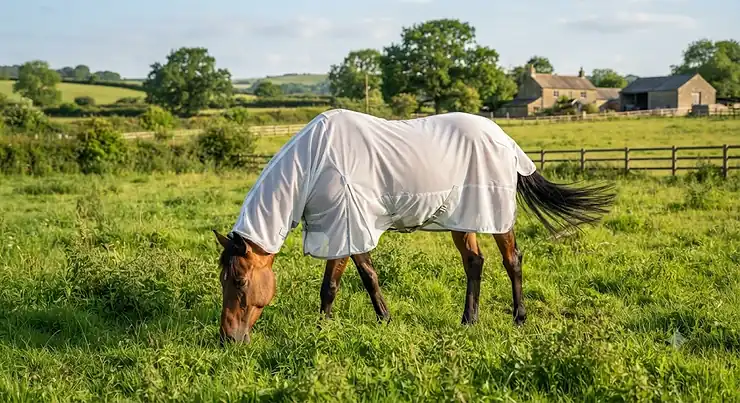
This guide cuts through that. We’ve researched seven genuinely available fly rugs sold in the UK, pulled real specifications from manufacturers and retailers, and gathered aggregated review sentiment rather than inventing glowing testimonials nobody actually wrote. According to Horse & Hound’s buyers guide testing, fit, fastenings and fabric weave matter just as much as the UV percentage printed on the label — and that’s exactly the kind of practical detail we’ll unpack alongside every product below.
Whether you’re chasing something ultra-lightweight for a sweaty cob, hunting for the best horse fly sheet amazon has in stock this week, or trying to work out whether mesh rug breathability is worth paying extra for, you’ll find honest, sourced answers here — not just another spec sheet dressed up as a review.
Quick Comparison Table
For readers in a hurry, here’s a snapshot of five standout options from our full line-up of seven. Full specs, pricing bands and detailed commentary follow further down the page.
| Fly Rug | Style | Standout Strength | Best For | Price Range |
|---|---|---|---|---|
| LeMieux Arika Armour-Tek | Detachable neck | 85% UV, micro-mesh comfort | Premium all-round protection | £140-£170 range |
| WeatherBeeta ComFiTec Hexi Shield Combo Neck | Fixed combo neck | Snag-resistant hexagon weave | Rugs that get destroyed in the field | £80-£95 range |
| Equilibrium Field Relief | Fixed neck | 90% UVB, science-backed pattern | Sweet itch and UV-sensitive horses | £75-£95 range |
| Shires Tempest Original Zeb-Tek Combo | Fixed combo neck | Zebra-stripe fly deterrence | Budget-conscious owners | Around £55-£65 |
| AniMac Fly Rug | Fixed neck | Sturdy build at a low price | Entry-level everyday turnout | Around £40-£50 |
Looking at this shortlist, there’s a clear split between rugs that lean on fabric science (the Equilibrium Field Relief and Shires Tempest Original Zeb-Tek Combo, both built around published fly-deterrence research) and rugs that lean on brute durability (the WeatherBeeta ComFiTec Hexi Shield Combo Neck). The LeMieux Arika Armour-Tek sits above both camps on refinement, while the AniMac Fly Rug proves you don’t need to spend three figures to get adequate cover. We’ll explain exactly what drives those price differences as we go.
💬 Found a rug that looks promising already? Bookmark this page and keep scrolling — the full breakdown below could save you from a fit or fabric mistake.
Top 7 Fly Rugs for Horses: Expert Analysis
Before diving in, here’s the fuller spec comparison across all seven rugs we researched.
| Product | UV Protection | Neck Style | Notable Feature | Price Range |
|---|---|---|---|---|
| LeMieux Arika Armour-Tek | 85% | Detachable | Angled T-bar closure | £140-£170 |
| WeatherBeeta ComFiTec Hexi Shield Combo Neck | 55%+ | Fixed combo | Hexagon weave mesh | £80-£95 |
| Equilibrium Field Relief | 90% UVB / 77% UVA | Fixed | Tested hexagon print | £75-£95 |
| Shires Tempest Original Zeb-Tek Combo | 80%+ | Fixed combo | Zebra stripe print | £55-£65 |
| Masta Turnoutmasta Hybrid | Not UV-rated | Detachable | 1200D waterproof top | £90-£120 |
| Premier Equine Buster Stay-Dry Super Lite | ~70% (lower section) | Fixed, extended | 600D waterproof topline | £55-£70 |
| AniMac Fly Rug | Not independently rated | Fixed | Sturdy field-tested build | £40-£50 |
Two things jump out here. First, UV percentages aren’t directly comparable across brands because manufacturers test differently — a 55% figure from one company isn’t automatically “worse” than 85% from another if the testing methodology and mesh density differ. Second, price doesn’t map neatly onto quality; the Premier Equine Buster Stay-Dry Super Lite undercuts the WeatherBeeta ComFiTec Hexi Shield Combo Neck while offering genuine waterproofing the WeatherBeeta doesn’t include. That’s the kind of nuance a bare spec sheet won’t tell you, but it’s exactly why these seven rugs earned a place on this list.
1. LeMieux Arika Armour-Tek — premium micro-mesh with a second-skin fit
The standout here is the micro-mesh construction, which is genuinely finer than the weave on most fly rugs in this price bracket, and it shows the moment you run a hand over the fabric. Specification-wise, the rug carries an 85% UV protection rating, an antibacterial and anti-static lining, and a patented two-part lower skirt designed to break tension around the hemline so the rug doesn’t bind as your horse moves. In practice, that finer mesh means less “billowing” in a breeze and a fit that genuinely does sit closer to the coat than a standard nylon mesh combo.
Based on the spec comparison, this is the rug for owners who’ve been burned by rubbing before — the 45° angled T-bar front closure distributes pressure away from the point of shoulder, which is precisely where cheaper buckle fastenings tend to cause sore patches. It’s best suited to horses with sensitive skin, greys prone to sun bleaching, or anyone who’s tired of replacing a budget rug every season. Reviewers on independent stockist sites consistently note the fit as snug without being restrictive, and several mention the detachable neck as genuinely easy to remove one-handed rather than a fiddly afterthought.
Pros:
- ✅ 85% UV protection is high for the category
- ✅ Angled closure meaningfully reduces shoulder rubbing
- ✅ Detachable neck adds versatile coverage options
Cons:
- ❌ Among the most expensive rugs on this list
- ❌ Recommended professional cleaning only, adding upkeep cost
At around £140-£170, the LeMieux Arika Armour-Tek sits at the premium end, but the fit engineering justifies it for horses who’ve struggled with rubbing on cheaper mesh — this is a buy-once-wear-for-years proposition rather than a disposable summer sheet.
2. WeatherBeeta ComFiTec Hexi Shield Combo Neck — built to survive a rug-ripper
What most buyers overlook about this model is that its hexagon weave isn’t just cosmetic — it’s specifically engineered snag resistance, aimed at horses who treat their field mates, fences and hedgerows as chew toys. The 100% nylon mesh outer carries over 55% UV protection, a memory foam wither relief pad, and a full wrap two-piece tail flap alongside an ultra belly wrap for genuinely comprehensive coverage.
The real-world takeaway is durability under stress rather than the highest UV figure on this list. If your horse is the type who comes in with yesterday’s rug in three pieces, the hexagon construction is designed to resist exactly that kind of tearing better than a standard grid mesh. Aggregated reviewer sentiment from stockist sites is consistently positive on toughness, with several owners of known “rug wreckers” reporting the rug surviving a full season where previous rugs hadn’t lasted a fortnight. The trade-off is a fixed combo neck, meaning you can’t remove the neck section if temperatures spike and your horse would rather go bare-necked.
Pros:
- ✅ Snag-resistant hexagon weave suits tough horses
- ✅ Memory foam wither pad reduces rubbing
- ✅ Full wrap tail flap and ultra belly wrap add coverage
Cons:
- ❌ Fixed neck means no bare-neck option in heat
- ❌ UV rating lower than several premium rivals
Priced around £80-£95, the WeatherBeeta ComFiTec Hexi Shield Combo Neck earns its keep through longevity rather than flashy specs — a sensible pick if you’ve replaced more rugs than you’d like to admit.
3. Equilibrium Field Relief — the fly rug built on published fly-behaviour research
Here’s what the spec sheet won’t spell out clearly enough: the hexagonal print on this rug isn’t decorative, it’s the direct result of testing methodology modelled on university research into which patterns and colours reduce fly landings. Equilibrium’s own trials, informed by the same broad body of work that produced the University of Bristol’s stripe studies, reported hexagon prints reducing fly landings by around 51-55% compared with a plain fabric. On UV protection, the rug offers 77% UVA and 90% UVB blocking, alongside anti-rub lining and a dedicated wither pressure-relief panel.
This is a genuinely strong option for horses prone to sweet itch, UV sensitivity, or midge-driven irritation, because the design brief was specifically “reduce landings,” not just “cover the horse.” Reviewers consistently note the shaped back and shoulder relief panels as noticeably better at preventing rubbing than symmetrical, boxier competitors. Where it’s less convincing is coverage extras — there’s no detachable neck option on the standard model, so horses needing full neck protection may need to pair it with a separate fly hood.
Pros:
- ✅ Fly-landing reduction backed by design testing
- ✅ Strong 90% UVB rating suits sun-sensitive horses
- ✅ Anti-rub lining and wither relief panel reduce sores
Cons:
- ❌ No detachable neck cover on the standard rug
- ❌ Pattern-specific colours may be less available in some sizes
At £75-£95, the Equilibrium Field Relief is arguably the most evidence-led rug on this list, and it’s a strong match for any horse whose owner has read one too many “why won’t he stand still” vet forum threads.
4. Shires Tempest Original Zeb-Tek Combo — the zebra-stripe budget pick
The standout feature is right there in the name: this rug uses a monochromatic zebra-stripe print, directly inspired by the growing body of research (including work from the University of Bristol) showing that horseflies struggle to execute a controlled landing on high-contrast stripes. Specification-wise, it offers 80%+ UV blocking, tested to BS EN 13758-1:2002+A1:2006, blanket-set chest fastenings, adjustable cross surcingles and a fillet string.
What most buyers overlook here is that “budget” doesn’t mean “untested” — the zebra print isn’t a gimmick, it’s grounded in the same visual-disruption mechanism zebras themselves rely on to reduce horsefly attacks. That said, honest analysis has to note the fixed combo neck and simpler chest fastening system, which won’t offer quite the same anti-rub refinement as the pricier LeMieux. Reviewer sentiment on stockist sites is broadly positive on value, with repeated comments about the rug performing well above its price point for everyday summer turnout, though a handful of owners mention the mesh feeling slightly less substantial than premium alternatives after a full season of hard use.
Pros:
- ✅ Stripe pattern grounded in real fly-behaviour research
- ✅ 80%+ UV blocking at a budget price point
- ✅ Independently tested to a recognised BS EN standard
Cons:
- ❌ Simpler fastenings than premium rivals
- ❌ Mesh reportedly feels less substantial after heavy use
At roughly £55-£65, the Shires Tempest Original Zeb-Tek Combo is the rug we’d point a first-time buyer towards — genuine science, a fair price, and no unnecessary frills.
5. Masta Turnoutmasta Hybrid Fly Rug — the pick for broad-bodied horses
The standout advantage here is fit generosity — this hybrid rug is specifically noted by reviewers as a strong option for broader, cobbier builds that struggle in narrower-cut combos. Specification-wise, it combines a 1200D waterproof top section with a lighter, breathable nylon lower half, a fleece-lined wither pad, reflective strips, cross surcingles and detachable leg straps, plus a longer-cut detachable neck secured with double-locking Velcro.
Based on the spec comparison, this hybrid construction earns its place through unpredictable-weather flexibility rather than pure fly-defence science: the waterproof topline handles a sudden downpour without soaking through, while the mesh underside keeps the horse from overheating on the next scorching afternoon — a genuinely useful combination for the UK’s famously indecisive summer weather. Aggregated review commentary highlights the generous cut as the standout for wider-chested breeds, though a few owners note the detachable neck’s Velcro closures require regular cleaning to keep working smoothly once field debris builds up.
Pros:
- ✅ Generous cut suits broader and cobbier builds
- ✅ Waterproof top layer copes with sudden showers
- ✅ Detachable neck and adjustable leg straps aid fit
Cons:
- ❌ Velcro neck fastenings need regular debris cleaning
- ❌ No stated UV percentage rating from the manufacturer
Priced around £90-£120, the Masta Turnoutmasta Hybrid Fly Rug is the rug to reach for if your horse’s main problem is build rather than bugs — a well-cut rug beats a high-tech one that simply doesn’t fit.
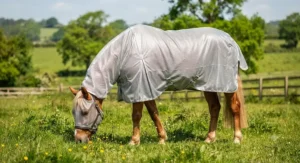
6. Premier Equine Buster Stay-Dry Super Lite — lightweight protection for changeable days
The standout feature is the 600D ripstop waterproof topline paired with a genuinely lightweight lower mesh section, offering roughly 70% UV reflection, an extended integrated neck cover with double-locking straps, and an antibacterial, anti-static polyester lining over the mane and shoulder to reduce rubbing. The extra-high elasticated shoulder gusset and PVC-coated tail strap round out a rug clearly designed for transitional weather rather than one climate extreme.
Here’s what the spec sheet doesn’t fully convey: reviewers testing this rug found it noticeably better suited to broader horses than some narrower-cut rivals at a similar price, with one independent reviewer noting they had to size down from their usual fit — a useful heads-up before you order. The rug handles the classic British summer scenario of rain-then-sunshine within the same afternoon, which is arguably more valuable in practice than chasing the highest UV number on a spec sheet. Reported feedback also flags the neck cover slipping slightly during grazing, a minor but worth-knowing quirk.
Pros:
- ✅ Waterproof topline suits unpredictable summer weather
- ✅ Extended neck cover with double-locking straps
- ✅ Antibacterial lining reduces mane and shoulder rubbing
Cons:
- ❌ Neck cover can slip down slightly while grazing
- ❌ Sizing runs differently to some other UK brands
At around £55-£70, the Premier Equine Buster Stay-Dry Super Lite offers genuine hybrid weatherproofing at a price closer to a basic mesh rug — a smart pick for owners who hate checking the forecast twice a day.
7. AniMac Fly Rug — proof that budget doesn’t mean flimsy
The standout feature of this rug, according to independent testing, is sturdiness that outperforms its low price point — reviewers specifically note it standing up to “normal field hijinks” rather than tearing at the first opportunity, which is a common failure point for entry-level fly rugs. It’s a fixed-neck design without the bells and whistles of hybrid waterproofing or micro-mesh construction, but it delivers the fundamentals: a physical barrier against biting insects and basic UV shielding at an accessible price.
What most buyers overlook about entry-level rugs like this one is that “cheap” and “poor quality” aren’t automatically the same thing — the honest test is whether the rug survives a season of turnout, and independent reviewer feedback specifically praised the build quality and smart appearance relative to cost. It’s best suited to owners managing multiple horses on a budget, or as a sensible spare rug to rotate in while a primary rug is being washed. It won’t match the refined fit engineering of the LeMieux or the tested fly-deterrence science of the Equilibrium, but for straightforward daily protection, it does the job without demanding a premium spend.
Pros:
- ✅ Sturdy build that resists normal field wear
- ✅ Genuinely accessible price point
- ✅ Smart, well-finished appearance for the cost
Cons:
- ❌ No advanced UV or fly-deterrence testing data published
- ❌ Basic fixed-neck design with fewer coverage extras
At roughly £40-£50, the AniMac Fly Rug is the sensible choice for owners managing several horses, or anyone who wants a reliable spare without the premium price tag.
Practical Usage Guide: Fitting, First 30 Days and Maintenance
Getting the fit right matters more than the fabric you choose. Measure your horse from the centre of the chest to the point of the buttock with a soft tape, and always check the manufacturer’s own size chart rather than assuming sizing is consistent across brands — as the fit notes on the Premier Equine Buster Stay-Dry Super Lite show, some owners size down compared with their usual measurement.
In the first 30 days, check the rug daily for rubbing at the shoulder, wither and mane, particularly with a new rug whose lining hasn’t softened with wear yet. Common early mistakes include over-tightening the chest straps (which restricts the shoulder and causes exactly the rubbing you’re trying to prevent) and leaving leg straps too loose, which lets the rug ride up in windy conditions. A weekly shake-out and a monthly wash — following the label’s care instructions, since some rugs like the LeMieux Arika Armour-Tek recommend professional cleaning only — keeps the mesh performing as intended, since a fly rug clogged with mud and grass seed loses some of its breathability regardless of how good the underlying fabric is.
Rotate two rugs where budget allows, both to extend the life of each one and to have a spare ready when one is drying or being repaired. Small tears are worth patching immediately with rug repair tape; left alone, mesh damage spreads quickly under field stress.
Real-World Scenarios: Which Fly Rug Suits Your Horse?
If you’re managing a 24/7 turnout cob who treats fences as scratching posts, the WeatherBeeta ComFiTec Hexi Shield Combo Neck is the sensible starting point — its snag-resistant hexagon weave is specifically built for exactly that kind of daily wear and tear, and the price sits comfortably below the premium tier.
If you own a grey or a horse with a known sweet itch history, spending more on the Equilibrium Field Relief or the LeMieux Arika Armour-Tek is money well spent — both carry stronger UV ratings and anti-rub linings that matter far more for sensitive skin than they do for a hardier native pony.
If you’re a first-time owner juggling livery costs and don’t want to gamble a large sum on a rug you’re not sure will fit, the Shires Tempest Original Zeb-Tek Combo or the AniMac Fly Rug let you get properly kitted out without a premium spend, freeing up budget for a spare rug or a decent fly spray to layer on top.
What Is a Fly Rug for Horses?
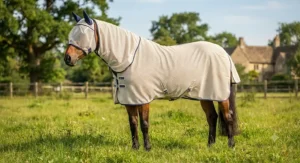
A fly rug for horses is a lightweight, breathable cover, usually made from mesh fabric, designed to create a physical barrier between a horse’s coat and biting insects such as horseflies, midges and stable flies, while typically also offering some level of UV protection against sun bleaching and skin damage during turnout.
How to Choose a Fly Rug for Horses
- Measure accurately first. Use a soft tape from chest centre to buttock point, and check the specific brand’s size chart rather than assuming consistency.
- Match UV protection to your horse’s coat. Greys, sensitive-skinned horses and those prone to sun bleaching benefit from higher-rated rugs like the LeMieux Arika Armour-Tek or Equilibrium Field Relief.
- Consider your horse’s field behaviour. A known rug-wrecker needs the snag resistance of something like the WeatherBeeta ComFiTec Hexi Shield Combo Neck, not a delicate premium mesh.
- Decide on neck coverage. A detachable neck offers flexibility on hot days; a fixed combo neck offers simpler, cheaper full coverage.
- Factor in weather variability. If your yard sees regular summer showers, a hybrid rug such as the Masta Turnoutmasta Hybrid or Premier Equine Buster Stay-Dry Super Lite avoids the need for a separate rain sheet.
- Check fastenings for your horse’s temperament. Fidgety horses do better with quick-clip closures; broader or narrower horses may need adjustable buckle systems instead.
- Set a realistic budget, then buy a spare. Two mid-range rugs in rotation often outlast one expensive rug worn daily without a break.
Lightweight Fly Rug Horse: Why Weight and Breathability Matter
A genuinely lightweight fly rug horse owners can leave on all day should feel almost imperceptible once fitted — the aim is protection without adding heat load, which matters enormously during a British heatwave when horses already struggle to lose body heat effectively. Fabric weight isn’t listed as prominently as UV percentage on most listings, but it directly affects comfort: the micro-mesh construction on the LeMieux Arika Armour-Tek, for instance, is specifically engineered to feel like a “second skin” rather than a heavy blanket, while still maintaining airflow.
What most buyers overlook is that lightweight doesn’t automatically mean flimsy, and heavier doesn’t automatically mean more protective. The Shires Tempest Original Zeb-Tek Combo is genuinely light and airy while still hitting 80%+ UV blocking, proving that low weight and solid protection aren’t mutually exclusive. For horses that get visibly hot and sweaty under standard turnout rugs, prioritising a lightweight option — even if it means a slightly lower UV rating — often produces a more comfortable, better-tolerated result over a full summer season.
Mesh Rug Breathability: What the Weave Actually Does
Mesh rug breathability comes down to how much airflow the weave allows through to the coat while still physically blocking insects from landing and biting. A tighter weave, like the hexagon pattern used on the WeatherBeeta ComFiTec Hexi Shield Combo Neck, trades a small amount of airflow for significantly improved snag resistance, while a more open weave prioritises cooling at the cost of some durability.
The practical upshot is that no single rug maximises both breathability and toughness simultaneously — it’s always a trade-off, and the right balance depends on your individual horse. A horse that overheats easily benefits more from the open, second-skin mesh of the LeMieux Arika Armour-Tek, while a horse that’s rough on rugs benefits more from the reinforced weave of the WeatherBeeta, even if that means marginally less airflow. Reviewers consistently note that rugs marketed as “ultra-breathable” still need regular shaking out and washing, since caked mud and grass seed reduce effective airflow regardless of the underlying weave quality.
Insect Protection for Horses: Beyond the Rug
A fly rug is one layer of insect protection for horses, not the whole strategy. Fly fringes and masks cover the face and eyes, where rugs can’t reach, while fly repellent sprays or gels add a chemical deterrent layer that complements the physical barrier a rug provides. Stable management matters too — reducing standing water, managing muck heaps promptly and using fly traps in barn areas can meaningfully cut the overall insect population your horse is exposed to.
Pattern science is increasingly part of this picture. Research from the University of Bristol found that horseflies are specifically averse to landing on highly contrasting striped or checked patterns, which is exactly why rugs like the Shires Tempest Original Zeb-Tek Combo use monochrome stripe printing rather than plain fabric. A peer-reviewed study published in the Journal of Experimental Biology backs this up, showing horseflies struggle to execute controlled landings on high-contrast patterns compared with plain grey coats. Combining a scientifically patterned rug with a fly mask and a decent repellent gives noticeably better all-round protection than relying on any single product alone.
Summer Turnout Rug Considerations: Fit, Rotation and Fabric
As a summer turnout rug, a fly rug needs to withstand hours of field wear far beyond what a stable-only rug experiences — rolling, rubbing against fences, and repeated wetting from dew or showers all take a toll faster than most owners expect. Fit is especially critical for full-time turnout, since a rug worn continuously for weeks will expose any rubbing points that a rug worn only occasionally might not reveal so quickly.
Rotating two rugs, as mentioned earlier, extends the working life of each and gives you a dry spare on wash day. Fabric choice should reflect your specific field conditions: sheltered paddocks with less wind and rain suit a lighter mesh like the Equilibrium Field Relief, while exposed fields prone to sudden downpours are better served by a hybrid design such as the Masta Turnoutmasta Hybrid Fly Rug or Premier Equine Buster Stay-Dry Super Lite, both of which combine mesh coverage with a genuinely waterproof topline.
Buying a Horse Fly Sheet on Amazon: What to Check Before You Click
Searching for a horse fly sheet amazon listings can be a genuinely useful way to compare stock availability and read a wide spread of buyer feedback quickly, but a few checks help avoid disappointment. First, confirm the seller and brand match — third-party marketplace listings occasionally mix up sizing charts between similar-sounding rugs, so always cross-check dimensions against the manufacturer’s own size guide rather than relying solely on the marketplace listing. Second, read recent reviews rather than the overall star average alone, since older reviews may reflect a since-changed fabric batch or fastening design.
Prices on any marketplace fluctuate regularly, so treat any figure you see as a snapshot rather than a fixed number — always check the current price and any listed delivery timeframes before finalising a purchase, and never assume availability shown today will still be accurate next week. Returns policies are also worth reading closely for horsewear specifically, since some sellers restrict returns on used or fitted rugs, understandably given hygiene considerations.
Common Mistakes When Buying a Fly Rug for Horses
The single most common error is buying purely on UV percentage without checking whether the rug’s cut suits your horse’s individual shape — a high UV rating means nothing if the rug rubs at the shoulder because it’s cut for a narrower build. A close second is ignoring fastening type relative to temperament; a fidgety horse and a slow, fiddly buckle system are a recipe for a rug that ends up half off within the hour.
Skipping the size chart in favour of “he’s always a 6ft6” is another frequent misstep, since sizing genuinely does vary between brands, as reviewer notes on the Premier Equine Buster Stay-Dry Super Lite demonstrate. Finally, many owners buy a single rug and expect it to last an entire season of daily wear without a spare — a strategy that tends to end in either a threadbare rug by August or an emergency purchase mid-heatwave when your usual retailer happens to be out of stock.
Fly Rug vs Fly Sheet vs Sweet Itch Rug: What’s the Difference?
These three terms are often used interchangeably, which causes genuine confusion when shopping. A standard fly rug or fly sheet (the terms are largely synonymous in UK retail) is built from open mesh designed to block biting insects while maximising airflow. A sweet itch rug uses a much tighter weave, specifically designed to stop the tiny Culicoides midges responsible for sweet itch reactions, at the cost of somewhat reduced breathability compared with a standard mesh fly rug.
| Type | Mesh Density | Best For | Airflow |
|---|---|---|---|
| Standard fly rug | Open mesh | General insect protection | High |
| Sweet itch rug | Tight, fine mesh | Midge-sensitive horses | Moderate |
| Hybrid waterproof fly rug | Mixed (mesh + waterproof top) | Changeable summer weather | Moderate-High |
The clearest takeaway from this comparison is that choosing the wrong category can leave a genuinely sweet-itch-prone horse under-protected even in an expensive standard fly rug, simply because the mesh gaps are too large for midges. Conversely, putting a full sweet itch rug on a horse with no midge sensitivity sacrifices unnecessary airflow on hot days. If in doubt, a rug like the Equilibrium Field Relief, built around anti-rub and UV-focused design rather than midge-specific mesh density, sits usefully in the middle ground for horses with general sensitivity but no confirmed sweet itch diagnosis.
📌 Not sure which category fits your horse? A quick chat with your vet about any midge reactions can save you buying the wrong type twice.
Long-Term Cost & Maintenance
Total cost of ownership matters more than sticker price alone. A £45 rug replaced every season for five years costs roughly the same, or more, than a £160 rug built to last multiple seasons with proper care — and that’s before factoring in the hassle of repeat shopping trips.
| Rug | Price Range | Expected Lifespan (typical use) | Cost-Per-Season Estimate |
|---|---|---|---|
| AniMac Fly Rug | £40-£50 | 1-2 seasons | £25-£45 |
| Shires Tempest Original Zeb-Tek Combo | £55-£65 | 2-3 seasons | £20-£30 |
| Equilibrium Field Relief | £75-£95 | 3-4 seasons | £20-£28 |
| LeMieux Arika Armour-Tek | £140-£170 | 4-6 seasons | £25-£35 |
Interpreting this table, the mid-range and premium options often work out cheaper per season than the cheapest rug on the list, provided they’re properly maintained and rotated rather than worn daily without a break. Maintenance costs — repair tape, occasional professional cleaning for delicate mesh, and replacement leg straps — should also be factored in, since a £140 rug that needs £20 of repairs annually still typically beats replacing a £45 rug outright every year or two.
Safety, Regulations and Fabric Standards
UK fly rug manufacturers commonly test UV and fabric performance against recognised standards such as BS EN 13758-1:2002+A1:2006, the standard referenced for the Shires Tempest Original Zeb-Tek Combo‘s UV testing — worth checking for on any rug’s specification sheet if UV protection is a priority for your horse. Beyond the rug itself, horse owners in England have a statutory duty of care under the Animal Welfare Act 2006, and the accompanying Code of Practice for the Welfare of Horses, Ponies, Donkeys and their Hybrids makes clear that protecting a horse from unnecessary suffering — which reasonably includes chronic insect irritation during turnout — falls within an owner’s basic responsibilities.
Practically, this means checking fastenings regularly for wear that could cause injury, ensuring a rug isn’t so tight it restricts movement or breathing, and removing rugs periodically to check the skin underneath for rubs, heat rash or early signs of sweet itch that a rug alone won’t resolve. None of this is about ticking a legal box; it’s simply good horsemanship that happens to align with the statutory guidance.
FAQ
❓ How often should you wash a fly rug for horses?
❓ Can a horse wear a fly rug all day and night?
❓ What UV protection percentage should I look for in a fly rug?
❓ Do zebra print fly rugs actually work better?
❓ What's the difference between a fly rug and a sweet itch rug?
Conclusion
Choosing the right fly rug for horses ultimately comes down to matching the rug’s strengths to your specific horse and field conditions, rather than chasing the single “best” option on paper. The LeMieux Arika Armour-Tek rewards owners prioritising fit refinement and UV protection; the WeatherBeeta ComFiTec Hexi Shield Combo Neck rewards those managing a known rug-wrecker; the Equilibrium Field Relief rewards horses with genuine UV or sweet itch sensitivity; and budget options like the Shires Tempest Original Zeb-Tek Combo and AniMac Fly Rug prove that solid, science-backed protection doesn’t require a premium spend.
Whichever you choose, remember that a fly rug works best as one part of a broader strategy — paired with a fly mask, sensible field management and regular fit checks — rather than as a standalone fix. Measure carefully, check the size chart for your specific brand, and don’t be afraid to keep a spare rug in rotation once you’ve found the one that fits your horse best.
✨ Ready to find your horse’s perfect match? Compare current prices and availability on the rugs above before the summer rush sets in! 🐎☀️
Recommended for You
- Horse Travel Rug 2026: 7 Best Picks for Trailers & Horseboxes
- Wicking Cooler Rug for Horses: 7 Proven Picks for 2026
- 7 Best Fleece Cooler Rug for Horses Picks (2026 UK Guide)
Disclaimer: This article contains affiliate links. As an Amazon Associate, I earn from qualifying purchases. If you purchase products through these links, we may earn a small commission at no additional cost to you.
✨ Found this helpful? Share it with your friends! 💬🤗
