
In This Article
There’s a particular moment every rider of a strong horse knows. You turn into the last line of fences, the horse locks onto the jump like a heat-seeking missile, and your reins stop being communication and start being a tug-of-war you’re losing. A well-chosen gag bit for strong horse work can turn that fight back into a conversation, but only if you pick the right one and only if you’re the right rider to use it.

I’ve built this guide from real product specifications, published bitting guidance and the current British Showjumping equipment documents, not from invented test rides. Note that the Horse & Hound guide to the Cheltenham gag is clear that this style of bit is for experienced riders only. The same goes for every gag bit for strong horse on this list.
Here’s what we’ll cover. First, how gag rein action and poll pressure actually work. Next, seven real models across budget, mid-range and premium tiers. Then the competition rules that decide whether your gag bit for showjumping is even legal on the day. Finally, practical fitting, troubleshooting and ownership advice that product listings leave out. Whether you’re after one of the classic control bits or a gentler step up from a snaffle, you’ll leave with a shortlist and a plan.
Quick Comparison: Gag Bit for Strong Horse Options at a Glance
Here are the seven models side by side. I’ve deliberately left out star ratings, because I couldn’t verify a consistent pool of independent reviews across all of them. Prices are ranges only, so check current prices before buying.
| Product | Mouthpiece | Standout | Price range | Best For |
|---|---|---|---|---|
| Korsteel Cheltenham Eggbutt Gag | Single-jointed stainless steel | Familiar, no-frills design | Budget tier (check current price) | Trying gag action cheaply |
| Shires Cheltenham Gag Bit | 14mm stainless steel | Slim mouthpiece, 75mm cheeks | Low-£20s | Everyday schooling and jumping |
| Jeffries Eldonian Cheltenham Eggbutt Gag | Single-jointed | Three sizes, 4.5in to 5.5in | Low-£20s | Ponies and smaller mouths |
| OTTE Cheltenham Gag with Copper Roller | Roller with copper inlay | Encourages mouth activity | Mid-range (check current price) | Horses that lean and stiffen |
| OTTE Cheltenham Gag with Double Joint | Double-jointed German silver | Softer on the tongue | Mid-range (check current price) | Sensitive mouths |
| Neue Schule Cheltenham Gag 8023CG | Tranz Angled Lozenge, 16mm | Refined anatomical shaping | Premium (check current price) | Sensitive but over-keen horses |
| Stübben Golden Wings 4-in-1 Gag | Double-jointed Sweet Copper | Four rein options | Premium (check current price) | Fleshy lips, versatile setups |
The budget trio is where most riders should start, since the Shires Cheltenham Gag Bit and the Jeffries Eldonian Cheltenham Eggbutt Gag both sit in the low-£20s range. If your horse has a sensitive mouth, though, the Neue Schule Cheltenham Gag 8023CG and the OTTE Cheltenham Gag with Double Joint cost more but are shaped far more kindly. For the widest range of rein settings, the Stübben Golden Wings 4-in-1 Gag gives you the most options.
💬 Just one click — help others make better buying decisions too!😊
Top 7 Gag Bit for Strong Horse Picks: Expert Analysis
Every bit below is a real, currently listed model. Where a spec matters, I explain what it does in practice. Where I couldn’t verify reviews, I say so rather than make anything up.
1. Korsteel Cheltenham Eggbutt Gag — simplest entry point to gag action
The Korsteel Cheltenham Eggbutt Gag is the textbook design: a single-jointed stainless steel mouthpiece with eggbutt rings. The eggbutt rings (2⅝in on the 5in size) keep the bit stable and reduce pinching at the lips. That stability matters, because a gag that swings about adds noise to your signals.
Because the mouthpiece is single-jointed, it acts on the tongue, bars and corners of the mouth. The gag cheekpieces, which are sold separately, add the poll element. Used with two reins, you keep direct snaffle contact and add the gag action only when the horse leans.
On the evidence, this is a sensible first gag bit for strong puller trials if your horse tolerates a single joint. I couldn’t verify a reliable pool of independent UK reviews for this exact model, so judge it on spec rather than reputation.
Pros:
- ✅ Eggbutt rings keep the bit stable
- ✅ Works with two reins for adjustable effect
- ✅ Low-cost way to trial gag action
Cons:
- ❌ Single joint can nutcrack on sensitive mouths
- ❌ Gag cheekpieces must be bought separately
Price range: budget tier, so check current price; it’s good value as a low-risk trial.

2. Shires Cheltenham Gag Bit — slim, affordable everyday workhorse
The Shires Cheltenham Gag Bit pairs a 14mm mouthpiece with 75mm cheeks. That’s a relatively slim mouthpiece for a stainless steel bit, and it sits close to the standard for jumping.
On paper, a thinner mouthpiece is more pointed in its action. That works well for horses that ignore a thicker bar but can be unforgiving on a shallow mouth. The brand’s own guidance recommends two sets of reins, so you can fall back to plain snaffle contact whenever you like.
For riders weighing a gag bit for showjumping on a budget, this is the sort of model that makes sense. It’s plain and sturdy, and it lets you learn what a running action does before spending more. It suits the horse that leans and tugs but has an average-sized mouth.
I couldn’t verify enough independent review data on this exact model to summarise buyer sentiment responsibly. Instead, note that stainless steel is rust-resistant and easy to keep clean, which will matter if you’re riding in a British winter.
Pros:
- ✅ 14mm mouthpiece gives clear communication
- ✅ Stainless steel is tasteless and easy to clean
- ✅ Designed for use with two sets of reins
Cons:
- ❌ Slim mouthpiece may feel sharp to shallow mouths
- ❌ Cheeks sold separately add to cost
Price range: low-£20s, which is good value for a first gag bit for strong horse experiments.
3. Jeffries Eldonian Cheltenham Eggbutt Gag — best size range for smaller mouths
The Jeffries Eldonian Cheltenham Eggbutt Gag comes in 4.5in, 5in and 5.5in sizes. That range is useful, because many strong ponies and cobs are poorly served by a one-size-fits-most approach to control bits.
An accurate fit is half the battle with any gag. A bit that’s too wide will slide, and one that’s too narrow will pinch. Having a 4.5in option means smaller-mouthed horses can use a gag bit for strong horse work without a mouthpiece that overhangs.
This model uses a single-jointed design with eggbutt rings, so the action is familiar. The mouthpiece will still distribute pressure unevenly if your horse has a fleshy tongue, so watch for signs of discomfort.
As with the other budget models, I couldn’t verify a robust set of independent reviews for this listing. The pricing and size range are the main selling points.
Pros:
- ✅ Three sizes cover small and mid mouths
- ✅ Eggbutt rings reduce lip pinching
- ✅ Familiar single-joint action
Cons:
- ❌ Single joint isn’t for sensitive tongues
- ❌ Limited verifiable review data
Price range: low-£20s, so the sizing flexibility is the value here.
4. OTTE Cheltenham Gag with Copper Roller — best for horses that lean and lock
The OTTE Cheltenham Gag with Copper Roller is listed on amazon.co.uk and features a mouthpiece with a roller and copper inlay. Rollers invite a horse to mouth the bit and play with it, which can break up a stiff, locked jaw.
That matters for a particular type of strong horse. Some pull because they’re running away. Others pull because they brace through the jaw and poll, and a roller can interrupt that bracing. Copper encourages salivation, which many riders associate with a softer feel.
Consider this one if your horse snatches and then leans. A word of caution, though: rollers can make some horses over-busy with the mouth, which is a problem when you need a quiet contact in front of a fence.
I couldn’t verify independent review data for this exact variant. What I can say is that its design is aimed squarely at stiffness rather than raw speed.
Pros:
- ✅ Roller encourages relaxed mouthing
- ✅ Copper inlay promotes salivation
- ✅ Eggbutt cheek keeps the bit stable
Cons:
- ❌ Roller can make some horses fussy
- ❌ Not suited to calm, quiet mouths
Price range: mid-range (check current price), a fair step up if stiffness is your core issue.
5. OTTE Cheltenham Gag with Double Joint — kinder to the tongue
The OTTE Cheltenham Gag with Double Joint is made from German silver, which encourages salivation. The double joint is the headline, though. With a central link, the mouthpiece lies flatter on the tongue and avoids the nutcracker effect of a single joint.
This makes it a better fit for a horse that’s strong but sensitive. If a single-jointed gag makes your horse throw its head or open its mouth, a double joint is the logical next step. The gag rein action is the same, but the pressure across the tongue and bars is more even.
Think of it as the compromise model. You get the lift of a Cheltenham with a more comfortable mouthpiece, and that suits a gag bit for strong puller trials where the horse is keen rather than aggressive.
I couldn’t verify a reliable set of independent reviews for this exact model. Treat it as a design-led recommendation rather than one backed by crowd feedback.
Pros:
- ✅ Double joint avoids nutcracker pressure
- ✅ German silver encourages salivation
- ✅ Suits sensitive but strong horses
Cons:
- ❌ Costs more than basic stainless models
- ❌ Needs careful fitting to avoid sliding
Price range: mid-range (check current price), which is good value for sensitive mouths.

6. Neue Schule Cheltenham Gag 8023CG — most refined mouthpiece shaping
The Neue Schule Cheltenham Gag 8023CG uses the Tranz Angled Lozenge mouthpiece in a 16mm thickness. The angled lozenge is designed to sit more comfortably on the tongue, and 16mm is noticeably thicker than the 14mm budget options.
The maker positions it for the over-enthusiastic horse with a sensitive mouth, and for horses that lean or snatch down. It suggests two reins to separate snaffle and gag action, but notes that most riders use the gag rein alone for maximum lift. That’s a strong warning in itself: this bit demands an independent seat and good hands.
For the right horse, a thicker, shaped mouthpiece spreads the pressure of the gag rein action and is easier to live with. It’s a considered choice for riders committed to a gag bit for showjumping across a full season.
I couldn’t verify independent review data, so this is a spec-led recommendation. The premium price buys engineering, not an endorsement.
Pros:
- ✅ 16mm lozenge spreads pressure kindly
- ✅ Eggbutt cheek reduces rubbing at the lips
- ✅ Suits sensitive but over-keen horses
Cons:
- ❌ Premium cost versus basic models
- ❌ Needs an experienced, independent rider
Price range: premium (check current price), which is justified only if the mouthpiece solves a real comfort issue.
7. Stübben Golden Wings 4-in-1 Gag — most rein positions in one bit
The Stübben Golden Wings 4-in-1 Gag features Golden Wing side plates, which stop the corners of the lips pinching and stabilise the bit. The Sweet Copper mouthpiece (about 90% copper) promotes salivation, and four rein attachment options let you dial the effect from mild to firm.
That versatility is a strength. You can use the bit as a gentle lever for flatwork, then change the setup for jumping. You can also run rope gag cheeks through the loops for a true running action. The 14mm mouthpiece and 65 to 70mm rings keep it in proportion.
It suits horses with fleshy lips that pinch in a loose ring. One retailer reviewer, a single data point, described using it on a horse that needed something a little stronger than a snaffle for jumping without going too strong. They liked that the mouthpiece matched his dressage bit.
Before competing, check the current British Showjumping equipment document to confirm that this style of bit, and your chosen setup, is permitted in your class.
Pros:
- ✅ Golden Wings plates prevent lip pinching
- ✅ Four rein options adjust the effect
- ✅ Sweet Copper encourages acceptance
Cons:
- ❌ Expensive compared with simple gags
- ❌ Complex setup, so check competition rules
Price range: premium (check current price), best for riders who’ll use its versatility.
What Is a Gag Bit for Strong Horse Riding?
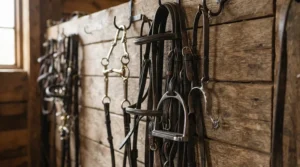
A gag bit for strong horse riding is a snaffle-style bit with cheekpieces that slide or attach through the rings, adding leverage and lift. When you apply the gag rein, the bit rises in the mouth and creates poll pressure, encouraging the horse to lift its head and shoulders and lighten the forehand.
That definition covers a family of bits. Some use fixed cheeks (the American gag), some use rope or leather cheekpieces that run through the rings (the Cheltenham and running gags), and others use multiple slots to alter the leverage (the Dutch gag). H&H’s guidance describes the lifting action of a Cheltenham as raising the bit and with it the head and neck. It adds that these bits suit horses that lean on the bit and get strong during faster work.
The key point is that a gag works through lift, not through raw brake pressure. If you pull harder, the horse’s reaction depends on how it responds to poll pressure and the corners of the mouth. A rider with a steady hand gets a clear signal. A rider with a heavy hand gets a confused horse. That’s why every responsible source describes gags as tools for experienced hands.
How Gag Rein Action and Poll Pressure Work
Understanding gag rein action makes it easier to see why these bits can transform a strong horse, and why they can go badly wrong.
The mechanics
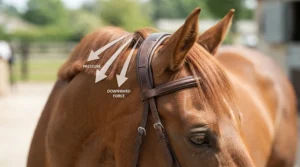
When you take up the gag rein, the cheekpiece moves through the bit ring. The bit slides up toward the corner of the mouth, while the cheekpiece tightens the headpiece. The result is a combination of tongue and bar pressure, corner-of-mouth lift, and poll pressure.
The American gag adds a leverage-style action, although it isn’t a true leverage bit because there’s no curb chain. Using the second rein on the bit rings gives a milder snaffle effect, which is why many riders ride with two reins and use the gag only when needed.
Why poll pressure matters
Poll pressure encourages the horse to raise its head, which unlocks the shoulders and lightens the forehand. For a horse that dives onto its forehand and runs through the hand, this lift can be the difference between a controllable approach and a flat-out rush.
The catch is that lift can be too much. A horse that already carries its head high may hollow and invert. Thicker mouthpieces and gentle, brief rein pressure help to spread the effect.
What to watch
Watch for head tossing, an open mouth, or a horse that stops going forward. Those are signs that the gag rein action is too severe or the rider’s hands are too busy.
How to Choose a Gag Bit for Strong Horse Work
Use these numbered steps to narrow the field. They draw on the bitting checklist from an industry bitting guide, which asks first whether the horse is fit, pain-free and educated enough.
- Rule out pain and fitness first. Have a qualified equine dentist, vet and saddle fitter check the horse, because a horse in pain will often pull.
- Be honest about your own skill. A gag bit for strong horse work demands independent hands, so ask your instructor whether you’re ready.
- Match the mouthpiece to the mouth. Sensitive tongue? Choose a double joint or lozenge. Fleshy lips? Consider side plates.
- Pick the right thickness. Thinner bars (around 14mm) are sharper. Thicker ones (around 16mm) are kinder but need more room in the mouth.
- Choose eggbutt rings for stability. They reduce pinching and keep the bit still.
- Plan for two reins. The ability to ride on a snaffle rein most of the time is a major safety valve.
- Check your competition rules. Confirm the exact bit and cheek setup against current British Showjumping documents before you compete.
As a general rule, move up one step at a time. If a snaffle isn’t enough, a mild gag is the logical next step, and a Pelham is not necessarily stronger in effect. In one common story in bitting guides, riders who moved from a snaffle to a Pelham found they got more stopping power but lost forward movement.
Gag Bit for Showjumping: Rules and Regulations in 2026
If you’re competing under British Showjumping, the Equipment Clarification Document is the authority, and it’s updated several times a year. The versions I found were dated across 2026, with the most recent amendments listed in August 2026. Always check the latest version before you ride.
Here’s what the document says in broad terms. A Cheltenham gag is permitted in competition, though the exact wording includes conditions. It also lists a Cheltenham gag with roundings as not permitted, and that change took effect immediately when published. The American gag is permitted in Senior and Junior competition, with conditions on how it’s used. Pelham gags and curb gags, by contrast, are listed as not permitted.
Other amendments matter too. The document lists some combination bits as permitted in Horse competitions but not with adjustable mechanisms, and it bans a range of other items including bit lifters and Worcester nosebands.
What does this mean for you? First, a gag bit for showjumping isn’t automatically legal in every class or age group. Second, the way you fit it, with roundings or a particular rein setup, can change its legal status. Third, a stable, plain setup is the safest option. If in doubt, ask a steward before you enter the ring, and keep a printed copy of the relevant page in your tack box.
Cheltenham Gag Bit vs American Gag vs Other Control Bits
Different gags suit different horses, so here’s how they compare.
| Bit | Action | Strength | Best For |
|---|---|---|---|
| Snaffle | Direct, no lift | Mild | Horses that aren’t strong |
| Cheltenham gag bit | Running lift with poll pressure | Moderate to strong | Horses that lean in faster work |
| American gag | Fixed-cheek lift, leverage-like | Strong | Experienced riders with strong horses |
| Dutch gag | Multi-ring, adjustable leverage | Moderate to strong | Riders who want adjustable effect |
| Pelham | Curb leverage with chain | Strong | Specific cases, with a stopping-focus |
The table shows a spectrum, not a ladder. The Cheltenham gag bit is often the first step because it works with a snaffle-style feel and a second rein. The American gag explainer from Horse & Hound describes a firm lifting message that suits a strong puller or a horse that leans on the hand, and notes riders who found it softened a horse that hollowed in a Dutch gag.
In practical terms, choose the Cheltenham when you want to keep a snaffle option, and consider an American gag when you need a quicker, firmer response. Be wary of any bit that adds severity without addressing why the horse is pulling.
Choosing a Gag Bit for Strong Puller: Matching the Bit to the Pulling Style
Not all strong horses pull for the same reason, and your choice of gag bit for strong puller work should reflect that.
The leaner. This horse drops its weight into your hands. A Cheltenham with a roller or a thicker lozenge mouthpiece can encourage the horse to lift and carry itself.
The runner. This horse accelerates in front of fences and ignores half-halts. It may need the lift of a gag, but more importantly it needs schooling to respond to a half-halt on the flat.
The bracer. This horse stiffens its jaw and poll and goes rigid. A double joint or roller may help break up the brace, and softer, shorter rein aids work better than a long, sustained pull.
The sensitive over-keen horse. This type pulls because it’s anxious. Heavy-handed control bits can make it worse, so a mild, wide mouthpiece such as the Neue Schule Cheltenham Gag 8023CG is more sensible.
A quick sense-check: if your horse’s pulling began suddenly, rule out dental, back or saddle problems first. A bit can mask a problem, but it can’t fix it.
Common Mistakes When Buying a Gag Bit for Strong Horse Work
These are the pitfalls that come up most often.
- Buying a stronger bit to fix a training gap. Control bits manage symptoms, and a horse that hasn’t learned to respond to a half-halt will find a way round them.
- Using the gag rein constantly. The best riders use the gag rein briefly and release immediately. A constant pull teaches the horse to lean on it.
- Ignoring rule changes. The amendments to the equipment document changed several times this year. Check the British Showjumping rule amendments and member handbooks before every season.
- Poor sizing. A bit that’s too wide slides and creates uneven poll pressure, and one that’s too narrow pinches the lips.
- Forgetting the cheekpieces. Many gag bits, including the Shires Cheltenham Gag Bit and Korsteel Cheltenham Eggbutt Gag, need cheeks bought separately, so factor that into the budget.
- Choosing by price alone. A budget bit is fine if it suits the mouth, but a poor match costs more in the long run.
Practical Guide: Fitting and Introducing Your Gag Bit
This is a practical usage guide. Ask a qualified instructor to supervise your first sessions.
Step 1: Fit it like a snaffle. The bit should sit comfortably at the corners of the mouth with no pinching and no excessive wrinkles. Check clearance on each side, ideally just a few millimetres.
Step 2: Set up the reins. Use two reins if your bit allows it, with the snaffle rein on the bit ring and the gag rein on the cheekpiece. This lets you ride mostly on the snaffle and use the gag only when needed.
Step 3: Introduce it on the flat. Spend at least a week or two in the school before jumping, and practise short, polite half-halts. Release the moment the horse responds.
Step 4: Jump low first. Use small fences to see how the horse reacts, and keep your hands soft.
Step 5: Maintain it. Rinse the bit after each ride, check the cheekpieces for fraying or cracks weekly, and replace worn cheeks promptly. Inspect the rings monthly for wear.
Common mistakes in the first 30 days: using the gag rein too much, changing too many things at once, and skipping the school work.
Real-World Scenarios: Which Gag Bit for Showjumping Fits Which Rider?
These are hypothetical profiles designed to illustrate the reasoning, not reports of real tests.
Scenario 1: The amateur 1.10m rider on a big, keen horse. The horse leans in the last three strides. Budget: modest. Frequency: three jumping sessions a week. A sensible path is the Shires Cheltenham Gag Bit with two reins, because it’s affordable and lets you learn the action. If the horse hollows or tosses its head, step up to the OTTE Cheltenham Gag with Double Joint.
Scenario 2: The pony rider with a strong cob. The mouth is small and the budget is tight. The Jeffries Eldonian Cheltenham Eggbutt Gag comes in a 4.5in size, which gives a better fit than many alternatives. Always check that the rules for pony classes allow the setup.
Scenario 3: The experienced rider with a sensitive, over-keen horse. The budget is higher and the horse is anxious. The Neue Schule Cheltenham Gag 8023CG or Stübben Golden Wings 4-in-1 Gag offers shaped, softer pressure. Use light hands and keep the snaffle option available.
In each case, the budget and the horse’s temperament matter more than the bit’s reputation.
Problem → Solution Guide for Gag Bit for Strong Puller Riders
Problem 1: The horse throws its head. Likely causes are a single-jointed mouthpiece that’s too sharp or hands that are too busy. Try a double joint such as the OTTE Cheltenham Gag with Double Joint, and check teeth and saddle fit.
Problem 2: The horse hollows and rushes. The gag may be lifting too much. Use the snaffle rein more, and consider a bit with a thicker mouthpiece such as the Neue Schule Cheltenham Gag 8023CG.
Problem 3: The horse ignores the gag. The horse may have learned to lean on it. Go back to flatwork and half-halts, and avoid the temptation to go up another notch.
Problem 4: The horse opens its mouth or gapes. This is a sign of discomfort or tension. Check the fit, and consider a roller, such as the OTTE Cheltenham Gag with Copper Roller, only if the horse settles with it.
Problem 5: The lips look pinched or rubbed. Eggbutt rings help, and so do side plates such as those on the Stübben Golden Wings 4-in-1 Gag. Check the bit isn’t too narrow.
Features That Actually Matter (And Those That Don’t)
What matters. Mouthpiece shape and thickness are the biggest factors. A bit that fits the tongue and bars will always beat a fancier bit that doesn’t. Ring style matters too, since eggbutt rings stabilise the bit. The ability to ride with two reins is a safety feature, so look for it.
What matters a little. Material is a preference. Copper and German silver encourage salivation, and many riders like that, but evidence of a dramatic difference is thin. Treat it as a bonus rather than a reason to buy.
What doesn’t matter much. Fancy finishes and branding do little for the horse. A Korsteel Cheltenham Eggbutt Gag and a more expensive model work on the same principle, and the extra money buys shaping, materials and comfort rather than magic.
What marketing glosses over. No bit fixes a training gap. The best gag bit for strong horse work still depends on soft hands, a fit horse and a rider who knows when to release.
Long-Term Cost and Maintenance of a Gag Bit for Showjumping
The upfront price is only part of the story. Here’s a simple value view.
| Tier | Typical upfront cost | Extras to budget | Best For |
|---|---|---|---|
| Budget (Shires Cheltenham Gag Bit, Jeffries Eldonian Cheltenham Eggbutt Gag) | Low-£20s | Gag cheeks, spare reins | Trialling a gag bit for strong horse work |
| Mid-range (OTTE models) | Check current price | Cheeks, fitting advice | Sensitive or stiff horses |
| Premium (Neue Schule Cheltenham Gag 8023CG, Stübben Golden Wings 4-in-1 Gag) | Check current price | Cheeks, possible second bit for schooling | Committed long-term use |
The table shows that the bit itself is only part of the cost. Cheekpieces, spare reins and occasional replacement add up. Budget bits are a sensible way to find out whether a gag helps before you invest in a premium option. If the horse improves and you plan to keep the setup for years, a better mouthpiece can be worth paying for.
Maintenance is cheap. Rinse after use, dry the bit, and replace worn cheeks. Replace any bit that shows burrs or rough edges, since they can hurt the horse’s mouth.
FAQ
❓ Is a Cheltenham gag bit allowed in British Showjumping competitions?
❓ How many reins should I use with a gag bit for strong puller work?
❓ Can a gag bit for showjumping hurt my horse?
❓ What size Cheltenham gag bit do I need?
❓ How much does a Cheltenham gag bit cost in the UK?
Conclusion
Choosing a gag bit for strong horse work is less about finding the strongest bit and more about finding the right one for your horse’s mouth and your own hands. Start by ruling out pain and gaps in training. Then pick a mouthpiece that suits the tongue and bars, keep a snaffle rein available, and introduce the bit slowly on the flat before you jump.
If you’re new to gags, the Shires Cheltenham Gag Bit and Korsteel Cheltenham Eggbutt Gag are sensible, low-cost trials. If your horse is sensitive, the OTTE Cheltenham Gag with Double Joint or Neue Schule Cheltenham Gag 8023CG offers a kinder mouthpiece. And if you want the widest range of settings, the Stübben Golden Wings 4-in-1 Gag is the versatile option, provided your competition rules allow your setup.
A gag bit for showjumping can make a hard-pulling horse feel like a different animal, but only in the right hands. Keep your hands soft, release quickly and check the rules each season.
Recommended for You
- Pelham Bit vs Snaffle Bit: 7 Best Pelham Picks For UK Riders (2026)
- Snaffle Bit For Young Horse: 7 Best Picks & Fitting Guide (2026)
- Bitless Bridle vs Snaffle Bridle: 7 Best Picks For UK Riders (2026)
Disclaimer: This article contains affiliate links. As an Amazon Associate, I earn from qualifying purchases. If you purchase products through these links, we may earn a small commission at no additional cost to you.
✨ Found this helpful? Share it with your friends! 💬🤗
