
In This Article
Open any UK tack-room door and you’ll find one. Probably three, tangled in a bucket beside the hoof oil. The loose ring snaffle bit is the wellington boot of the bitting world: unfashionable, endlessly practical, and quietly responsible for more happy first rides than anyone could count.

Yet “loose ring” isn’t one product. It’s a whole family: rubber and copper, single-jointed and double-jointed, budget and boutique. A poor choice shows up fast as lip pinching, a mouthpiece sliding sideways, or a horse who fusses at every contact. This guide compares seven real options for 2026. Then it digs into what the product pages skip: loose ring bit sizing, bit rotation, mouthpiece flexibility, copper, and how to choose a loose ring bit for sensitive mouth.
One honesty note up front. This analysis rests on manufacturer specifications, UK retailer data, published fitting advice and aggregated customer reviews, not on my own hands-on testing. Where I couldn’t verify genuine reviews, I say so.
What Is a Loose Ring Snaffle Bit?
A loose ring snaffle bit is a direct-pressure bit whose rings slide freely through holes at each end of the mouthpiece. That movement lets the bit shift gently across the tongue, bars and lips, giving a softer, more responsive feel and discouraging leaning. It works without leverage on the poll.
That’s why Your Horse magazine’s guide to fitting bits calls a loose ring often ideal for a first bit. Its caveat is that a horse likely to panic may be safer in an eggbutt or full cheek, which can’t be pulled through the mouth.
Quick Comparison: Loose Ring Snaffle Bit Picks at a Glance
| Product | Mouthpiece | Material | Price range | Best For |
|---|---|---|---|---|
| Shires EquiKind Ripple Loose Ring Mullen Mouth Snaffle | Rippled mullen (unjointed) | EquiKind flexible rubber-like | Under £25 | Young or sensitive horses |
| Korsteel Hard Rubber Jointed Loose Ring Snaffle | Single-jointed | Hard rubber | Mid-teens £ | Budget starter bit |
| Shires Loose Ring Copper Lozenge Snaffle | Double-jointed lozenge | Copper | £18-£22 range | Copper on a budget |
| Shires Brass Alloy Training Bit Loose Ring | Double-jointed, 18mm | Brass/copper alloy | Under £30 | Horses that lean |
| Happy Mouth Jointed Mouth Loose Ring | Single-jointed | Polymer-coated, apple scent | Under £30 | Bit-shy horses |
| Neue Schule Verbindend Loose Ring | Curved | Salox Gold | £85-£110 range | Tongue evasions, schooling |
| Sprenger Dynamic RS Loose Ring Single Jointed | Single-jointed, 45° angle | Sensogan, steel rings | £95-£125 range | Sensitive, fleshy-tongued horses |
Prices are ranges at the time of research and may vary, so check current price before buying. Looking at the table, the Shires EquiKind Ripple and Korsteel Hard Rubber Jointed Loose Ring Snaffle are the low-risk entry points. The Shires Loose Ring Copper Lozenge Snaffle is the cheapest way into copper. The Neue Schule Verbindend Loose Ring and Sprenger Dynamic RS Loose Ring Single Jointed cost several times more, and what that buys is shaping and alloy refinement, not magic. Budget buyers should note that the cheaper bits ask you to do more of the fitting homework.
💬 Just one click — help others make better buying decisions too!😊
Top 7 Loose Ring Snaffle Bit Options: Expert Analysis
1. Shires EquiKind Ripple Loose Ring Mullen Mouth Snaffle — softest start for green horses
The “ripple” is the clever part: a gentle texture that gives the tongue something to feel without a joint folding in the mouth. Shires describes the mouthpiece as a small amount of pressure, aimed at young horses and those with sensitive mouths.
The mullen shape is unjointed, so there’s no nutcracker action on the palate. EquiKind is a lightweight, flexible, rubber-like material with an apple flavour, which should make it more inviting than cold metal on a frosty morning. The loose rings add movement, so the horse can’t easily lean on or grab the bit.
On paper, this is a sensible loose ring bit for sensitive mouth work and for horses that have gone hard after harsher metal. The trade-off is durability. Soft materials show chew marks and wear sooner than metal, so inspect it regularly.
I couldn’t verify a meaningful pool of independent reviews for this exact model, so treat everything here as spec-based reasoning.
Pros:
- ✅ Unjointed mullen avoids nutcracker action
- ✅ Flexible, lightweight, apple-flavoured material
- ✅ Loose rings discourage leaning and grabbing
Cons:
- ❌ Soft material wears faster than metal
- ❌ Independent reviews hard to verify
Price: under £25 range at the time of research. Verdict: a low-risk first experiment for a fussy youngster.
2. Korsteel Hard Rubber Jointed Loose Ring Snaffle — cheapest route to a thick, mild mouthpiece
If budget rules, this is the bit that keeps a rubber-mouthed experiment affordable. Korsteel pitches it as a mobile bit that discourages fixing and leaning on the forehand.
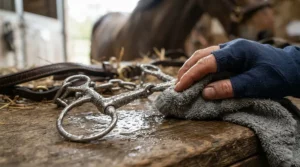
The mouthpiece is thick, and thicker means rein pressure is spread over a larger area, which is kinder on the corners and bars of the mouth. Hard rubber is warmer than steel and creates a milder bit overall. The single joint, however, still creates nutcracker action, which presses on the tongue, bars and roof of the mouth.
My take: it suits horses that dislike cold, thin metal but don’t object to a single joint. It’s less ideal for a small mouth or low palate, where a chunky mouthpiece can feel crowded. Hard rubber also shouldn’t be left in use once cracked or deeply chewed.
I couldn’t verify a worthwhile set of genuine customer reviews, so there’s no sentiment to report here.
Pros:
- ✅ Thick mouthpiece spreads rein pressure widely
- ✅ Warmer, softer feel than stainless steel
- ✅ Very affordable for a trial bit
Cons:
- ❌ Single joint means nutcracker action
- ❌ Bulky for small mouths
Price: mid-teens £ at UK retailers at the time of research. Verdict: great value as a test, not a forever bit.
3. Shires Loose Ring Copper Lozenge Snaffle — copper comfort without the premium bill
Think of it as a copper French link with a bit more tongue conversation. Shires notes it’s also known as a copper French link bradoon.
The double joint removes nutcracker action, and the central lozenge gives a slightly more positive feel on the tongue than a flat plate would. The listing gives 65mm inside ring diameter, a 16mm mouthpiece and a “fairly mild” rating. Shires also points to horses with large tongues or small mouths as good candidates.
Honestly, this is where a copper loose ring bit makes most sense for the money. The lozenge is a gentle step up in clarity, but a very tongue-sensitive horse might find it busier than a flat plate. Copper tarnishes, so expect to rub it up.
I couldn’t verify enough independent reviews to summarise.
Pros:
- ✅ Double joint avoids nutcracker action
- ✅ Copper encourages a softer, relaxed mouth
- ✅ Suits large tongues or small mouths
Cons:
- ❌ Lozenge may feel busy to tongue-sensitive horses
- ❌ Copper tarnishes and needs cleaning
Price: £18-£22 range at the time of research. Verdict: the sweet spot for budget copper.
4. Shires Brass Alloy Training Bit Loose Ring — for horses that lean on the rein
The name says “training”, and the target is clear: horses that hang on the rein and riders wanting a less restricted mouthpiece. It’s a loose ring cheek snaffle with an 18mm double-jointed mouthpiece.
Shires says the design concentrates pressure on the tongue and bars while avoiding nutcracker and palate action. The copper-and-brass alloy is described as warmer than stainless steel. At 18mm it’s chunky, which is gentle on the bars but needs enough room in the mouth.
On the spec comparison, it’s the thickest bit in this round-up, so check your horse can close its mouth comfortably around it. For a leaner with a roomy mouth, it’s an interesting, inexpensive experiment.
Again, I couldn’t verify real review data for this exact model.
Pros:
- ✅ Double joint avoids palate pressure
- ✅ Warm brass-copper alloy feel
- ✅ Loose rings discourage grabbing
Cons:
- ❌ 18mm may overwhelm small mouths
- ❌ Few verifiable independent reviews
Price: under £30 range; check current price. Verdict: sound value if your horse has the mouth space.
5. Happy Mouth Jointed Mouth Loose Ring — the apple-scented persuader
For horses that treat the bit like a dentist’s appointment, flavour and softness can break the stand-off.
The mouthpiece is coated in a soft, flexible, durable plastic with an apple scent, which the maker says makes the bit gentler and more welcoming. The rings are loose, the mouthpiece is jointed, and the US listing I found offered 5″ and 5½” sizes. UK sizing availability may differ.
My analysis: that coating is the point. It softens contact on the bars and corners and gives a bit-shy horse a pleasant first impression. The downside is the same as any coated bit: a keen chewer can damage it, and damaged coating is a good reason to retire it.
No verified reviews worth summarising turned up for this specific model.
Pros:
- ✅ Soft coating cushions bars and corners
- ✅ Apple scent encourages acceptance
- ✅ Simple, familiar jointed design
Cons:
- ❌ Coating can be chewed through
- ❌ Single joint still has nutcracker action
Price: under £30 range at the time of research. Verdict: a handy persuader, replaced when worn.
6. Neue Schule Verbindend Loose Ring — the tongue-evasion specialist
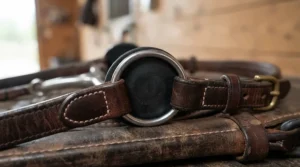
The Verbindend earns its fanbase by giving the tongue somewhere to go. Its curved mouthpiece is designed to help with tongue evasions, horses heavy on the forehand and resistance to the aids.
It’s made of Salox Gold, a high-copper alloy valued for conductivity and anti-tarnish behaviour, so it warms quickly in the mouth. The brand says the loose ring allows instant release and a more refined feel, and retailers describe it as dressage legal (check your rulebook).
Reviews on overseas retailer pages are largely positive. One Australian retailer showed 42 reviews at the time of research, and buyers mention less tongue-over-the-bit, softer contact and a more settled mouth. A US retailer showed a small set of five ratings averaging 5.0. Treat both as small, self-selecting samples.
The big practical note is sizing. Because of the curve, the brand advises ordering a quarter-inch larger than your current bit and aiming for a snug 2-5mm gap between lip and mouthpiece hole.
Pros:
- ✅ Curved mouthpiece gives the tongue room
- ✅ High-copper Salox Gold warms quickly
- ✅ Reviewers report softer, steadier contact
Cons:
- ❌ Premium price
- ❌ Runs small, so order carefully
Price: £85-£110 range depending on size and thickness. Verdict: worth it if tongue evasions are your actual problem.
7. Sprenger Dynamic RS Loose Ring Single Jointed — ergonomic premium for sensitive mouths
Sprenger’s twist is geometry. The joint is angled forward by 45°, designed so the bit sits between the tongue and palate and spreads pressure evenly across the tongue. Sprenger and UK retailers describe it as ideal for sensitive horses or those with a fleshy tongue.
The UK listing I found shows 16mm thickness, 70mm rings, and Sensogan (a copper, manganese and zinc alloy) with stainless steel rings. That’s a hybrid: a mouthpiece that encourages chewing, with hard-wearing rings. A double-jointed 14mm version also exists.
My analysis: if you want a loose ring bit for sensitive mouth work and can afford the premium, the angled joint is the most thoughtful solution here. I didn’t find enough verified independent reviews to summarise, so the performance claims are Sprenger’s own.
One practical note: some sizes may be made to order, with a few weeks’ wait.
Pros:
- ✅ 45° joint angle spreads tongue pressure
- ✅ Copper-based alloy with durable steel rings
- ✅ Suits fleshy tongues and sensitive horses
Cons:
- ❌ Premium price for a single-jointed bit
- ❌ Possible made-to-order waits
Price: £95-£125 range at the time of research. Verdict: a long-term investment for the right mouth.
Loose Ring Bit Sizing: A Step-by-Step Fitting Guide
Loose ring bit sizing is where most of the pain starts. Rings that move are brilliant, until a bit that’s too narrow pinches or too wide slides.
- Measure the mouth. Use a bit gauge, or thread a piece of string through the mouth and mark the lip corners.
- Allow for the ring. A loose ring needs about an eighth of an inch (roughly 3mm) clearance either side under rein tension, according to Your Horse. Neue Schule’s fitting advice says no more than that, measured at rest and under contact.
- Check height. Wrinkle-counting varies between sources. Neue Schule suggests one or two wrinkles, while Your Horse warns there’s no ideal number. Check for some movement at the lip corners under tension.
- Respect the curve. Curved mouthpieces like the Neue Schule Verbindend run small, so size up as the brand recommends.
- Adding guards? Bit guards generally need a size larger.
- Recheck at the first ride. Fit can shift as the bit settles.
For an academic angle, UHI’s tack and equipment guide reinforces the principle: too narrow pinches, too wide lets the bit slide, and either spoils the contact. If you’re between sizes, go with the one that keeps the bit centred.

Fixing Lip Pinching and Bit Rotation: A Problem-Solution Guide
Problem 1: Lip pinching. The loose rings can nip the corners as they rotate. Check width first, because a bit that’s too narrow is the usual culprit. If it’s right, bit guards are one fix, but size up and check they’re allowed in competition. A loose ring tube bit is another alternative.
Problem 2: The bit slides sideways. A bit that’s too wide shifts across the mouth with every change of bend. The Sprenger Dynamic RS Loose Ring Single Jointed is designed to sit more stably, but fit matters more than design.
Problem 3: Tongue evasions. A curved or angled mouthpiece such as the Neue Schule Verbindend Loose Ring or the Sprenger gives the tongue more room.
Problem 4: Leaning. Loose rings help by shifting under pressure. The Shires Brass Alloy Training Bit Loose Ring targets this directly.
Problem 5: A horse that won’t accept the bit. Try warmth or flavour: the Happy Mouth Jointed Mouth Loose Ring or the Shires EquiKind Ripple Loose Ring Mullen Mouth Snaffle.
If a problem persists, don’t keep swapping metal. Rule out dental and rider-hand issues, and get an equine dentist or vet to check the mouth.
Real-World Scenarios: Matching a Loose Ring Snaffle Bit to Your Horse
Scenario A: The green four-year-old on a tight budget. She’s ridden four times a week in an indoor school and the budget is about £25. The Shires EquiKind Ripple Loose Ring Mullen Mouth Snaffle is the logical start. The mullen shape avoids a joint, and the softer material makes introductions easier.
Scenario B: The hacking cob who leans. He’s out on varied terrain three times weekly and hangs on the rein. The Shires Brass Alloy Training Bit Loose Ring targets leaning at a modest price, provided his mouth has room for 18mm.
Scenario C: The dressage horse with a tongue problem. She’s schooled five days a week and keeps getting her tongue over the bit. Here the budget stretches. The Neue Schule Verbindend Loose Ring and Sprenger Dynamic RS Loose Ring Single Jointed are the realistic candidates. The Verbindend’s curve and the Sprenger’s 45° joint address the same problem differently.
Across all three, the pattern is the same: fit the mouth first, then match the problem, and only then think about price.
✨ Ready to Compare Real Options?
🔍 Take your bit search from guesswork to a short, sensible list. Click on any highlighted product above to check current pricing and availability. A well-fitted bit makes every ride feel more connected, so your horse can focus on the work!
How to Choose a Loose Ring Snaffle Bit: 7 Steps
- Start with the mouth, not the brand. Measure width and note tongue thickness and lip shape.
- Pick the mouthpiece. Mullen avoids joints, single-jointed has nutcracker action, double-jointed spreads pressure.
- Match thickness to room. Thick bits are gentler but need space.
- Consider the material. Copper alloys, rubber and coated bits suit fussy mouths.
- Check ring size. Around 65-70mm is common among the bits here.
- Plan for fit extras. Guards mean a larger bit; curved bits may need a size up.
- Check rules and returns. Competition rules vary, and retailers often won’t take back a bit once it’s been in a mouth.
The most common mistake is jumping to step 4 and ignoring steps 1 and 3. A copper bit of the wrong width is still a wrong bit.
Loose Ring Bit for Sensitive Mouth: What Actually Helps
“Sensitive” is a catch-all, so be specific about the reaction. A horse that gapes, tosses its head or snatches at the contact is telling you something, but not necessarily that the bit is the cause.
A loose ring bit for sensitive mouth work tends to share a few traits. Soft or warm materials, such as the Shires EquiKind Ripple or the Happy Mouth Jointed Mouth Loose Ring, reduce the shock of cold metal. An unjointed mullen avoids nutcracker action. Double joints or angled joints, as in the Sprenger Dynamic RS Loose Ring Single Jointed, avoid pinching the palate.
But sensitivity can also mean pain. Sharp teeth, a poor-fitting noseband or a rider with an unsteady hand can all mimic a bit problem. If changing bits doesn’t help, check the rest of the picture before spending more.
Copper Loose Ring Bit: Hype, Science and What to Expect
A copper loose ring bit sounds like a cheat code. Copper and copper-rich alloys warm quickly and are marketed as encouraging salivation, which retailers link to a softer, more accepting mouth. Four bits in this guide use copper-based metal: the Shires Loose Ring Copper Lozenge Snaffle, the Shires Brass Alloy Training Bit Loose Ring, the Neue Schule Verbindend Loose Ring and the Sprenger Dynamic RS Loose Ring Single Jointed.
Be realistic, though. Salivation isn’t a guarantee of acceptance, and equestrian writers dispute how much metal choice matters compared with training and hands. Treat copper as a helpful nudge, not a fix.
Practically, expect tarnish and oxidation. That’s normal and often considered a sign of the metal reacting. If your horse accepts a stainless steel bit comfortably, there’s no pressing reason to switch.
Mouthpiece Flexibility and Bit Rotation: Single, Double or Mullen?
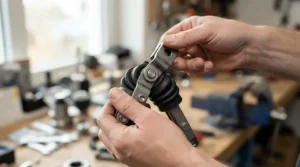
Mouthpiece flexibility changes how pressure lands. A single joint, as in the Korsteel Hard Rubber Jointed Loose Ring Snaffle, folds in the mouth with nutcracker action. A double joint, as in the Shires Loose Ring Copper Lozenge Snaffle, lies flatter on the tongue. A mullen, as in the Shires EquiKind Ripple Loose Ring Mullen Mouth Snaffle, doesn’t fold at all.
Bit rotation is the other half. Loose rings rotate on the mouthpiece, which Neue Schule says gives an instant release from pressure. That rotation is why a loose ring bit encourages the horse to mouth and soften, and why a bit that’s too narrow pinches.
Curved and angled designs add a third variable. The Neue Schule Verbindend Loose Ring curves around the tongue, while the Sprenger Dynamic RS Loose Ring Single Jointed tips its joint forward. Both are attempts to fit mouth anatomy rather than fight it.
Loose Ring Snaffle Bit vs Eggbutt vs Full Cheek
| Feature | Loose ring | Eggbutt | Full cheek |
|---|---|---|---|
| Movement in the mouth | High | Low | Low |
| Lip pinching risk | Higher | Lower | Lower |
| Pull-through risk | Higher | Low | Lowest |
| Best For | Responsive, mobile contact | Steady, fixed feel | Steering and young horses |
Looking at the comparison, the loose ring is the most communicative and the most fit-sensitive. An eggbutt trades some responsiveness for stability, and a full cheek adds steering help and pull-through protection. If your horse is calm and your fitting is careful, the loose ring wins. If you ride a spooky horse in open country, the other two deserve a look.
For background on how these cheek types are classified, see Wikipedia’s overview of horse bits. Choose the type that matches your horse’s temperament and your own confidence.
Long-Term Cost and Maintenance of a Loose Ring Snaffle Bit
| Tier | Product | Price range | Best For |
|---|---|---|---|
| Budget | Korsteel Hard Rubber Jointed Loose Ring Snaffle | Mid-teens £ | Trial bit |
| Mid | Shires Loose Ring Copper Lozenge Snaffle | £18-£22 range | Budget copper |
| Premium | Sprenger Dynamic RS Loose Ring Single Jointed | £95-£125 range | Long-term investment |
Looking at the numbers, a premium bit bought at around £100 and used four times a week for three years works out at roughly 17p a ride. A budget bit that’s replaced twice isn’t automatically cheaper. The real saving comes from getting the fit right the first time.
Maintenance is simple. Rinse after every ride, dry thoroughly, and check rubber and coated bits for chew marks. Look over the ring holes for burrs, and polish copper if it tarnishes. Many retailers won’t accept returns on bits that have been used, so confirm the policy before you buy.
Common Mistakes When Buying a Loose Ring Snaffle Bit
Buying by the old bit’s size. A loose ring needs different clearance from an eggbutt, so don’t copy the number.
Ignoring curved-bit sizing. The Neue Schule Verbindend Loose Ring runs small, and the brand says to size up.
Forgetting guards change the size. If you add bit guards, you’ll typically need a larger bit.
Chasing metal over fit. A copper bit that pinches is still a pinching bit.
Overlooking competition rules. Thickness, guards and materials vary between rulebooks, so check the current one.
Skipping the vet or dentist. Utah State University’s guide to snaffle bitting notes that mouth guards are often used with loose ring bits to stop lips being pinched. It also reminds readers that a mild bit can become a severe one in the wrong hands, and that no bit fixes an unhealthy mouth.

FAQ
❓ How much should I spend on a loose ring snaffle bit in the UK?
❓ Is a loose ring snaffle bit allowed in dressage?
❓ Can I use bit guards with a loose ring snaffle bit?
❓ Is a copper loose ring bit better than stainless steel?
❓ How tight should a loose ring snaffle bit fit?
Conclusion
The loose ring snaffle bit endures because it’s adaptable, but that adaptability is a double-edged sword. Get the fit right and it’s one of the most communicative bits you can buy. Get it wrong and you’ll be chasing lip pinching and sliding mouthpieces for weeks.
For a gentle start, the Shires EquiKind Ripple Loose Ring Mullen Mouth Snaffle is the sensible low-risk choice. For budget copper, the Shires Loose Ring Copper Lozenge Snaffle is hard to beat. If tongue evasions are the issue, the Neue Schule Verbindend Loose Ring and Sprenger Dynamic RS Loose Ring Single Jointed are worth the premium. Whichever you pick, measure first, mind the loose ring bit sizing, and treat copper and soft materials as helpful extras rather than miracles.
Recommended for You
- Gag Bit For Strong Horse: 7 Best Proven Picks (2026)
- Pelham Bit vs Snaffle Bit: 7 Best Pelham Picks For UK Riders (2026)
- Snaffle Bit For Young Horse: 7 Best Picks & Fitting Guide (2026)
Disclaimer: This article contains affiliate links. As an Amazon Associate, I earn from qualifying purchases. If you purchase products through these links, we may earn a small commission at no additional cost to you.
✨ Found this helpful? Share it with your friends! 💬🤗
