In This Article
Somewhere between mile twelve and mile twenty of your first proper trail ride, you stop thinking about scenery and start thinking about your seat bones. That’s the moment most riders go hunting for an affordable endurance saddle, usually with a slightly panicked google search and a credit card in hand. An affordable endurance saddle is a purpose-built or trail-adapted saddle, typically synthetic or treeless, designed to distribute rider weight evenly over long distances without the four-figure price tag of a bespoke leather competition saddle. The good news: “affordable” and “adequate” are not the same thing, and you genuinely don’t need to remortgage the stable to get one that works.
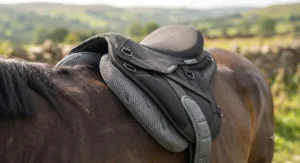
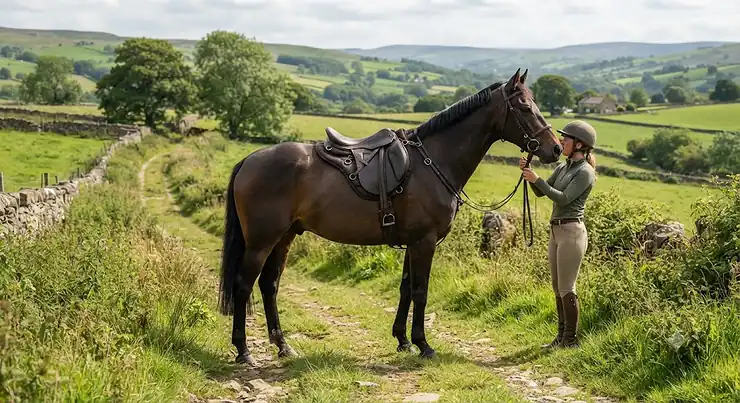
This guide walks through seven real, currently available saddles spanning budget synthetics through to a premium ultralight import, with honest analysis of who each one suits. We’ll also dig into wide-horse fitting, treeless versus treed debates, and what the actual research says about saddle fit and welfare — because a saddle that looks like a bargain but causes a sore back is no bargain at all. Every specification here comes from manufacturer data and UK retailer listings, and every review comment is aggregated from genuine rider sources, not invented for effect. As the British Horse Society notes on saddle fit, poorly fitted tack is one of the most common and most preventable causes of ridden horse discomfort — so getting this choice right matters more than it might first appear.
Quick Comparison: Affordable Endurance Saddle Options at a Glance
Before diving into the full breakdown, here’s how our seven picks stack up on the essentials.
| Saddle | Type | Approx. Weight | Price Range | Best For |
|---|---|---|---|---|
| Kincade Synthetic All Purpose | Synthetic, treed | ~4.5-5kg | under £200 | Absolute beginners on a strict budget |
| Thorowgood T4 Endurance | Synthetic, treed, adjustable | ~5-5.5kg | £550-£650 | Riders wanting a British-made endurance-specific design |
| Wintec Pro Endurance HART | Synthetic, treed, adjustable | 6.4kg (14.1lb) | £950-£1,250 | Serious mid-distance riders wanting proven tech |
| Wintec Pro Wide Endurance | Synthetic, treed, adjustable | ~6.4kg | £1,150-£1,300 | Cobs and other broad-backed horses |
| Torsion Endurance Treeless | Treeless, leather | ~5-6kg | £550-£800 | Riders wanting a treeless feel with home-trial reassurance |
| Barefoot Cherokee | Treeless, leather | ~5.5-6.5kg | £700-£1,000 | Multi-horse yards needing one flexible saddle |
| Specialized Ultralight | Synthetic/leather hybrid, adjustable tree | 4.1kg (9lb) | £2,500-£3,500 (imported) | Riders prioritising minimal weight above all else |
A quick scan of this table tells its own story: there isn’t one “best” affordable endurance saddle, there’s a best one for your budget, your horse’s shape, and how far you’re actually planning to ride. The Kincade Synthetic All Purpose wins on raw price, but it’s a general-purpose saddle pressed into endurance service rather than a specialist tool, so treat it as a stepping stone rather than a destination. At the other end, the Specialized Ultralight costs more than the other six combined, and that gap is the clearest illustration in this whole article of what you’re actually paying for as saddles get lighter and more adjustable.
💬 Found a saddle you like the look of already? Scroll down to the full breakdown and see exactly why it made the cut.
The Top 7 Affordable Endurance Saddles: Expert Analysis
1. Kincade Synthetic All Purpose Saddle — cheapest genuine entry point
The Kincade Synthetic All Purpose Saddle is the one you buy when you need something in the tack room this week, not the one you buy after months of research. It’s a synthetic leather general-purpose saddle with a medium-deep seat, padded airflow flaps, and knee rolls, listed directly on Amazon UK for typically under £200. That price point puts it in a different universe from every other saddle on this list, and the trade-offs show up accordingly.
Here’s what most buyers overlook: this isn’t an endurance saddle in the technical sense — it’s a general-purpose saddle that happens to be light and cheap enough that trail riders adopt it anyway. The flaps and panels are built for shorter arena sessions, not eight-hour trail days, so the padding compresses faster under sustained weight-bearing. Reviewers on equestrian forums report mixed experiences with budget synthetic ranges like this one; some riders find them perfectly serviceable as a first saddle or spare, while others note the panels flatten noticeably within a season of regular use, and comfort dips accordingly on longer outings.
Pros:
- ✅ Genuinely the lowest entry price on this list
- ✅ Lightweight synthetic build, easy to lift and clean
- ✅ Available directly through Amazon UK with fast delivery
Cons:
- ❌ Not purpose-built for multi-hour endurance distances
- ❌ Panel padding reportedly softens faster than pricier synthetics
At under £200, the Kincade Synthetic All Purpose Saddle is a sensible stopgap or backup saddle, not a long-term endurance investment — treat it as saddle number one, not saddle forever.
2. Thorowgood T4 Endurance — British-made and purpose-built for the job
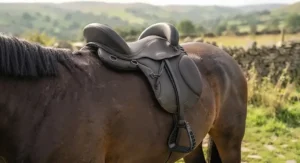
Made in Walsall, England, by a company with more than three decades of adjustable-saddle manufacturing behind it, the Thorowgood T4 Endurance is the first saddle on this list actually engineered for the discipline rather than borrowed from general riding. Expect to pay somewhere in the £550-£650 range depending on stockist and gullet configuration.
What that money buys is a short panel design suited to shorter-backed Arab-type horses (the breed that dominates competitive endurance for good reason), a straighter-cut flap that supports the longer, more relaxed leg position endurance riders adopt over distance, and five heavy-duty D-rings at the rear plus two at the front for strapping on saddlebags, hoof boots and spare kit. The adjustable gullet system — R-bar or S-bar depending on tree shape — means you can reconfigure the fit from narrow-medium through to extra-extra-wide as your horse’s condition changes across a season, which matters enormously for riders whose horse’s topline shifts between winter rest and summer fitness work.
Pros:
- ✅ Purpose-designed endurance geometry, not a repurposed GP saddle
- ✅ Adjustable gullet accommodates seasonal changes in horse shape
- ✅ Seven attachment D-rings for kit and saddlebags
Cons:
- ❌ Suede-effect seat needs specific care (no wire-bristle brushes)
- ❌ Narrower resale market than the more ubiquitous Wintec range
If you want a British-built saddle designed around endurance riding from the ground up without spending four figures, the Thorowgood T4 Endurance earns its place near the top of most shortlists.
3. Wintec Pro Endurance HART — the lightweight benchmark
Weighing a genuinely impressive 6.4kg (14.1lb), the Wintec Pro Endurance HART is frequently cited by long-distance riders as the saddle to beat in the synthetic category. UK retailers list it consistently in the £950-£1,250 bracket, which stretches the definition of “affordable” but still sits well under half the price of an equivalent custom leather endurance saddle.
The HART (Horse and Rider Technology) badge covers several features working together: CAIR air-cushioned panels that mould to the horse’s back and self-adjust as muscle shape changes through a ride, an EASY-CHANGE gullet system spanning narrow to extra-wide, and FlexiContourbloc knee supports shaped to hold the rider’s leg in position over long hours without pinching. A moveable front support paired with a fixed rear support lets riders fine-tune their own leg position, something cheaper synthetics simply don’t offer. Reviewers consistently report that the seat pocket holds them centrally even after several hours in the saddle, and the air panel system is credited with reducing the pressure-point complaints that plague cheaper foam-flocked alternatives.
Pros:
- ✅ Genuinely lightweight at 14.1lb for horse and rider fatigue
- ✅ CAIR air panels self-adjust to changing muscle shape mid-ride
- ✅ Adjustable gullet covers narrow through extra-wide horses
Cons:
- ❌ Price sits closer to premium than true budget territory
- ❌ Currently only widely available in black
Based on the spec comparison across this whole list, the Wintec Pro Endurance HART is the saddle most likely to satisfy a serious endurance rider who has outgrown entry-level kit but isn’t ready for a four-figure leather saddle.
4. Wintec Pro Wide Endurance — built specifically for broader horses
Fitting a standard-tree saddle to a genuinely wide horse is one of the most common headaches in endurance riding, and the Wintec Pro Wide Endurance exists to solve exactly that problem. UK pricing through Wintec’s own site works out to roughly £1,150-£1,300, financed in instalments by several retailers.
The engineering here is worth explaining rather than just listing. A narrow-waisted seat design counteracts the “sitting on a barrel” sensation riders often report on genuinely broad-backed horses, while super-soft panels are specifically shaped to mould around wider conformation rather than bridging across it. The standout feature, though, is the Y-Girthing system, which distributes girth pressure across a wider surface area and noticeably improves stability on rounder-backed horses that tend to roll a standard saddle from side to side at trot and canter. Combined with the moveable front and fixed rear support system shared with the standard HART model, this reduces the rider fatigue that comes from constantly correcting balance on a horse whose barrel shape works against a conventional tree.
Pros:
- ✅ Y-Girthing system specifically engineered for wide, round backs
- ✅ Narrow-waisted seat counters the “perched on a barrel” feel
- ✅ Shares proven HART panel and support technology
Cons:
- ❌ Among the priciest options on this list
- ❌ Wide-specific fit means it won’t suit a narrower horse later
For anyone whose cob, native pony, or barrel-chested crossbreed has defeated every standard-fit saddle they’ve tried, the Wintec Pro Wide Endurance is worth the extra outlay before considering a custom leather build.
5. Torsion Endurance Treeless Saddle — treeless comfort with a safety net
The Torsion Endurance Treeless Saddle sits in the £550-£800 bracket depending on specification, and it’s one of the few treeless options with a proper UK agent network and a formal home-trial scheme — around £45 for a three-day loan against a £400 refundable deposit, a meaningful reassurance given how personal treeless fit can be.
Constructed from nappa leather with a padded Sympanova underside, this saddle has genuine competition pedigree: it’s been used by endurance riders at World Championship level and holds approval from British Dressage and British Eventing (always worth double-checking current rules with your specific discipline’s judges before entering). Because there’s no rigid tree, weight distribution flexes with the horse’s movement rather than fighting against it, which many riders and horses with a history of tree-related pressure points find transformative. The trade-off, and it’s an honest one, is that treeless saddles rely far more heavily on correct pad selection to manage weight distribution than treed saddles do — get the pad wrong and you lose most of the benefit.
Pros:
- ✅ Formal UK home-trial scheme reduces buying risk
- ✅ Competition pedigree at World Championship endurance level
- ✅ Flexes with horse movement rather than resisting it
Cons:
- ❌ Performance depends heavily on correct pad choice
- ❌ Nappa leather needs more regular conditioning than synthetics
If treeless appeals but you’re nervous about committing sight unseen, the Torsion Endurance Treeless Saddle‘s trial scheme makes it the lowest-risk way into that category.
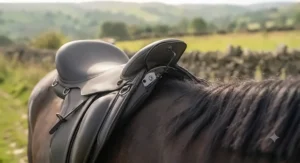
6. Barefoot Cherokee — the multi-horse yard’s answer
Barefoot’s overall UK saddle range spans roughly £179 to £1,080 depending on model and specification, and the Barefoot Cherokee sits comfortably in the middle of that span, typically landing somewhere around £700-£1,000 new through UK stockists. It’s described by specialist retailers as a versatile treeless option ideal for both endurance and general trekking, which is precisely the reputation it’s built among riders who own more than one horse.
That versatility is the whole point. Because there’s no fixed tree size to match, the Barefoot Cherokee can move between horses of genuinely different shapes with a change of pad rather than a change of saddle, which is a real cost saving for anyone running two or three horses through a season. Aggregated forum sentiment on Barefoot’s treeless range is honestly mixed rather than uniformly glowing: several riders report the seat twist feels wider than expected for smaller riders, and one detailed account described a horse reacting badly to the fit until swapped to a different model in the range, while others report comfortably covering 40km rides without issue but hold reservations about pushing much beyond 50km due to pressure building around the stirrup attachment points. That’s the kind of honest, source-grounded nuance worth knowing before you buy rather than after.
Pros:
- ✅ Genuinely adaptable across multiple horse shapes
- ✅ Moulds and softens with use over time
- ✅ Strong reputation specifically for endurance and trekking
Cons:
- ❌ Wider seat twist reported as uncomfortable by some smaller riders
- ❌ Reviewers flag pressure concerns on rides beyond roughly 50km
For yards juggling more than one horse and one budget, the Barefoot Cherokee offers a flexibility none of the treed saddles on this list can match.
7. Specialized Ultralight — the premium benchmark for minimal weight
At 4.1kg (9lb), the Specialized Ultralight is dramatically lighter than every other saddle here, and it needs to be understood as a different category of purchase rather than a direct rival to the budget options above it. Handcrafted in the USA from English bridle leather, it isn’t stocked by UK high-street tack shops, so expect to budget somewhere in the region of £2,500-£3,500 once shipping and import costs from the US are factored in — get a direct quote before committing, since cross-border pricing shifts.
The minimalist design strips away the skirting leather that covers the saddle bars on conventional saddles, creating close-contact feel that riders describe as dramatically improving communication with the horse over subtle terrain changes. Standard billet rigging offers flexible girth placement, and the patented 3-D Adjustable Fit System allows the tree width, arch and angle to be tuned to an individual horse rather than relying on a handful of fixed gullet sizes. This is the saddle competitive endurance riders reach for once budget genuinely isn’t the limiting factor and every gram carried over 100 miles matters.
Pros:
- ✅ Class-leading 9lb weight reduces horse fatigue over distance
- ✅ Fully tunable fit system rather than fixed gullet sizes
- ✅ Handcrafted from premium English bridle leather
Cons:
- ❌ By far the most expensive saddle on this list
- ❌ US-based purchase means longer lead times and import costs
Realistically, the Specialized Ultralight belongs on a shortlist once you’ve outgrown “affordable” altogether and are buying for competitive performance rather than budget comfort — it’s included here as the ceiling this whole comparison is measured against.
Practical Usage Guide: Setting Up, Fitting and Caring for Your New Saddle
Buying the saddle is honestly the easy part. Getting the first month right is where most preventable problems happen. Start with a proper fitting session rather than guessing from a size chart — even an adjustable-gullet saddle like the Thorowgood T4 Endurance or Wintec Pro Endurance HART needs setting to your horse’s current shape, not a generic “medium” default. Book this with a qualified fitter where possible; the Society of Master Saddlers maintains the UK’s recognised accreditation for this reason.
In the first thirty days, recheck fit weekly rather than assuming it’s done once and finished. Horses coming into fitness for endurance work change shape surprisingly fast as muscle develops along the topline, and a saddle that fit perfectly in week one can start bridging or pinching by week four. For treeless options like the Torsion Endurance Treeless Saddle or Barefoot Cherokee, pay particular attention to pad selection during this period — treeless performance lives or dies on getting the underlying pad right, far more than with a treed saddle. A common early mistake is over-tightening the girth to compensate for a saddle that’s slightly loose; this masks the symptom without fixing the underlying fit problem and can create new pressure points of its own.
For ongoing maintenance, synthetic saddles like the Kincade Synthetic All Purpose and Wintec range need little more than a wipe-down and occasional deep clean of stitching and buckles, while leather treeless saddles such as the Barefoot Cherokee need regular conditioning to prevent the leather drying and cracking under sustained UK weather exposure. Store every saddle on a proper rack rather than flat, which preserves panel shape and prevents the tree (where present) from warping.
Real-World Scenarios: Which Endurance Rider Are You?
The weekend hobbyist: Riding 10-15 miles most Sundays on a cob-type horse, working with a modest budget and no plans to compete. The Thorowgood T4 Endurance or, for a genuinely broad-backed cob, the Wintec Pro Wide Endurance both make sense here — purpose-built without stretching into competitive-tier pricing.
The graded-ride newcomer: Training toward Endurance GB’s entry-level 16km-32km rides on a fit, lighter-framed horse. The Wintec Pro Endurance HART suits this rider well: light enough to matter on longer training rides, adjustable enough to track a horse coming into fitness, and proven at genuine endurance distances rather than just trail hacking.
The multi-horse yard owner: Managing two or three horses of different shapes on a shared budget. The Barefoot Cherokee‘s adaptability across conformations, paired with pad changes rather than saddle changes, solves a problem that treed saddles simply can’t — you’d otherwise need a separate saddle per horse.
The competitive miler: Training seriously toward 80km-plus competitive rides where every gram carried affects horse performance over hours. This is where the Specialized Ultralight earns its considerably higher price tag, though most riders in this bracket will have already outgrown the “affordable” framing of this guide entirely.
How to Choose an Affordable Endurance Saddle
- Measure your horse’s back shape properly first. Fit comes before budget — even the cheapest saddle on this list is a false economy if it doesn’t sit correctly.
- Decide treed or treeless early. This shapes your whole shortlist; treeless options like the Torsion Endurance Treeless Saddle suit horses with unpredictable or changeable shape, while treed saddles like the Wintec Pro Endurance HART suit more consistent conformation.
- Check the gullet or tree adjustability. Adjustable systems mean one saddle can track a horse’s fitness changes across a season rather than needing replacement.
- Weigh weight against durability. Lighter isn’t automatically better if it sacrifices the panel support needed for multi-hour rides — the Specialized Ultralight and Kincade Synthetic All Purpose sit at opposite extremes of this trade-off for very different reasons.
- Read aggregated review sentiment, not star ratings alone. A 4.5-star average can hide a recurring complaint about panel wear or seat comfort that matters enormously to you specifically.
- Factor in trial and return policies. Home-trial schemes like Torsion’s meaningfully de-risk a purchase you can’t fully evaluate until you’ve ridden real distance in it.
- Budget for accessories, not just the saddle. Girths, pads and D-ring attachments for kit add a genuine £100-£200 on top of most of these prices.
As World Horse Welfare’s saddle fitting guidance makes clear, the areas most worth careful consideration when fitting a new saddle are exactly the ones that protect your horse’s topline development and reduce back pain risk over the long term — so working through this list properly before you buy pays off well beyond the purchase price.
Treeless vs Treed Endurance Saddles: Which Wins for Long-Distance Riding?
This is one of the most genuinely contested debates in endurance circles, and honestly, there isn’t a universal winner. A treed endurance saddle, like the Wintec Pro Endurance HART, uses a rigid or semi-rigid frame to bridge weight across the horse’s back without direct pressure on the spine — done well, this is highly effective, but a poorly fitted tree concentrates pressure at specific points rather than distributing it. A treeless endurance saddle, like the Torsion Endurance Treeless Saddle or Barefoot Cherokee, removes that frame entirely, relying on flexible panels and correct pad selection to spread rider weight, which flexes naturally with the horse’s movement but shifts more responsibility onto pad choice and rider balance.
| Factor | Treed (e.g. Wintec Pro Endurance HART) | Treeless (e.g. Barefoot Cherokee) |
|---|---|---|
| Weight distribution | Bridges across panels, consistent if well fitted | Flexes with horse, pad-dependent |
| Adjustability | Gullet swap changes width | Naturally accommodates shape changes |
| Multi-horse use | Usually needs refitting per horse | Often usable across several horses |
| Best For | Wintec Pro Endurance HART — consistent-shaped horses | Barefoot Cherokee — variable or multi-horse use |
Reading across that table, the practical takeaway is that treed saddles reward a horse with a stable, predictable shape and reward the rider with consistent, well-understood fit, while treeless saddles reward flexibility and changeability but demand more attentive pad management to deliver the same protection. Neither is objectively superior for long-distance riding — the right choice depends far more on your specific horse’s conformation stability than on brand loyalty or forum opinion.
Endurance Saddle for Wide Horses: What Actually Works
Wide horses — genuinely broad-backed cobs, natives, and some warmblood crosses — are one of the most common saddle-fit headaches in endurance riding, because most saddle trees are still developed around a moderate, average conformation. An endurance saddle for wide horses needs to solve two separate problems simultaneously: preventing the saddle rolling side to side on a rounder barrel, and avoiding the “perched on top” sensation that develops when a standard tree simply doesn’t spread wide enough.
The Wintec Pro Wide Endurance tackles both directly through its Y-Girthing system, which spreads girth pressure across a broader surface than a standard two-point girth attachment, and its narrow-waisted seat design, which counteracts the feeling of sitting too high and too spread. For riders exploring treeless as an alternative route into fitting wide horses, the Barefoot Cherokee‘s flexible panels can mould around a rounder back without needing a specific “wide” model at all — though as noted earlier, some riders with smaller seats report the twist itself feels broad regardless of the horse underneath them, so trying before buying matters more here than almost anywhere else in this guide.
A mistake worth flagging specifically for wide horses: buying a “wide” gullet setting on a standard-tree saddle and assuming that solves the problem. Gullet width affects wither clearance, but it doesn’t necessarily address the actual panel and girthing geometry that a genuinely wide-specific design like the Wintec Pro Wide Endurance builds in from the ground up.
Lightweight Endurance Saddle Options: How Much Does Weight Really Matter?
Riders new to the sport are often surprised how much saddle weight gets discussed in endurance circles, given that the horse also carries the rider’s own bodyweight, tack, water, and kit. The reasoning is cumulative rather than dramatic: over 50, 80 or 100km, every additional kilogram carried adds to fatigue, and saddle weight is one of the few variables entirely within the rider’s control before the ride even starts.
Among this list, the Specialized Ultralight at 4.1kg and the Wintec Pro Endurance HART at 6.4kg represent the genuine lightweight tier, while the budget Kincade Synthetic All Purpose Saddle is light largely because it’s built with less material overall rather than through deliberate lightweight engineering — an important distinction, because that lighter build also correlates with the panel durability concerns noted earlier. What most buyers overlook is that a lightweight endurance saddle only delivers its full benefit if the weight saved isn’t offset by reduced panel support; shaving 2kg off saddle weight matters far less if it comes at the cost of the pressure distribution that protects your horse’s back over distance. The spec sheet won’t tell you this directly, but reviewers consistently frame the ideal as “as light as the design allows without compromising panel structure” rather than lightest at any cost.
Common Mistakes When Buying an Affordable Endurance Saddle
Buying on price alone, without checking fit first, is the single most common and most expensive mistake — a wrongly-fitted £200 saddle that causes back soreness costs far more in vet and physio bills than a correctly fitted £600 one. Skipping the trial period, where one’s offered, is a close second; scheme-based options like the Torsion Endurance Treeless Saddle‘s home trial exist precisely because fit genuinely can’t be judged from photos and spec sheets alone. Another frequent error is assuming a general-purpose saddle like the base Kincade Synthetic All Purpose Saddle will scale comfortably to genuine multi-hour distances simply because it’s comfortable for an hour’s hack — panel design intended for shorter sessions behaves differently under six hours of sustained load. Finally, riders regularly under-budget for accessories, forgetting that girths, numnahs, and saddlebag attachments meaningfully add to total spend beyond the saddle price itself.
What to Expect: Real-World Performance on Long-Distance Riding
Specs on a page translate into something quite different once you’re four hours into a ride. A well-fitted synthetic saddle like the Wintec Pro Endurance HART should still feel stable and unremarkable at hour four — not numb, not sore, just quietly doing its job, which is genuinely the highest praise an endurance saddle can earn. Treeless options like the Barefoot Cherokee tend to feel notably close-contact from the first mile, giving a strong sense of horse movement that some riders find reassuring and others find requires an adjustment period to their own balance.
For anyone training toward formally organised long-distance riding through Endurance GB, it’s worth noting that graded and competitive rides include mandatory veterinary checks before and after the ride, assessing heart rate recovery and soundness — a saddle causing even mild discomfort can show up in these checks as elevated heart rate or a subtly altered gait, which is a strong practical reason to prioritise fit over aesthetics or brand prestige when choosing between the options in this guide.
Long-Term Cost & Maintenance: The True Price of “Affordable”
| Saddle | Purchase Price | Typical Lifespan | Ongoing Costs |
|---|---|---|---|
| Kincade Synthetic All Purpose | under £200 | 2-4 seasons of regular use | Low — wipe clean, minimal upkeep |
| Thorowgood T4 Endurance | £550-£650 | 6-10 years with care | Moderate — wool reflocking periodically |
| Wintec Pro Endurance HART | £950-£1,250 | 8-12 years | Moderate — CAIR panels rarely need attention |
| Barefoot Cherokee | £700-£1,000 | 8+ years, pad-dependent | Moderate — leather conditioning, pad replacement |
Looking at that spread, the cheapest saddle to buy isn’t necessarily the cheapest to own. The Kincade Synthetic All Purpose Saddle may need replacing two or three times across the lifespan of a single Wintec Pro Endurance HART, which narrows the real-world cost gap considerably once you calculate cost-per-year rather than sticker price alone. Treeless options like the Barefoot Cherokee carry an additional ongoing cost most riders don’t budget for upfront: because performance depends so heavily on pad selection, expect to spend on two or three pad types before landing on the right combination for your horse.
Safety, Fit and Welfare: What UK Research Actually Says
This isn’t a marginal concern — it’s backed by hard data. Research from the Animal Health Trust’s Centre for Equine Studies, examining ridden horses across multiple disciplines, found that a striking proportion showed visibly poor saddle fit, with saddle slip during ridden work significantly associated with hindlimb lameness and gait abnormalities. Separately, a substantial share of the riders surveyed in that same body of work reported their own back pain, correlated with both horse discomfort and poor rider position — a reminder that saddle fit is a two-way welfare issue, not solely about the horse.
More recent academic work reinforces the same message from a different angle. A 2024 study examining the role of equestrian professionals in UK saddle fit, conducted through Hartpury University with input from the British Horse Society and the Society of Master Saddlers, surveyed hundreds of equestrian professionals about how saddle-fit advice reaches horse owners in practice — underlining that fit isn’t a one-off decision made at purchase, but an ongoing collaboration between rider, horse, and professional fitter across a saddle’s working life. Whichever saddle from this guide you choose, budgeting for a proper fitting check every six months, as most UK welfare bodies recommend, is not an optional extra — it’s part of the real cost of responsible ownership.
Problem → Solution: Fixing Common Endurance Saddle Issues
Problem: The saddle slips sideways on a rounder-backed horse. Solution: investigate a wide-specific design like the Wintec Pro Wide Endurance with its Y-Girthing system before assuming the answer is simply tightening the girth further, which treats the symptom rather than the cause.
Problem: Rider discomfort builds noticeably after three-plus hours. Solution: check seat pocket positioning and knee block placement — the FlexiContourbloc system on the Wintec Pro Endurance HART exists specifically to hold leg position over long stretches without repositioning being possible cheaply on budget synthetics.
Problem: A single saddle needs to fit multiple horses of different shapes. Solution: a treeless option like the Barefoot Cherokee adapts across conformations with a pad change rather than requiring a saddle change, solving a problem no fixed-tree saddle can.
Problem: Uncertainty about whether a treeless saddle will suit your horse. Solution: use a formal trial scheme, such as the one offered with the Torsion Endurance Treeless Saddle, rather than committing without riding real distance in it first.
Problem: A budget saddle’s panels have flattened after a season. Solution: this is a known limitation of entry-level synthetics like the Kincade Synthetic All Purpose Saddle — treat it as confirmation that it’s time to step up to a purpose-built endurance design rather than a manufacturing fault to fight.
FAQ
❓ What is the most affordable endurance saddle for beginners?
❓ Is a treeless endurance saddle better than a treed one for long-distance riding?
❓ How do I find an endurance saddle for wide horses?
❓ How much does a decent lightweight endurance saddle cost in the UK?
❓ What should I check before buying an affordable endurance saddle?
Conclusion
There’s no single correct answer to which affordable endurance saddle you should buy — only the right answer for your horse’s shape, your budget, and how far you’re actually planning to ride this season. For a genuine first step without much outlay, the Kincade Synthetic All Purpose Saddle gets you started; for purpose-built endurance geometry at a fair price, the Thorowgood T4 Endurance is hard to beat. Riders chasing serious mid-distance comfort should look hard at the Wintec Pro Endurance HART, while anyone with a genuinely broad-backed horse should start their search with the Wintec Pro Wide Endurance rather than fighting a standard tree. Treeless curious buyers get a safety net with the Torsion Endurance Treeless Saddle‘s trial scheme, multi-horse yards should weigh up the Barefoot Cherokee, and riders for whom budget genuinely isn’t the constraint have the Specialized Ultralight as the category’s ceiling.
Whichever you choose, remember that the cheapest saddle to buy isn’t always the cheapest to own, and that fit checked properly, and re-checked regularly, protects both your comfort and your horse’s welfare over every mile you put in together.
Recommended for You
- Western Saddle Under £600: 7 Brilliant Picks for 2026 (UK)
- Jumping Saddle Under £400: 7 Brilliant Picks for 2026
- 7 Best Dressage Saddles Under £500 in 2026 (Honest UK Guide)
Disclaimer: This article contains affiliate links. As an Amazon Associate, I earn from qualifying purchases. If you purchase products through these links, we may earn a small commission at no additional cost to you.
✨ Found this helpful? Share it with your friends! 💬🤗
